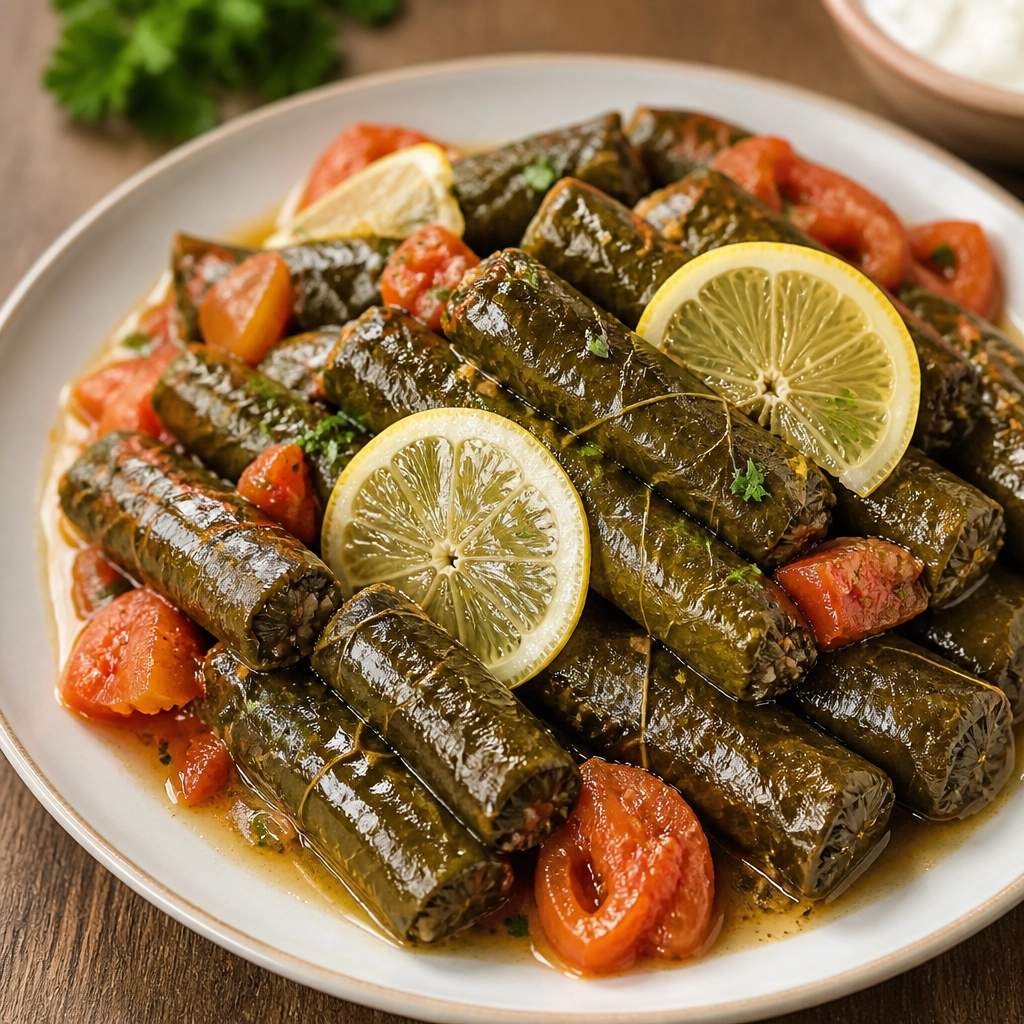
Warak Enab bil Lahme
These Lebanese stuffed grape leaves are tender, tightly rolled, and filled with spiced lamb and rice that cooks gently in a bright lemon broth. The result is rich yet delicate, with warm spice, savory depth, and a clean citrus finish.
Nutrition · per serving
Ingredients
19 itemsStuffing
Pot Base and Broth
To Finish
Tips
- •If using fresh grape leaves instead of jarred, blanch them in boiling water for 30-60 seconds until pliable, then cool before rolling.
- •Short-grain rice gives the proper tender, slightly creamy interior; avoid parboiled rice because it cooks unevenly in the rolls.
- •For neater rolls, keep your fingers slightly damp and use smaller amounts of filling than you think you need.
- •A spoonful of plain yogurt alongside is delicious, though not strictly necessary for serving.
Steps
- 1
Bring a kettle of water to the boil. Separate the jarred grape leaves, rinse them under cool water to remove excess brine, then soak them in hot water for 2 minutes. Drain well and trim any tough stems. Keep torn or small leaves aside for lining the pot and patching rolls.
180 g jarred grape leaves, drained - 2
In a bowl, combine the minced lamb, rinsed rice, minced onion, finely diced tomato, parsley, cinnamon, allspice, salt, black pepper, and olive oil. Mix thoroughly with your hand or a spoon until the rice and seasonings are evenly distributed, but do not overwork the lamb into a paste.
200 g minced lamb80 g short-grain rice, rinsed and drained80 g onion, very finely minced100 g tomato, very finely diced10 g fresh parsley, finely chopped1 g ground cinnamon1 g ground allspice4 g fine salt1 g black pepper15 ml extra-virgin olive oil - 3
Line the bottom of a medium heavy pot with any torn grape leaves, then arrange the sliced tomato and sliced garlic over them. This protects the stuffed leaves from direct heat and lightly perfumes the broth.
120 g tomato, sliced8 g garlic cloves, sliced - 4
Lay one grape leaf shiny-side down with the stem end facing you. Place about 1 heaped teaspoon of filling near the base, fold in the sides, and roll tightly into a slim cylinder. Leave a little room for the rice to expand; too-tight rolls can split. Repeat with the remaining leaves and filling.
180 g jarred grape leaves, drained200 g minced lamb80 g short-grain rice, rinsed and drained80 g onion, very finely minced100 g tomato, very finely diced10 g fresh parsley, finely chopped1 g ground cinnamon1 g ground allspice4 g fine salt1 g black pepper15 ml extra-virgin olive oil - 5
Pack the rolls seam-side down in the pot in tight concentric layers so they cannot unravel during cooking. Wedge any small pieces into gaps.
- 6
Mix the lemon juice, water or stock, salt, and olive oil. Pour over the rolls; the liquid should come just to the top layer, not drown them. Place the lemon slices on top and set a small heatproof plate over the rolls to keep them submerged.
60 ml fresh lemon juice350 ml water or light lamb stock3 g fine salt15 ml extra-virgin olive oil4 thin slices lemon slices - 7
Bring the pot to a gentle simmer over medium heat, then immediately reduce to low. Cover and cook for 35 minutes, maintaining a very gentle simmer. The broth should barely bubble; vigorous boiling can burst the leaves. Check near the end: the rice should be tender and the leaves soft.
- 8
Remove from the heat and let the pot rest, covered, for 10 minutes so the rolls firm up and reabsorb some broth. Drizzle with the remaining olive oil for sheen and aroma.
5 ml extra-virgin olive oil - 9
Carefully lift out the warak enab and arrange on a warm plate. Spoon over a little of the lemony cooking liquid and the softened tomato from the base. Serve warm, or at room temperature for a more traditional texture and flavor.
Origin & History
Warak enab, or stuffed grape leaves, is a cherished dish across the Levant and holds a special place in Lebanese home cooking. Versions with meat, such as warak enab bil lahme, are often prepared for family gatherings and festive meals, where careful rolling is considered a sign of skill and hospitality.
Do even more with Gourmate
Cook this recipe in Gourmate — your AI meal planning app.
Plan Meals
Weekly planner at a tap
Ask Questions
Chat with your AI chef
Adjust Recipe
Scale servings & swap ingredients
Cook Mode
Step-by-step guidance
Kitchen Timers
Built-in timers & alerts
Grocery List
Auto-generated shopping lists