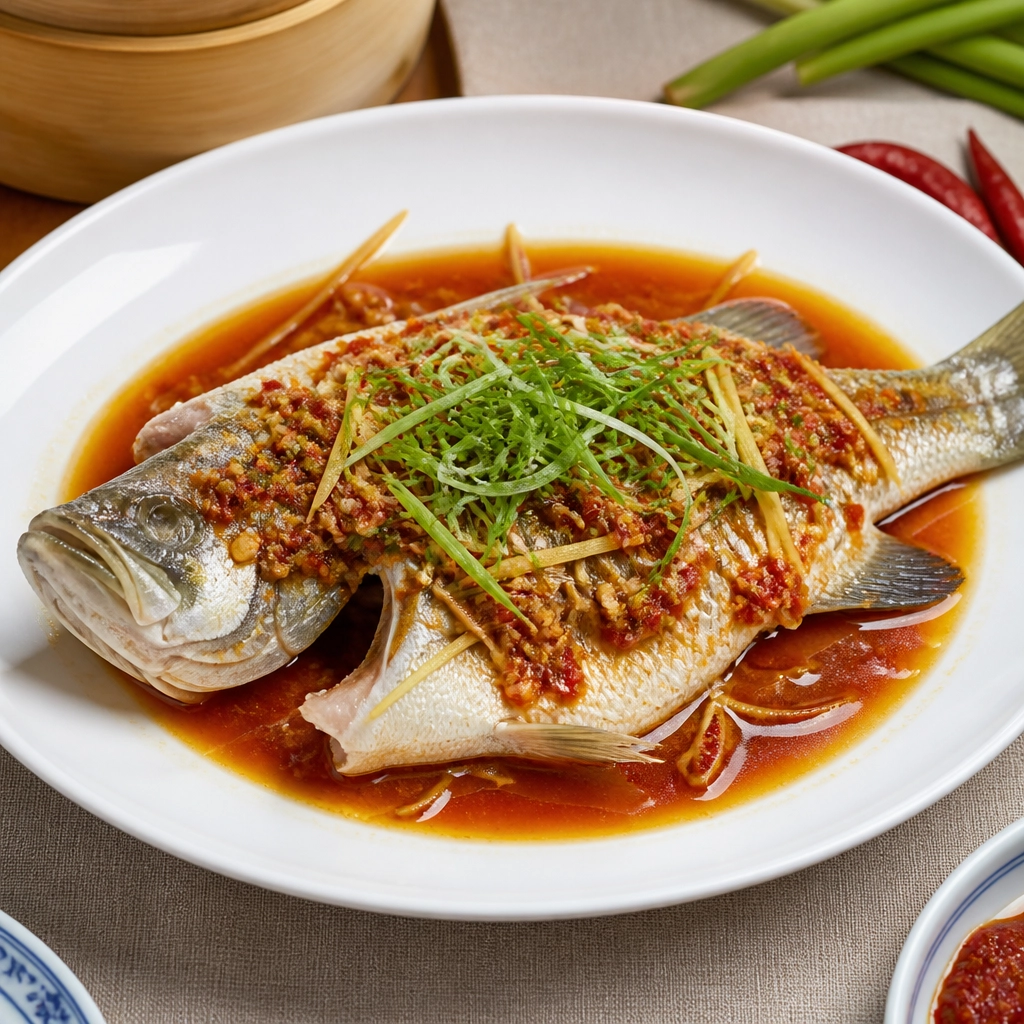
Qingzheng Luyu with Douban Sauce
This steamed sea bass is tender, silky, and fragrant, with sweet fish flesh balanced by the deep umami and gentle heat of doubanjiang. Ginger, garlic, and spring onion brighten the sauce, while steaming keeps the dish light, clean, and elegantly juicy.
Nutrition · per serving
Ingredients
12 itemsFish and aromatics
Sichuan douban steaming sauce
Tips
- •For the cleanest flavor, use the freshest sea bass possible and steam it the same day it is purchased.
- •If preferred, use sea bass fillets instead of a whole fish; reduce steaming time to about 6 to 7 minutes depending on thickness.
- •Because this is a lowfat version, the usual finishing pour of hot oil is omitted; extra ginger and spring onion keep the aroma vivid without added fat.
- •Serve with plain steamed rice and a simple blanched green vegetable to balance the salty, spicy sauce.
Steps
- 1
Pat the sea bass very dry inside and out. Score the thickest part of each side 2 to 3 times to help even cooking. Rub the fish with the salt, white pepper, and Shaoxing rice wine, including inside the cavity. Stuff half of the julienned ginger and a small handful of the spring onion shreds into the cavity and over the fish. Let stand for 5 minutes while you set up the steamer.
1 fish (about 500 g whole, 300 g edible flesh) whole sea bass, cleaned and scaled2 g fine salt0.5 g white pepper15 ml Shaoxing rice wine25 g fresh ginger, julienned30 g spring onions, cut into fine shreds - 2
Bring water in a steamer or wok fitted with a rack to a full boil over high heat. Choose a heatproof plate that fits inside with room for steam to circulate. This dish cooks best when the steam is vigorous before the fish goes in.
- 3
Meanwhile, stir together the Pixian chili bean paste, light soy sauce, hot water or stock, sesame oil, sugar, and the minced garlic until smooth. If your doubanjiang is very coarse, mash it briefly so it spreads more evenly over the fish.
18 g Pixian chili bean paste (doubanjiang)12 ml light soy sauce30 ml hot water or unsalted stock3 ml sesame oil2 g sugar10 g garlic, finely minced - 4
Place the fish on the heatproof plate and spoon the douban sauce over the top, avoiding too much buildup in one spot. Scatter the remaining ginger over the fish. Set the plate in the steamer, cover, and steam over high heat for 8 to 10 minutes, depending on thickness. The fish is done when the flesh at the thickest part turns opaque and flakes easily, or reaches about 63 C at the center.
1 fish (about 500 g whole, 300 g edible flesh) whole sea bass, cleaned and scaled25 g fresh ginger, julienned18 g Pixian chili bean paste (doubanjiang)12 ml light soy sauce30 ml hot water or unsalted stock3 ml sesame oil2 g sugar10 g garlic, finely minced - 5
Carefully remove the plate from the steamer and let the fish rest for 2 minutes so the juices settle and carryover heat finishes the center gently. Scatter the remaining spring onion shreds over the top for freshness and serve immediately with the steaming juices spooned over.
1 fish (about 500 g whole, 300 g edible flesh) whole sea bass, cleaned and scaled30 g spring onions, cut into fine shreds
Origin & History
Steamed whole fish is a cornerstone of Chinese home cooking and banquet cuisine, prized for showcasing freshness and natural sweetness. Sichuan-style versions layer in doubanjiang, the region's famous fermented chili bean paste, adding savory heat to the otherwise delicate Cantonese-influenced steaming method. This lighter adaptation keeps the bold profile while reducing oil.
Do even more with Gourmate
Cook this recipe in Gourmate — your AI meal planning app.
Plan Meals
Weekly planner at a tap
Ask Questions
Chat with your AI chef
Adjust Recipe
Scale servings & swap ingredients
Cook Mode
Step-by-step guidance
Kitchen Timers
Built-in timers & alerts
Grocery List
Auto-generated shopping lists