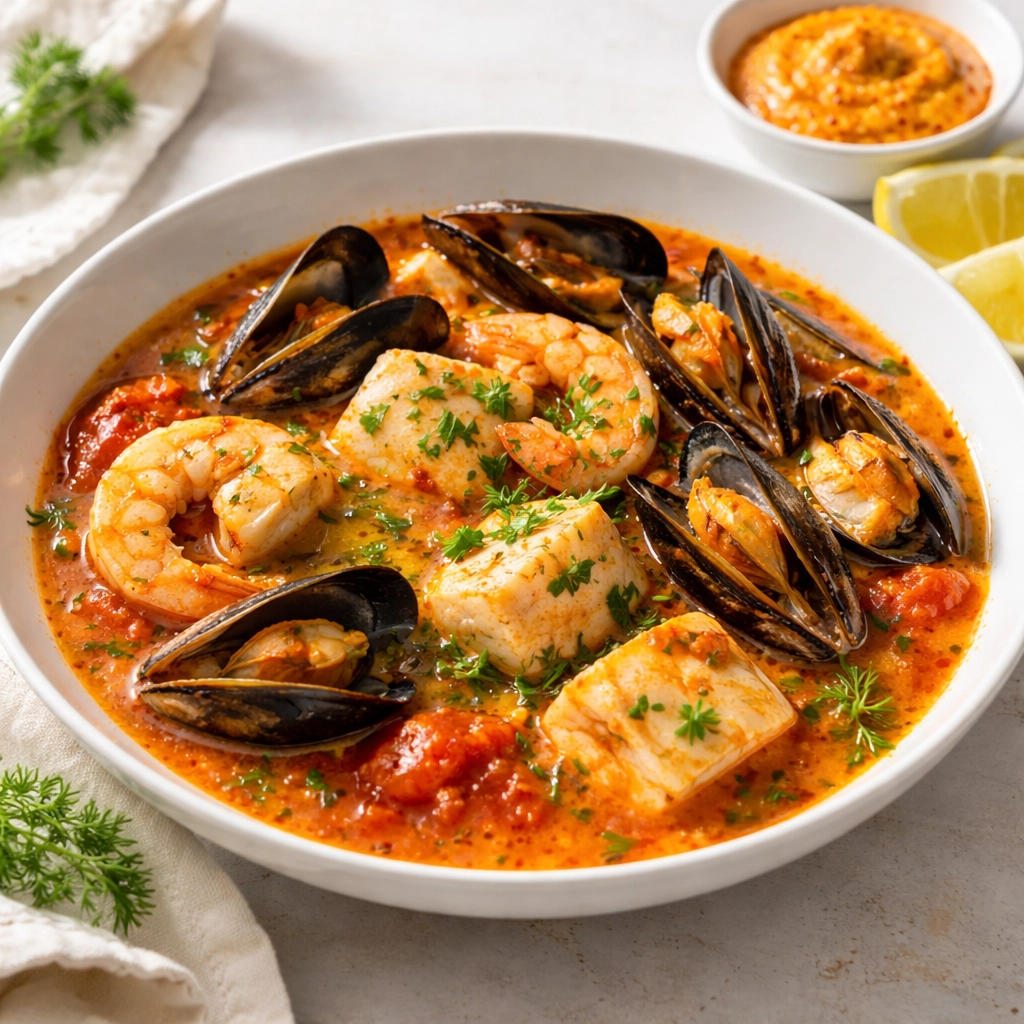
Bouillabaisse
This lighter bouillabaisse keeps the soul of the Provençal classic: saffron-scented broth, sweet fennel, tomato, and a generous mix of seafood. The light rouille adds smoky heat and richness without making the dish heavy, so the stew stays bright, clean, and deeply savory.
Safety Warning
Use only very fresh seafood. Scrub mussels thoroughly, discard any that are cracked or do not close when tapped before cooking, and discard any that do not open after cooking. If serving the rouille with raw egg yolk, use a pasteurized egg if available, especially for vulnerable diners.
Nutrition · per serving
Ingredients
30 itemsFor the broth
For the seafood
For the light rouille
To finish
Tips
- •Use a firm white fish such as cod, hake, monkfish, or pollock; delicate fish can fall apart in the broth.
- •For the cleanest flavour, add seafood in stages exactly as written so each type reaches doneness at the same time.
- •If you prefer, blend half the broth base before adding the seafood for a slightly thicker, more restaurant-style texture.
- •Because this is a lowfat version, the rouille is intentionally lighter than traditional versions but still gives the classic garlic-chilli-saffron effect.
- •Serve with extra toasted bread if desired, but it is not included in the nutrition estimate.
Steps
- 1
Prepare all ingredients before you start: slice the onion and fennel, finely slice the garlic, dice the tomato, cut the fish into large bite-size pieces, peel and devein the prawns if needed, and scrub and debeard the mussels. Discard any mussels that are cracked or that stay open when tapped firmly. Warm serving bowls if possible.
120 g onion, thinly sliced180 g fennel bulb, thinly sliced, fronds reserved4 cloves (16 g) garlic cloves, finely sliced250 g tomato, diced260 g firm white fish fillet, skinless, cut into 4 cm pieces120 g raw prawns, peeled and deveined300 g mussels, cleaned and debearded - 2
Make the broth base. In a wide pot over medium heat, add the olive oil, then the onion and fennel. Cook for 6-7 minutes, stirring often, until softened but not browned; gentle sweating keeps the broth sweet and clear-tasting. Add the sliced garlic and cook 30 seconds more.
10 ml olive oil120 g onion, thinly sliced180 g fennel bulb, thinly sliced, fronds reserved4 cloves (16 g) garlic cloves, finely sliced - 3
Stir in the diced tomato, tomato paste, orange zest, saffron threads, bay leaf, and thyme. Cook for 2 minutes to concentrate the tomato and bloom the saffron. Pour in the fish stock and water, add the salt and black pepper, then bring to a brisk simmer.
250 g tomato, diced15 g tomato paste2 strips orange zest0.2 g saffron threads1 bay leaf1 g dried thyme700 ml fish stock, low-salt200 ml water4 g fine sea salt1 g black pepper - 4
Simmer the broth uncovered for 18 minutes until the fennel is tender and the liquid is fragrant and slightly reduced. Taste and adjust seasoning lightly; the seafood will add salinity. Remove and discard the orange zest and bay leaf.
2 strips orange zest1 bay leaf - 5
While the broth simmers, make the light rouille. Soak the torn bread in the hot fish broth for 1 minute. In a tall container or small blender, combine the roasted red pepper, garlic clove, egg yolk, Dijon mustard, soaked bread with its broth, lemon juice, smoked paprika, and cayenne pepper. Blend smooth, then drizzle in the olive oil slowly until lightly thickened. It should be spoonable rather than stiff. Keep chilled until serving.
60 g roasted red pepper from jar, drained1 clove (4 g) garlic clove1 (18 g) egg yolk5 g Dijon mustard20 g whole-grain bread, crust removed, torn30 ml hot fish broth10 ml lemon juice1 g smoked paprika0.5 g cayenne pepper15 ml olive oil - 6
Bring the broth back to a lively simmer. Add the mussels, cover, and cook for 2 minutes. Add the fish pieces, poaching gently for 2 minutes; avoid boiling hard or the fish may break. Add the prawns and cook 1-2 minutes more, until the fish is just opaque, the prawns are pink and curled, and the mussels have opened. Discard any mussels that remain closed.
300 g mussels, cleaned and debearded260 g firm white fish fillet, skinless, cut into 4 cm pieces120 g raw prawns, peeled and deveined - 7
Let the stew stand off the heat for 2 minutes so the seafood finishes cooking gently and the flavours settle. This short rest helps keep the fish succulent.
- 8
Ladle the bouillabaisse into warm bowls, making sure each serving gets fish, prawns, and mussels. Top with chopped fennel fronds and parsley. Serve immediately with a spoonful of light rouille on the side and lemon wedges for squeezing over at the table.
5 g reserved fennel fronds, chopped6 g parsley, chopped2 wedges lemon wedges
Origin & History
Bouillabaisse comes from Provence, especially Marseille, where fishermen originally made it with unsold rockfish and aromatic Mediterranean ingredients. Over time it evolved from a humble broth into a celebrated regional dish, often accompanied by rouille and bread. Modern home versions commonly adapt the fish selection to what is fresh and available.
Do even more with Gourmate
Cook this recipe in Gourmate — your AI meal planning app.
Plan Meals
Weekly planner at a tap
Ask Questions
Chat with your AI chef
Adjust Recipe
Scale servings & swap ingredients
Cook Mode
Step-by-step guidance
Kitchen Timers
Built-in timers & alerts
Grocery List
Auto-generated shopping lists