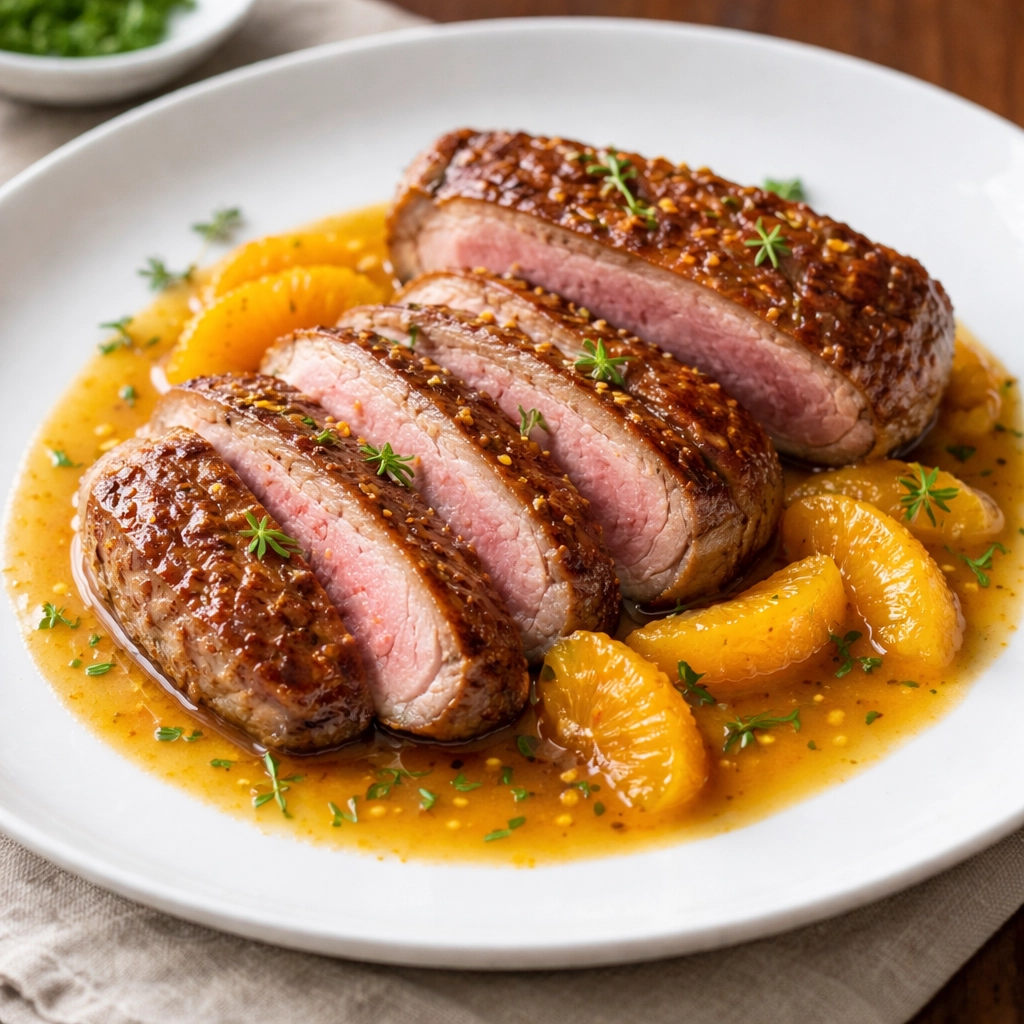
Canard a l'Orange
This version of Canard a l'Orange keeps the dish elegant and luxurious while trimming the sugar for a keto-friendly plate. Crisp, rendered duck skin and rosy meat are paired with a bright, silky orange and Grand Marnier reduction that tastes refined rather than sweet.
Nutrition · per serving
Ingredients
14 itemsCanard
Sauce a l'Orange
Finition
Tips
- •For the best keto balance, choose large duck breasts with a thick fat cap and use only a modest quantity of orange juice and segments, as written.
- •If your duck breasts are small, shorten the skin-side cooking by 2-3 minutes and check doneness early to avoid overcooking.
- •Rendered duck fat can be strained and refrigerated for roasting vegetables or cooking eggs.
- •A warm puree of celeriac or buttered green beans pairs well while keeping the meal low in carbohydrates.
Steps
- 1
Pat the duck breasts very dry with paper towels. Using a sharp knife, score the skin in a 1 cm crosshatch pattern, cutting through the fat but not into the meat. Season all over with salt and black pepper. Let stand at room temperature for 15 minutes while you prepare the sauce ingredients; this helps the meat cook more evenly and the skin render more efficiently.
2 x 280 g duck breasts, skin on5 g fine sea salt2 g freshly ground black pepper - 2
Prepare the orange components: finely zest the orange if not already done, juice enough orange to obtain 80 ml, and cut 60 g neat orange segments free from their membranes. Keep the segments aside for finishing so they stay intact.
2 g orange zest80 ml fresh orange juice60 g orange segments, membrane removed - 3
Place a cold heavy skillet over medium heat and lay in the duck breasts skin-side down. Starting in a cold pan is key for maximum fat rendering and crisp skin. Cook for 10-12 minutes, pressing lightly now and then so the skin makes full contact with the pan, until deep golden and much of the fat has rendered out. Pour off excess fat as needed, reserving only a thin film in the pan.
2 x 280 g duck breasts, skin on - 4
Turn the duck breasts and cook flesh-side down for 2 minutes. Reduce the heat if the fond threatens to burn. Transfer the duck to a rack or warm plate, skin-side up, and rest for 8 minutes; for medium-rare, the internal temperature should be about 54-57 C before resting and about 57-60 C after resting.
2 x 280 g duck breasts, skin on - 5
Pour off all but 1 tablespoon of duck fat from the skillet. Add the minced shallot and 25 g butter, then sweat over medium-low heat for 1-2 minutes until translucent but not browned. Add the orange zest and thyme sprigs and cook for 20 seconds to release their aroma.
40 g shallot, very finely minced25 g unsalted butter2 g orange zest2 sprigs fresh thyme - 6
Take the pan briefly off the heat, add the Grand Marnier, then return to medium heat and simmer until nearly evaporated. Add the orange juice, chicken stock, and powdered stevia. Reduce briskly for 5-7 minutes until the sauce is lightly syrupy and coats the back of a spoon. The reduction should be balanced, not jammy; if reduced too far, loosen with a spoonful of stock or water.
30 ml Grand Marnier80 ml fresh orange juice120 ml chicken stock, unsalted1 g powdered stevia - 7
Lower the heat to very low. Remove the thyme sprigs, then whisk in the cold butter a little at a time to mount the sauce until glossy. Fold in the orange segments just long enough to warm through without breaking them.
2 sprigs fresh thyme15 g cold unsalted butter60 g orange segments, membrane removed - 8
Slice the duck breasts on the bias into thick slices. Arrange on warm plates, spoon over the orange sauce and segments, and finish with fresh thyme leaves. Serve immediately while the skin is still crisp.
2 x 280 g duck breasts, skin on1 g fresh thyme leaves
Origin & History
Canard a l'Orange is one of the most famous preparations in the French repertoire, though sweet-and-sour duck with citrus has roots reaching back through earlier European court cooking. The modern French version became especially associated with classic restaurant dining, where crisp duck and a glossy orange sauce showcase careful sauce work and precise cooking.
Do even more with Gourmate
Cook this recipe in Gourmate — your AI meal planning app.
Plan Meals
Weekly planner at a tap
Ask Questions
Chat with your AI chef
Adjust Recipe
Scale servings & swap ingredients
Cook Mode
Step-by-step guidance
Kitchen Timers
Built-in timers & alerts
Grocery List
Auto-generated shopping lists