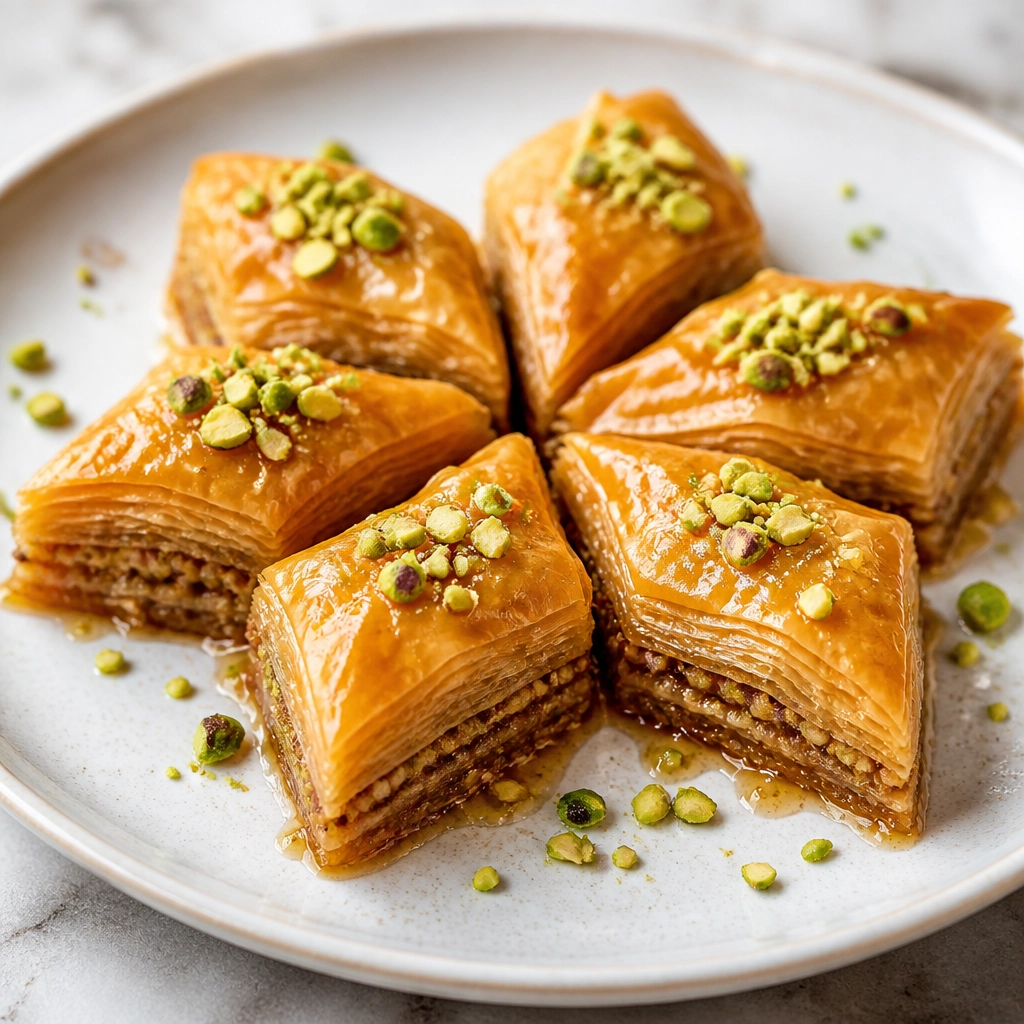
Baklava
This small-batch baklava is deeply crisp, buttery, and perfumed with honey, lemon, and a gentle touch of rose water. Layers of flaky filo encase a spiced walnut-pistachio filling, then soak up just enough syrup to become glossy and luscious without losing their crunch.
Nutrition · per serving
Ingredients
11 itemsNut filling
Pastry layers
Rose honey syrup
To finish
Tips
- •For the best texture, pour warm syrup over hot baklava; cold syrup can make the layers heavy, while boiling syrup may soften the pastry too much.
- •If your filo sheets are large, stack and cut them together to the size of the pan before assembly for neat layers.
- •A metal pan gives the crispest base, but ceramic works well if preheated briefly in the oven.
- •This small-batch version is intentionally rich; serve with strong Turkish tea or unsweetened coffee.
Steps
- 1
Preheat the oven to 180°C conventional / 160°C fan. Lightly brush a small baking dish or loaf tin (about 15 x 10 cm) with a little of the melted butter. Keep the filo covered with a barely damp towel while you work so it does not dry out and crack.
60 g unsalted butter, melted6 sheets (about 120 g) filo pastry - 2
Make the filling by mixing the walnuts, pistachios, cinnamon, and salt in a bowl. Chop the nuts fairly fine so the layers compact neatly, but do not grind them to a paste.
80 g walnuts, finely chopped30 g pistachios, finely chopped1 tsp ground cinnamon1 pinch fine salt - 3
Trim the filo sheets if needed to fit your dish. Lay in 2 sheets of filo, brushing each sheet lightly but fully with melted butter before adding the next. Scatter over half of the nut filling in an even layer, reaching the corners without packing it down too hard.
6 sheets (about 120 g) filo pastry60 g unsalted butter, melted80 g walnuts, finely chopped30 g pistachios, finely chopped1 tsp ground cinnamon1 pinch fine salt - 4
Add 2 more buttered filo sheets, then spread over the remaining nut filling evenly. Finish with the last 2 filo sheets, brushing each with butter, and generously butter the top surface so it bakes deeply golden and crisp.
6 sheets (about 120 g) filo pastry60 g unsalted butter, melted80 g walnuts, finely chopped30 g pistachios, finely chopped1 tsp ground cinnamon1 pinch fine salt - 5
Using a very sharp knife, cut the baklava all the way through into 4 to 6 small diamonds or rectangles before baking. This prevents the delicate top from shattering later and helps the syrup penetrate evenly.
- 6
Bake for 28-32 minutes, until the top is evenly golden brown and the edges are crisp. If it colors too quickly, loosely cover with foil for the final minutes; underbaked baklava will soften once syruped.
- 7
While the baklava bakes, make the syrup: combine the honey, water, and lemon juice in a small saucepan. Bring to a gentle simmer for 3-4 minutes, stirring just until smooth. Remove from the heat and stir in the rose water. The syrup should be fluid, lightly thickened, and fragrant rather than sticky.
90 g honey60 ml water1 tbsp lemon juice1 tsp rose water - 8
When the baklava comes out of the oven, immediately spoon the warm syrup evenly over the hot pastry, aiming into the cut lines and corners. You should hear a light sizzle. Let it rest for 15 minutes so the layers absorb the syrup while staying crisp on top.
90 g honey60 ml water1 tbsp lemon juice1 tsp rose water - 9
Finish with the chopped pistachios and serve slightly warm or at room temperature. For the cleanest layers, use the original cut lines to separate the pieces after resting.
10 g pistachios, finely chopped
Origin & History
Baklava is a celebrated layered pastry of the former Ottoman world, especially associated with Turkish confectionery traditions. While many regional versions use pistachios exclusively, walnuts are also widely used in home-style baklava. Rose-scented syrup is a classic aromatic variation that complements the buttery pastry and nuts.
Do even more with Gourmate
Cook this recipe in Gourmate — your AI meal planning app.
Plan Meals
Weekly planner at a tap
Ask Questions
Chat with your AI chef
Adjust Recipe
Scale servings & swap ingredients
Cook Mode
Step-by-step guidance
Kitchen Timers
Built-in timers & alerts
Grocery List
Auto-generated shopping lists