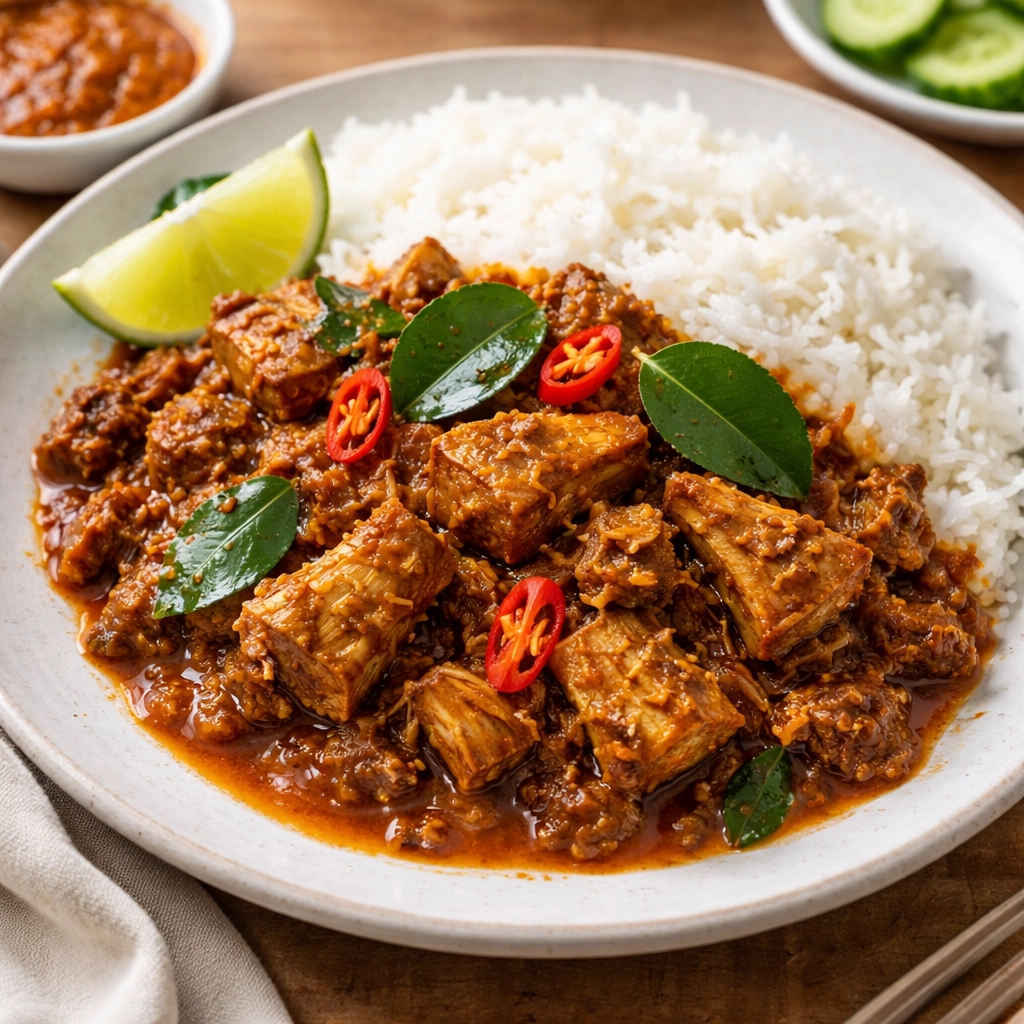
Rendang Nangka
This jackfruit rendang is rich, dark, and intensely aromatic, with layers of lemongrass, galangal, chili, and kaffir lime simmered into coconut milk until thick and glossy. The young jackfruit absorbs the spice paste beautifully, creating a deeply savory vegan dish with the concentrated, clingy finish that makes rendang so irresistible.
Nutrition · per serving
Ingredients
22 itemsBumbu halus
Kuah rendang
Penyelesaian
Tips
- •Young green jackfruit in brine or water is essential; avoid ripe sweet jackfruit, which is unsuitable for rendang.
- •A wide pan speeds reduction and makes it realistic to achieve a deeply flavored rendang within 60 minutes.
- •Kerisik is traditional in some regional styles and adds roasted coconut depth; if omitted, cook the rendang a few minutes longer for similar concentration.
- •This dish tastes even better after a few hours or the next day, once the spices fully settle into the jackfruit.
- •Serve with plain steamed rice, cucumber slices, and sambal for contrast.
Steps
- 1
Prepare the aromatics for the spice paste: roughly slice the shallots, garlic, chilies, turmeric, galangal, and ginger so they blend evenly. Trim the tough core end from the lemongrass and bruise the stalks with the back of a knife to release their oils. If the jackfruit pieces are large, tear or cut them into chunky bite-size shreds; this helps them absorb the sauce and mimic the fibrous texture typical of slow-cooked rendang.
80 g shallots20 g garlic30 g red chilies5 g bird's eye chilies15 g fresh turmeric20 g galangal10 g ginger2 stalks (about 40 g), bruised lemongrass stalks400 g young green jackfruit, drained - 2
Blend the spice paste. In a small blender or mortar, process the shallots, garlic, chilies, turmeric, galangal, ginger, ground coriander, ground cumin, and salt into a mostly smooth paste. If needed, add 1-2 teaspoons of water from the measured water to get it moving, but keep it as thick as possible so it fries rather than steams.
80 g shallots20 g garlic30 g red chilies5 g bird's eye chilies15 g fresh turmeric20 g galangal10 g ginger2 g ground coriander1 g ground cumin6 g fine sea salt120 ml water - 3
Fry the spice paste. Heat the oil in a wide sauté pan or shallow pot over medium heat. Add the spice paste and cook for 6-8 minutes, stirring often, until it darkens slightly, smells sweet and fragrant, and the oil begins to separate around the edges. This step is crucial: properly fried bumbu gives the rendang depth and prevents a raw taste.
20 ml neutral oil80 g shallots20 g garlic30 g red chilies5 g bird's eye chilies15 g fresh turmeric20 g galangal10 g ginger2 g ground coriander1 g ground cumin6 g fine sea salt - 4
Add the whole aromatics and jackfruit. Stir in the bruised lemongrass, kaffir lime leaves, cinnamon stick, and star anise for 1 minute until fragrant, then add the jackfruit and toss well so every piece is coated in the fried paste.
2 stalks (about 40 g), bruised lemongrass stalks6 leaves kaffir lime leaves1 small stick (3 g) cinnamon stick1 whole star anise400 g young green jackfruit, drained - 5
Build the braise. Pour in the coconut milk and water, then stir in the palm sugar and tamarind paste until dissolved. Bring to a steady simmer over medium heat, then reduce to medium-low. Cook uncovered for 25-30 minutes, stirring every few minutes and scraping the base, until the liquid reduces significantly and the coconut begins to thicken and look glossy. The jackfruit should be tender and well seasoned throughout.
400 ml coconut milk120 ml water12 g palm sugar8 g tamarind paste - 6
Finish in true rendang style. Continue cooking for 8-10 minutes, stirring more frequently as the sauce becomes very thick. Add the toasted grated coconut, if using, to help the mixture turn deeper, drier, and nuttier. The rendang is ready when the coconut oil visibly separates, the paste clings tightly to the jackfruit, and the pan looks nearly dry but not scorched.
20 g toasted grated coconut (kerisik), optional - 7
Balance and rest briefly. Remove the cinnamon, star anise, and lemongrass if desired for easier serving. Stir in the lime juice, taste, and adjust salt or acidity if needed. Let the rendang sit off the heat for 5 minutes so the oil reabsorbs slightly and the flavors settle before serving.
10 ml lime juice - 8
Serve hot with steamed rice or nasi kunyit, spooning over every bit of the concentrated sauce. For best texture, pull apart a few pieces of jackfruit with a fork just before plating so the edges catch more of the rich spice paste.
Origin & History
Rendang originates from Minangkabau cuisine in West Sumatra and is one of Indonesia’s most celebrated ceremonial dishes. Traditionally made by slowly reducing coconut milk with spices around beef, the technique has inspired many regional and modern adaptations, including plant-based versions using nangka muda, or young jackfruit.
Do even more with Gourmate
Cook this recipe in Gourmate — your AI meal planning app.
Plan Meals
Weekly planner at a tap
Ask Questions
Chat with your AI chef
Adjust Recipe
Scale servings & swap ingredients
Cook Mode
Step-by-step guidance
Kitchen Timers
Built-in timers & alerts
Grocery List
Auto-generated shopping lists