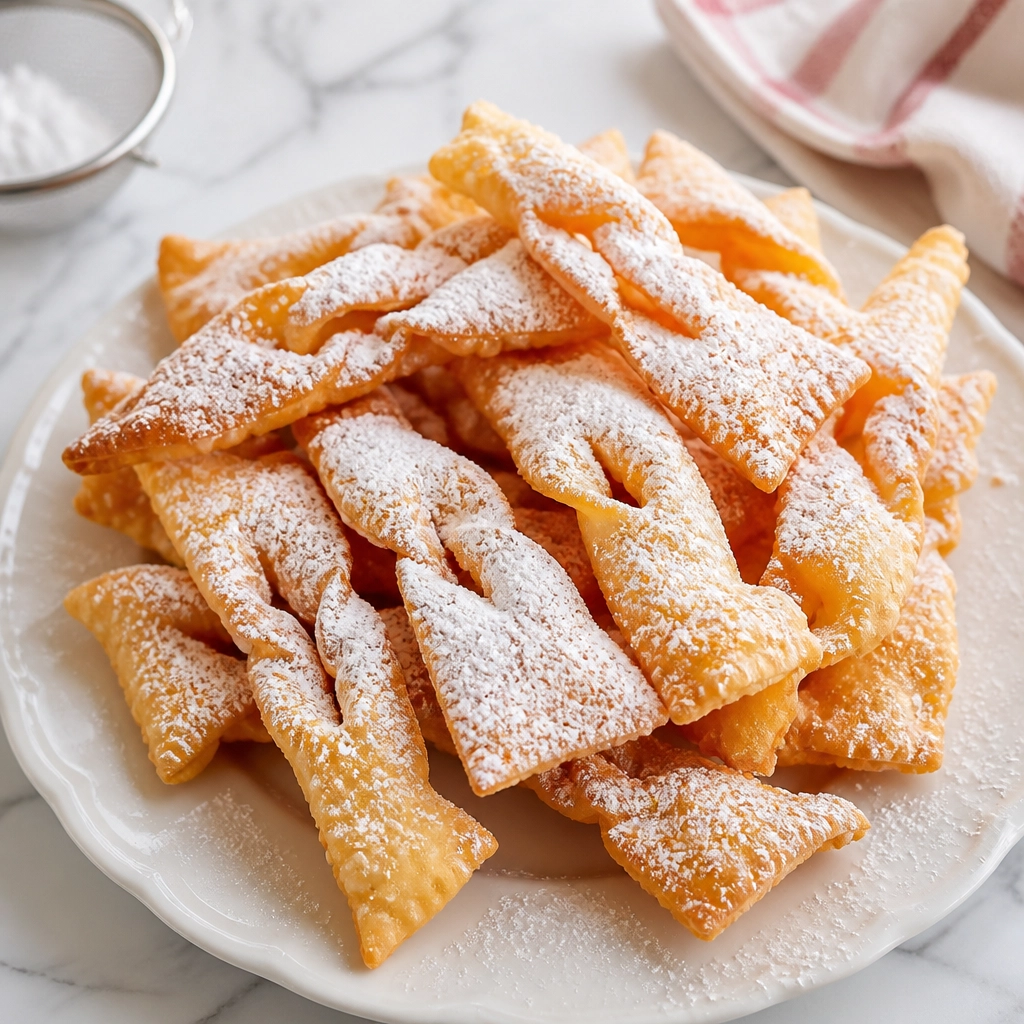
Faworki
Faworki are delicate fried pastry twists that shatter lightly when bitten, with a crisp, bubbly surface and a gentle richness from egg yolks, butter, and sour cream. Finished with a snowy dusting of icing sugar, they are airy, elegant, and irresistibly snackable.
Nutrition · per serving
Ingredients
9 itemsCiasto
Do smażenia i wykończenia
Tips
- •Roll the dough as thinly as possible; thick dough makes heavy, less delicate faworki.
- •The brief pounding step is traditional and helps create the signature bubbles during frying.
- •A small pan reduces the amount of oil needed, but keep enough depth for the pastries to float freely.
- •Faworki are best eaten the day they are made, ideally within a few hours of frying.
Steps
- 1
Prepare the dough: sift the plain flour onto a work surface or into a bowl, then add the egg yolks, sour cream, melted cooled butter, caster sugar, rum, and salt. Mix until a shaggy dough forms, then knead for 5-6 minutes until smooth and fairly firm. If it feels sticky, dust very lightly with flour, but keep the dough compact rather than soft.
120 g plain flour2 egg yolks30 g sour cream15 g unsalted butter, melted and cooled10 g caster sugar10 ml rum1 pinch fine salt - 2
Beat and rest the dough: using a rolling pin, pound and fold the dough repeatedly for 3-4 minutes to incorporate air; this helps create the characteristic blistered, crisp texture. Wrap or cover and let it rest for 10 minutes so it relaxes and rolls out more easily.
- 3
Roll and shape the faworki: on a lightly floured surface, roll the dough very thinly, about 1-2 mm thick. Cut into strips roughly 3 cm wide and 10 cm long. Cut a 3 cm slit in the centre of each strip and pull one end through the slit to form a twist. Keep the shaped pieces covered with a towel so they do not dry out before frying.
- 4
Heat the oil in a small deep pan to 175-180°C. Fry the twists in batches for 30-45 seconds per side until pale golden and puffed; they should colour lightly, not deeply brown. Turn once with tongs or a spider, and avoid overcrowding so the oil temperature stays steady.
500 ml neutral frying oil - 5
Drain and finish: transfer the fried faworki to paper towel or a rack and cool for 2-3 minutes until no longer greasy. Dust generously with icing sugar and serve while fresh and crisp.
15 g icing sugar
Origin & History
Faworki, also known in some regions as chrust, are a classic Polish carnival pastry traditionally made for Tłusty Czwartek and the period before Lent. Their light, ribbon-like shape and delicate crunch have made them a festive favourite in Polish homes for generations.
Do even more with Gourmate
Cook this recipe in Gourmate — your AI meal planning app.
Plan Meals
Weekly planner at a tap
Ask Questions
Chat with your AI chef
Adjust Recipe
Scale servings & swap ingredients
Cook Mode
Step-by-step guidance
Kitchen Timers
Built-in timers & alerts
Grocery List
Auto-generated shopping lists