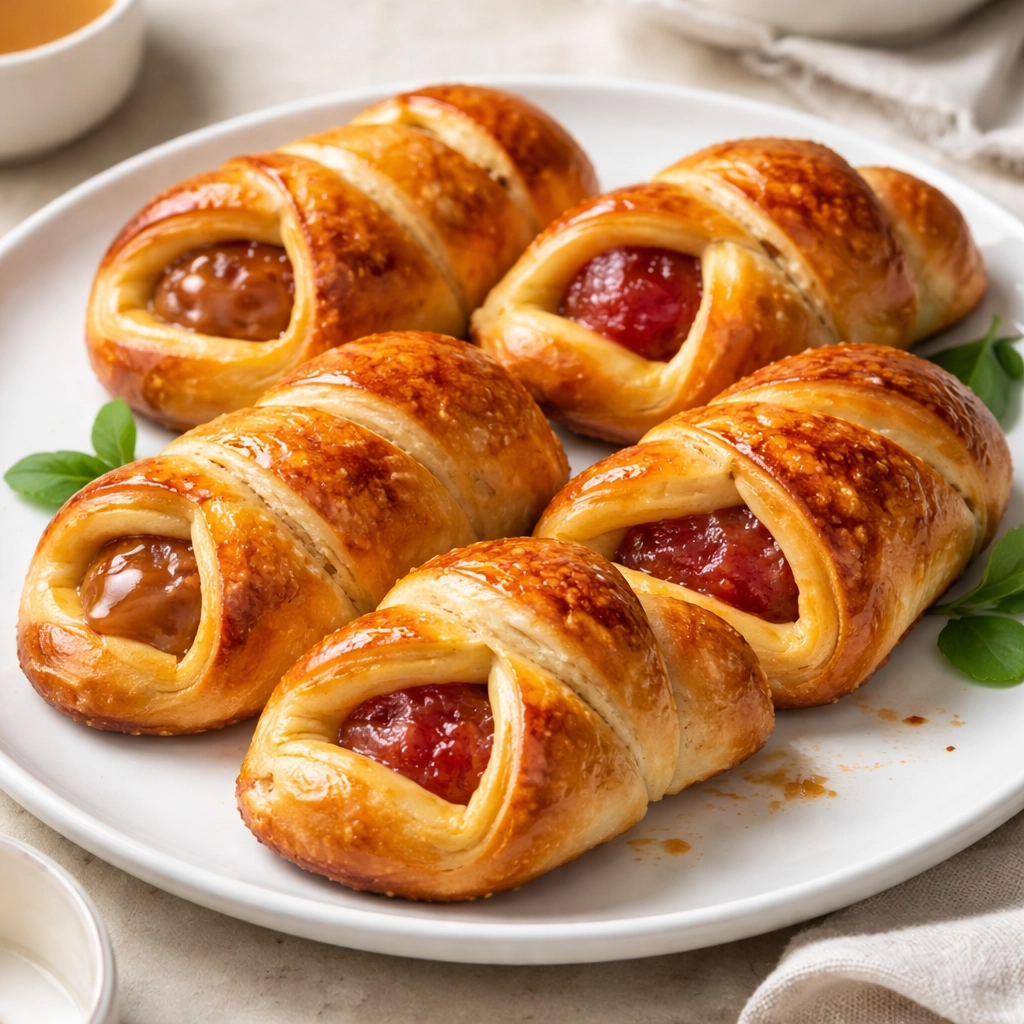
Facturas
These small facturas are tender, lightly sweet, and richly buttery, with a soft crumb and glossy finish. Filled with dulce de leche and quince paste, they deliver the comforting flavour of a traditional Argentine panadería in a compact homemade batch.
Nutrition · per serving
Ingredients
15 itemsMasa enriquecida
Rellenos
Glaseado y acabado
Tips
- •This is a small-batch, time-conscious bakery-style version designed for 2 servings; traditional facturas often use laminated or heavily enriched dough and require longer fermentation.
- •If you can spare more time, a 45-60 minute first rise will improve flavour and texture noticeably.
- •Firm dulce de leche repostero works better than soft table dulce de leche because it stays in place during baking.
- •For neat shaping, chill the filled pastries for 5 minutes before proofing if your kitchen is very warm.
Steps
- 1
Preheat the oven to 200°C conventional / 180°C fan. Line a tray with baking paper. In a bowl, combine the flour, sugar, salt, and instant yeast, keeping the salt and yeast on opposite sides at first. Add the lukewarm milk, egg, vanilla, and lemon zest, then mix until a shaggy dough forms.
250 g strong white flour30 g caster sugar4 g fine salt5 g instant yeast90 ml whole milk, lukewarm1 medium egg2 ml vanilla extract1 tsp lemon zest - 2
Knead the dough for 5-6 minutes until it begins to smooth out, then add the softened butter a little at a time. Continue kneading for 6-8 minutes more until the dough is silky, elastic, and only lightly tacky. A properly developed dough should stretch thinly without tearing quickly.
40 g unsalted butter, softened - 3
Cover the dough and let it rest for 20 minutes at warm room temperature. This short rest is enough here because the pastries are kept small to fit the time limit.
- 4
Meanwhile, cut the quince paste into 6 small batons or cubes for easy filling. If the dulce de leche is loose, chill it briefly so it pipes or spoons more cleanly.
70 g quince paste70 g dulce de leche, firm pastry style if possible - 5
Roll the dough on a lightly floured surface into a rectangle about 24 x 18 cm and roughly 5 mm thick. Cut it into 6 equal rectangles. For half of them, place a small line or spoonful of dulce de leche in the center; for the others, place quince paste. Fold or shape into classic small facturas forms such as simple rolls or envelopes, pressing the seams firmly so the filling stays enclosed but not compressed out.
250 g strong white flour70 g dulce de leche, firm pastry style if possible70 g quince paste - 6
Arrange the pastries on the lined tray with space between them. Cover loosely and proof for 15 minutes, until slightly puffed; they will not fully double in this shortened method, but they should look lighter and less dense.
- 7
Whisk the egg yolk with the milk and brush the tops lightly for even colour and shine. Avoid brushing heavy amounts onto cut edges, which can inhibit oven spring.
1 egg yolk10 ml whole milk - 8
Bake for 14-16 minutes until golden brown and the bottoms are cooked through. Rotate the tray halfway if your oven colours unevenly. The pastries should feel light for their size and the exposed dough at seams should no longer look raw.
- 9
While the facturas bake, heat the apricot jam with the water just until loosened, then strain if needed for a smooth glaze.
20 g apricot jam10 ml water - 10
Brush the hot pastries with the warm glaze and let them sit for 5 minutes before serving. Serve slightly warm, when the dough is tender and the fillings are soft but not runny.
20 g apricot jam10 ml water
Origin & History
Facturas are classic Argentine bakery pastries with roots in European immigrant baking traditions, especially from Spain, Italy, and Central Europe. Over time they became deeply woven into Argentine daily life, commonly eaten with coffee or mate and often filled with dulce de leche, quince paste, or pastry cream.
Do even more with Gourmate
Cook this recipe in Gourmate — your AI meal planning app.
Plan Meals
Weekly planner at a tap
Ask Questions
Chat with your AI chef
Adjust Recipe
Scale servings & swap ingredients
Cook Mode
Step-by-step guidance
Kitchen Timers
Built-in timers & alerts
Grocery List
Auto-generated shopping lists