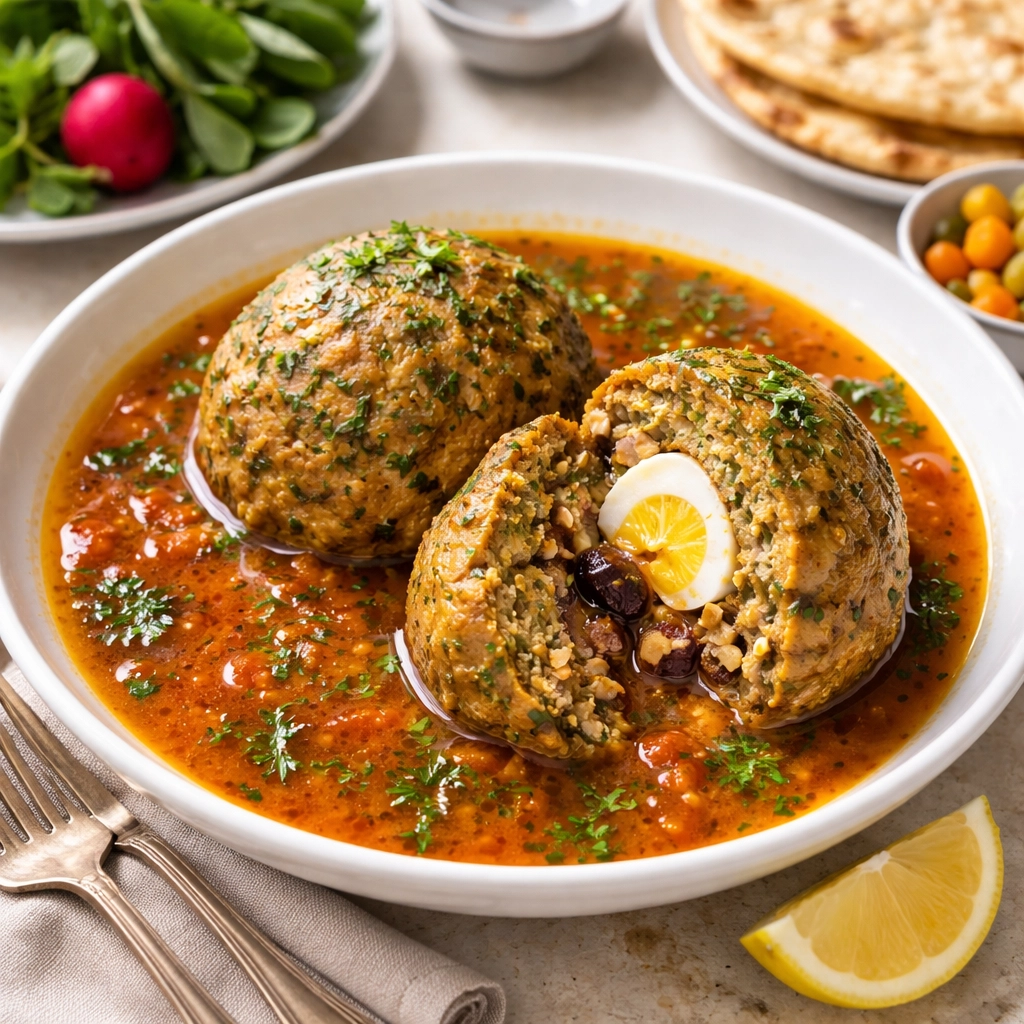
Kufteh Tabrizi
Kufteh Tabrizi is a giant, tender lamb meatball scented with herbs and turmeric, braised gently in a light tomato-onion broth. When cut open, it reveals a rich center of egg, sweet-tart dried plums, and walnuts, making each bite hearty, fragrant, and deeply comforting.
Nutrition · per serving
Ingredients
22 itemsKufteh mixture
Stuffing
Braising broth
Tips
- •Traditional Kufteh Tabrizi is often made as one very large meatball, but for 2 servings, two individual large kufteh are more practical and cook more evenly within 60 minutes.
- •If the meat mixture feels loose, chill it for 10 minutes before shaping; if still too wet, knead a little longer so the onion, rice, and proteins bind properly.
- •Keep the broth at a gentle simmer only. A rolling boil is the most common cause of cracked or broken kufteh.
- •Serve with flatbread, torshi, fresh herbs, or a simple sabzi khordan platter for a classic presentation.
Steps
- 1
Rinse the short-grain rice until the water runs mostly clear. Simmer it in plenty of water for 8-10 minutes until partly cooked but still firm in the center, then drain well and spread it out briefly so excess steam evaporates. If your split yellow peas are not already cooked, simmer them until tender, drain thoroughly, and lightly mash them.
60 g short-grain rice60 g split yellow peas, cooked and lightly mashed - 2
Place the hard-boiled egg in a bowl of cold water for a minute if still warm, then pat dry. Keep the dried plums and chopped walnuts ready beside your work area so the stuffing can be inserted quickly once the meat mixture is shaped.
1 medium egg, hard-boiled and peeled4 pieces (about 32 g) dried plums20 g walnuts, roughly chopped - 3
In a wide bowl, combine the ground lamb, grated onion, par-cooked rice, mashed split yellow peas, parsley, cilantro, dill, raw egg, turmeric, salt, and black pepper. Knead the mixture firmly by hand for 4-5 minutes until sticky and cohesive; this is essential for a kufteh that holds together rather than cracking in the broth.
300 g ground lamb120 g yellow onion, finely grated60 g short-grain rice60 g split yellow peas, cooked and lightly mashed20 g fresh parsley, finely chopped15 g fresh cilantro, finely chopped10 g fresh dill, finely chopped1 medium egg1 tsp turmeric1 tsp fine salt1/2 tsp black pepper - 4
Heat the oil in a wide, deep pan or shallow pot over medium heat. Add the sliced onion and cook for 5-6 minutes until softened and lightly golden. Stir in the tomato paste and turmeric and cook for 1 minute to remove the raw taste, then season with salt and pepper. Pour in the water and bring to a gentle simmer; the broth should be flavorful before the meatball goes in.
15 ml neutral oil100 g yellow onion, thinly sliced20 g tomato paste1/2 tsp turmeric1 tsp fine salt1/4 tsp black pepper700 ml water - 5
With wet hands, divide the meat mixture into two equal portions. Flatten one portion into a thick disc in your palm, place half the hard-boiled egg, 2 dried plums, and half the walnuts in the center, then bring the meat up and around the filling and seal very carefully. Roll gently into a smooth large ball without compressing so hard that it becomes dense. Repeat with the second portion using the remaining filling.
1 medium egg, hard-boiled and peeled4 pieces (about 32 g) dried plums20 g walnuts, roughly chopped - 6
Lower the heat so the broth is at a very gentle simmer, not a boil. Carefully place the kufteh into the pan. For the first 8-10 minutes, spoon some hot broth over the tops rather than moving them; this helps the exterior set. Once firm on the outside, cover partially and braise gently for 25-30 minutes, occasionally basting with broth. The kufteh are done when they feel firm, hold their shape, and the center reaches at least 71°C.
- 7
Sprinkle in the chopped parsley for the broth during the last 2 minutes of cooking. Turn off the heat and let the kufteh rest in the broth for 5 minutes so they settle and become easier to lift without breaking.
10 g fresh parsley, finely chopped - 8
Carefully transfer each kufteh to a shallow bowl and spoon over some of the oniony tomato broth. Serve hot, cutting open at the table to reveal the egg, plums, and walnuts inside.
Origin & History
Kufteh Tabrizi is a celebrated specialty of Tabriz in northwestern Iran and is one of the grand meatball dishes of Persian home cooking. It is known for its generous size and aromatic mixture of meat, rice, legumes, and herbs, often enclosing surprise fillings such as eggs, dried fruits, and nuts. The dish reflects the Persian love of layering savory, herbal, and sweet-tart flavors in a single festive preparation.
Do even more with Gourmate
Cook this recipe in Gourmate — your AI meal planning app.
Plan Meals
Weekly planner at a tap
Ask Questions
Chat with your AI chef
Adjust Recipe
Scale servings & swap ingredients
Cook Mode
Step-by-step guidance
Kitchen Timers
Built-in timers & alerts
Grocery List
Auto-generated shopping lists