Beghrir
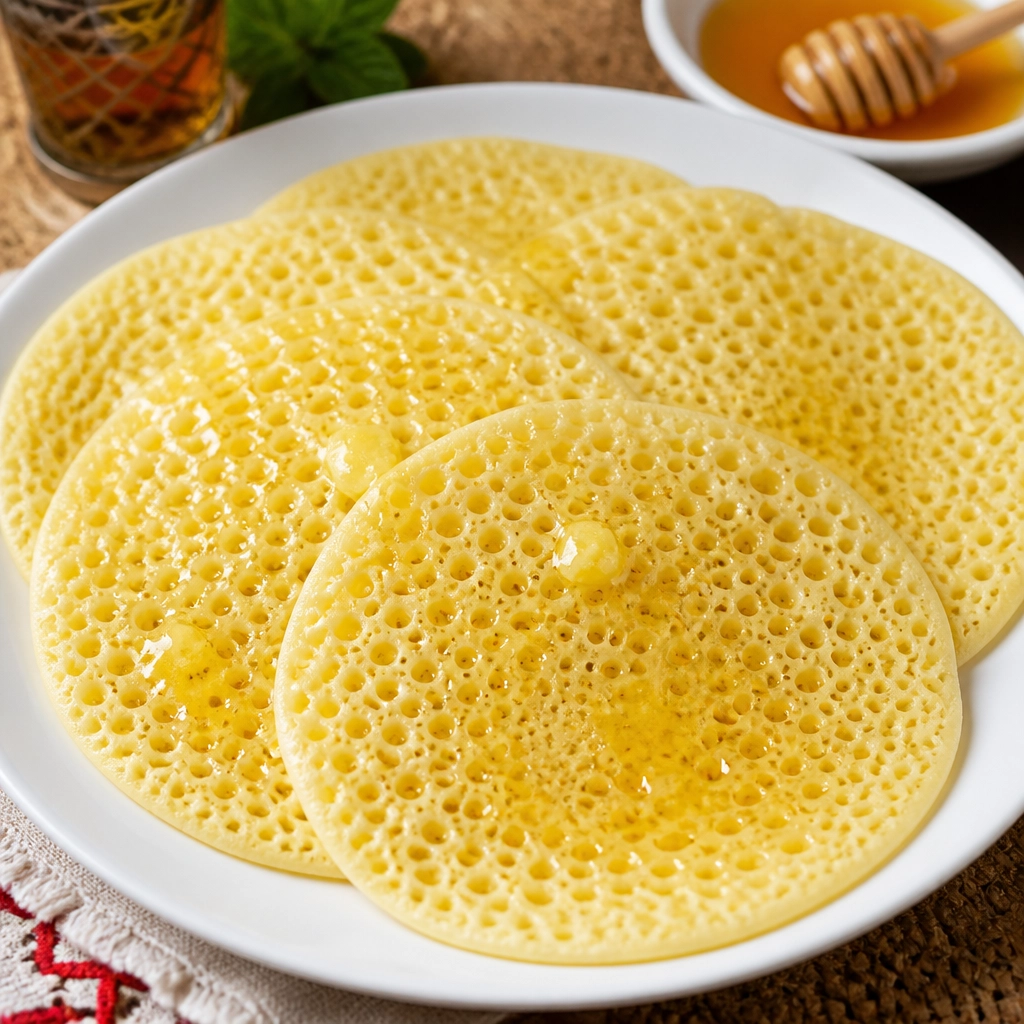
Beghrir are tender, spongy Moroccan pancakes with a delicate honeycomb surface that eagerly absorbs warm honey butter. Light, slightly chewy, and gently sweet, they make a comforting breakfast or teatime treat.
Nutrition · per serving
Ingredients
9 itemsBatter
Honey butter
Tips
- •If the batter thickens too much while standing, stir in 1-2 tablespoons of warm water.
- •A properly heated dry pan is key: too cool and few holes form; too hot and the bottom browns before the top sets.
- •Beghrir are often served for breakfast or with mint tea.
- •For best texture, serve as soon as possible after cooking.
Steps
- 1
Measure all ingredients. Put the fine semolina, plain flour, instant yeast, baking powder, and salt into a blender or mixing jug. Add the warm water and egg.
150 g fine semolina50 g plain flour4 g instant yeast5 g baking powder2 g salt375 ml warm water1 medium egg - 2
Blend for 30-45 seconds until completely smooth and slightly foamy. The batter should be thin, like heavy cream; blending helps create the characteristic tiny holes. Leave the batter to rest for 10 minutes so the semolina hydrates and the yeast starts working.
150 g fine semolina50 g plain flour4 g instant yeast5 g baking powder2 g salt375 ml warm water1 medium egg - 3
While the batter rests, gently melt the butter with the honey in a small saucepan or microwave-safe bowl. Stir until fluid and combined; keep warm for serving.
40 g honey25 g unsalted butter - 4
Heat a non-stick skillet or crêpe pan over medium heat. Stir the batter once very gently. Pour a small ladleful of batter into the dry pan to make a pancake about 12-14 cm wide. Cook on one side only until the surface is full of holes and completely set, about 1 1/2 to 2 minutes. Do not flip and do not grease the pan, or the holes will not form properly.
150 g fine semolina50 g plain flour4 g instant yeast5 g baking powder2 g salt375 ml warm water1 medium egg - 5
Repeat with the remaining batter, adjusting the heat as needed so the pancakes set without browning too much underneath. Stack them loosely on a clean towel to keep soft.
150 g fine semolina50 g plain flour4 g instant yeast5 g baking powder2 g salt375 ml warm water1 medium egg - 6
Serve the beghrir warm, spooning the honey butter generously over the top so it soaks into the holes.
40 g honey25 g unsalted butter
Origin & History
Beghrir is a classic Moroccan semolina pancake known as the 'thousand-hole pancake' because of its porous surface. It is especially popular at breakfast and during Ramadan, when it is commonly served with a warm mixture of honey and butter. The dish reflects North African reliance on semolina and griddle breads in everyday cooking.
Do even more with Gourmate
Cook this recipe in Gourmate — your AI meal planning app.
Plan Meals
Weekly planner at a tap
Ask Questions
Chat with your AI chef
Adjust Recipe
Scale servings & swap ingredients
Cook Mode
Step-by-step guidance
Kitchen Timers
Built-in timers & alerts
Grocery List
Auto-generated shopping lists