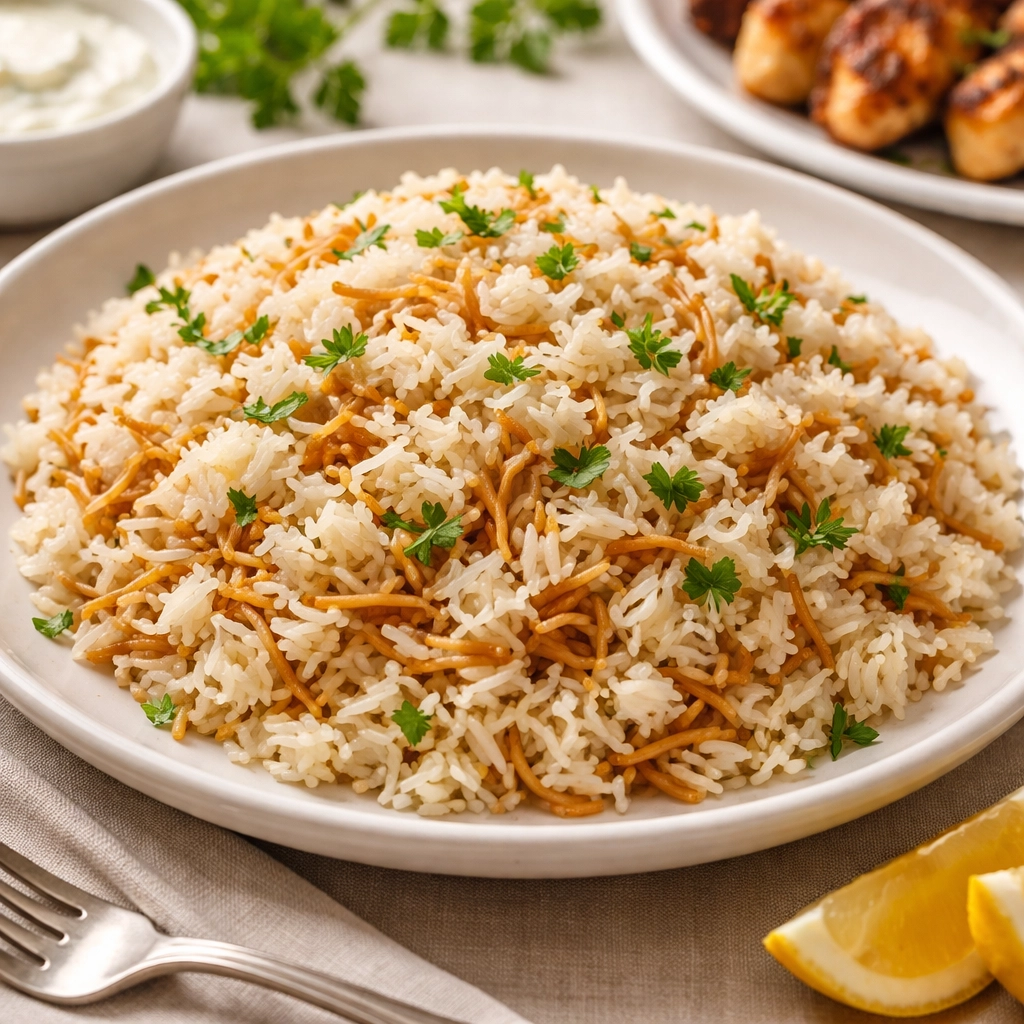
Şehriyeli Pilav
Şehriyeli Pilav is a simple, comforting Turkish rice pilaf with separate, buttery grains and little threads of deeply toasted vermicelli throughout. Cooked in chicken broth, it is savory, fragrant, and versatile enough to accompany everything from grilled meats to vegetable dishes.
Nutrition · per serving
Ingredients
6 itemsPilav base
To finish
Tips
- •For the most authentic texture, use Turkish baldo rice if available; if not, long-grain white rice works well for a beginner-friendly version.
- •Keep the lid closed during cooking and resting; trapped steam is essential for properly cooked pilav.
- •This pairs especially well with grilled chicken, kofte, beans, or a tomato-cucumber salad.
Steps
- 1
Rinse the rice in several changes of cold water until the water runs mostly clear. Put it in a bowl, cover with the hot water, and let it soak for 10 minutes; this helps the grains cook up longer and less sticky. Drain very well before cooking so excess water does not throw off the liquid ratio.
180 g long-grain white rice1000 ml hot water - 2
Melt the butter in a medium saucepan or small pot over medium heat. Add the fine vermicelli and stir constantly for 2-3 minutes until evenly deep golden brown; lower the heat if it starts catching, because burnt vermicelli will make the whole pilav bitter.
30 g unsalted butter35 g fine vermicelli - 3
Add the drained rice and salt to the pot. Stir gently for 1-2 minutes to coat every grain in butter and toast the rice lightly without breaking it.
180 g long-grain white rice4 g salt - 4
Pour in the chicken broth carefully; it may sputter. Stir once, scraping the bottom so no vermicelli sticks, then bring to a full boil over medium-high heat.
360 ml chicken broth - 5
As soon as it boils, reduce to the lowest heat and cover tightly with a lid. Cook undisturbed for 12 minutes. The liquid should be absorbed and small steam holes should appear on the surface; if not, give it 1-2 more minutes.
- 6
Turn off the heat and let the pilav rest, covered, for 10 minutes. This resting stage finishes the steaming gently and keeps the grains separate.
- 7
Fluff the pilav with a fork, lifting rather than stirring so the grains stay intact. Serve hot as a side or light main.
Origin & History
Pilav is a cornerstone of Turkish home cooking and appears at everyday meals as well as festive tables. The şehriyeli version, made with toasted vermicelli, is one of the most common styles, valued for its nutty flavor and elegant appearance. It reflects the Ottoman-influenced pilaf tradition that spread widely across the region.
Do even more with Gourmate
Cook this recipe in Gourmate — your AI meal planning app.
Plan Meals
Weekly planner at a tap
Ask Questions
Chat with your AI chef
Adjust Recipe
Scale servings & swap ingredients
Cook Mode
Step-by-step guidance
Kitchen Timers
Built-in timers & alerts
Grocery List
Auto-generated shopping lists