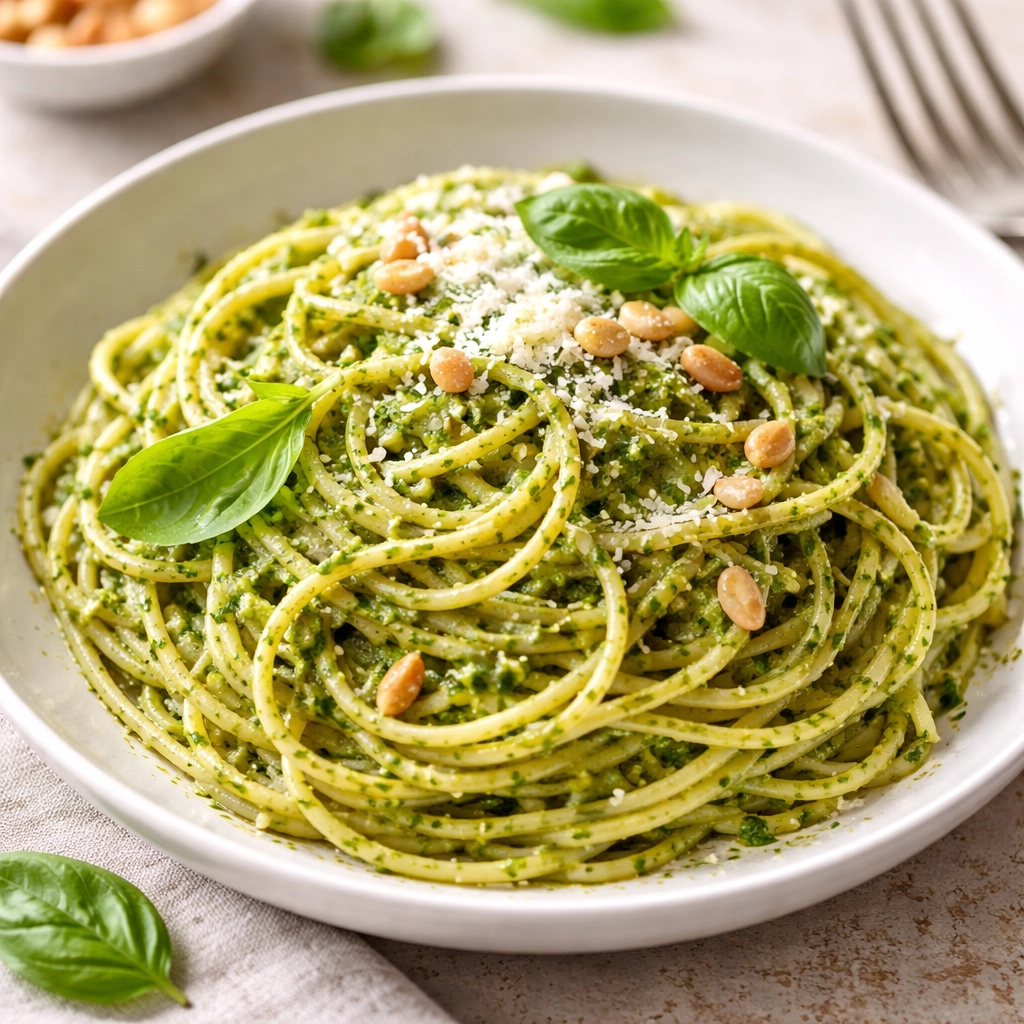
Pasta al Pesto
This classic Pasta al Pesto is bright, herbaceous, and richly savory, with sweet basil, nutty pine nuts, and aged cheese clinging to glossy strands of spaghetti. It is fast, deeply satisfying, and tastes freshest when served the moment it is tossed together.
Nutrition · per serving
Ingredients
13 itemsPer la pasta
Per il pesto
Per mantecare e servire
Tips
- •For a beginner-friendly version, a small food processor is the quickest and most reliable method.
- •Traditional Genoese pesto is not cooked; always toss it with pasta off the heat to preserve its fresh aroma and green color.
- •Linguine or trofie also work well if spaghetti is unavailable.
- •For a looser, silkier sauce, reserve a little more pasta water than listed and add it gradually.
Steps
- 1
Bring the water to a boil in a large pot. Salt it once boiling. Meanwhile, pick over the basil leaves and peel the garlic. If using a food processor, have all pesto ingredients ready beside it so the sauce comes together before the basil darkens.
2 litres water12 g fine salt50 g fresh basil leaves1 small clove garlic - 2
Add the spaghetti to the boiling water and cook until al dente according to the packet, usually 8-10 minutes. Stir in the first minute so it does not clump.
180 g dried spaghetti - 3
While the pasta cooks, make the pesto: in a mortar or small food processor, blend the garlic and pine nuts first, then add the basil, grated Parmesan, Pecorino Romano, and the ice cube. Drizzle in the olive oil and process just until mostly smooth. The ice helps keep the pesto bright green; avoid overprocessing, which can heat and dull the basil.
1 small clove garlic25 g pine nuts50 g fresh basil leaves35 g Parmesan, finely grated15 g Pecorino Romano, finely grated1 ice cube60 ml extra-virgin olive oil - 4
Just before draining the pasta, scoop out the pasta cooking water. Drain the spaghetti, but do not rinse it.
60 ml reserved pasta cooking water - 5
Return the hot pasta to the pot off the heat. Add the pesto, the reserved pasta cooking water, and the extra-virgin olive oil. Toss vigorously until the sauce lightly coats every strand and turns glossy. If it seems tight, add a splash more hot pasta water.
60 ml reserved pasta cooking water5 ml extra-virgin olive oil - 6
Divide between warm bowls and finish with the remaining Parmesan. Serve immediately while the pesto is vivid and fragrant.
10 g Parmesan, finely grated
Origin & History
Pasta al pesto is closely associated with Liguria, especially Genoa, where pesto alla Genovese developed from a tradition of pounding basil, pine nuts, cheese, garlic, and olive oil in a mortar. The sauce became a defining emblem of the region, prized for showcasing the intense fragrance of local basil and the simplicity of northern Italian cooking.
Do even more with Gourmate
Cook this recipe in Gourmate — your AI meal planning app.
Plan Meals
Weekly planner at a tap
Ask Questions
Chat with your AI chef
Adjust Recipe
Scale servings & swap ingredients
Cook Mode
Step-by-step guidance
Kitchen Timers
Built-in timers & alerts
Grocery List
Auto-generated shopping lists