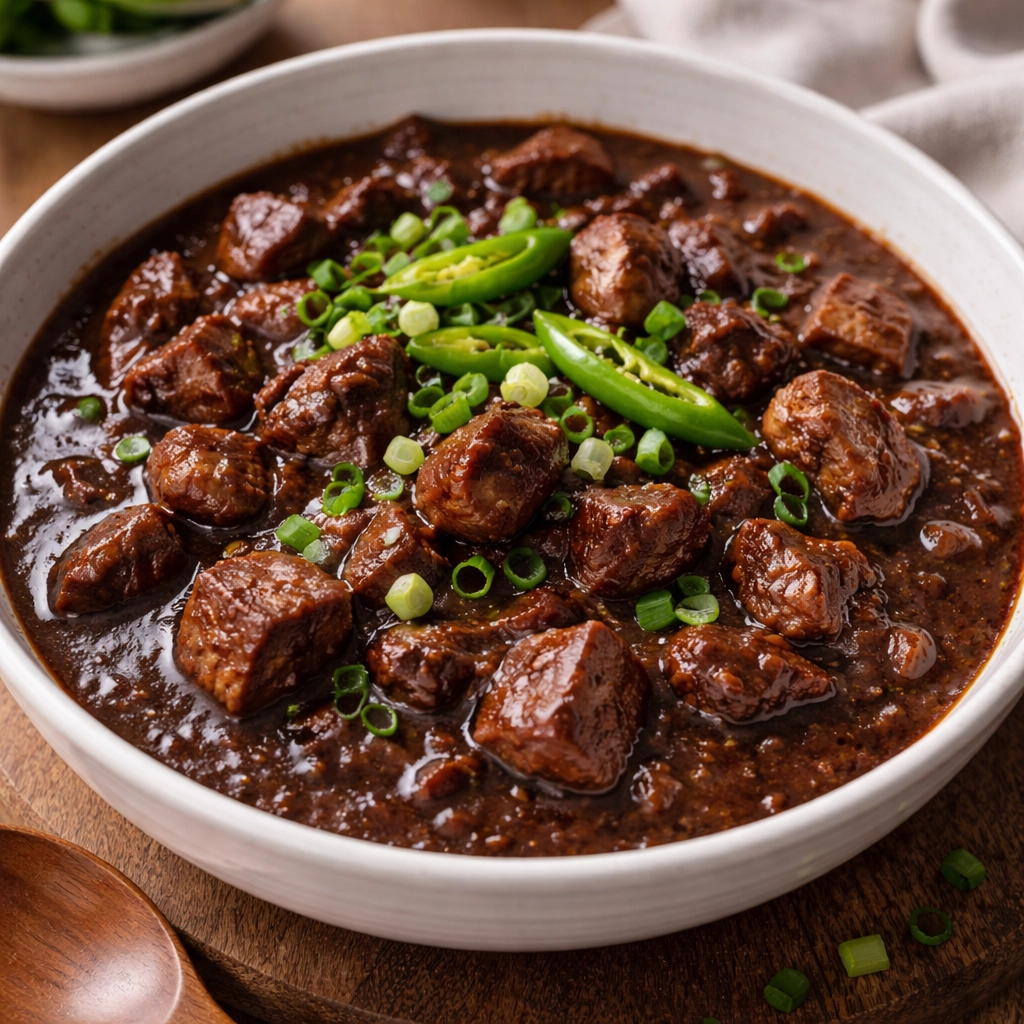
Dinuguan
Dinuguan is a rich, tangy, peppery pork stew with a deep savory flavor and a glossy, dark sauce thickened with pork blood. This version is balanced with ginger, garlic, chili, and vinegar for a bold, warming dish that is naturally low in carbohydrates and well suited to a keto meal.
Safety Warning
Use only food-grade pork blood from a reputable source, keep it refrigerated, and cook the stew thoroughly. Pork and blood are high-risk perishable ingredients and should not be left at room temperature for extended periods.
Nutrition · per serving
Ingredients
14 itemsKarne at sabaw
Gisa base
Pampaasim at pampalasa
Panghain
Tips
- •For a cleaner, smoother sauce, strain the pork blood before adding it to the pot.
- •Traditional dinuguan is often served with puto, but for a keto menu, pair it with sautéed greens, cauliflower rice, or eat it on its own.
- •If you want more heat, add extra green chili or a small chopped bird's eye chili during the final simmer.
- •Cane vinegar gives the most authentic flavor; if substituting, use a mild white vinegar in a slightly smaller amount and adjust to taste.
Steps
- 1
Prepare all ingredients before you start: cube the pork shoulder, finely dice the pork belly, chop the onion, mince the garlic and ginger, and slice the green chili and spring onion. Keep the pork blood chilled until needed, and stir it smooth so it will blend evenly into the stew.
400 g pork shoulder, cut into 2 cm cubes80 g pork belly, finely diced100 g onion, finely chopped20 g garlic, minced15 g ginger, minced2 small (20 g) green chili, sliced10 g spring onion, sliced250 g pork blood - 2
Set a medium pot over medium heat and cook the diced pork belly for 3-4 minutes until it renders some fat and begins to brown. Add the onion, garlic, and ginger, then sauté for 2-3 minutes until fragrant and the onion softens; do not let the garlic scorch or it will turn bitter.
80 g pork belly, finely diced100 g onion, finely chopped20 g garlic, minced15 g ginger, minced - 3
Add the pork shoulder and cook for 4-5 minutes, stirring often, until the outside loses its raw color and picks up a little browning. Season with fish sauce and black pepper, letting the fish sauce cook into the meat for about 30 seconds for deeper flavor.
400 g pork shoulder, cut into 2 cm cubes15 ml fish sauce1 g ground black pepper - 4
Pour in the water and add the bay leaf. Bring to a boil, then lower to a steady simmer and cook uncovered for 18-20 minutes, stirring occasionally, until the pork is tender enough to pierce easily but not falling apart. If the pot looks dry, add a splash more water.
300 ml water1 bay leaf - 5
Add the cane vinegar and do not stir for 1 minute; this helps keep the flavor bright and prevents a harsh raw-vinegar taste. After 1 minute, stir gently and simmer for 2 minutes.
80 ml cane vinegar - 6
Lower the heat to its gentlest setting. Slowly pour in the pork blood while stirring continuously to prevent lumps. Add the sliced green chili and simmer very gently for 5-6 minutes, stirring often, until the sauce turns glossy and thick enough to coat a spoon; do not let it boil hard or the blood can curdle and become grainy.
250 g pork blood2 small (20 g) green chili, sliced - 7
Taste and adjust with salt if needed. Remove the bay leaf, then let the dinuguan rest off the heat for 2 minutes so the sauce settles slightly. Spoon into bowls, top with spring onion, and serve hot.
2 g, or to taste salt10 g spring onion, sliced
Origin & History
Dinuguan is a classic Filipino savory stew made with pork and fresh blood, with roots in home cooking and regional carinderia fare across the Philippines. Its name comes from the word "dugo," meaning blood, and many local versions exist, varying in sourness, thickness, and the cuts of pork used. It is especially associated with hearty everyday meals and festive nose-to-tail cooking traditions.
Do even more with Gourmate
Cook this recipe in Gourmate — your AI meal planning app.
Plan Meals
Weekly planner at a tap
Ask Questions
Chat with your AI chef
Adjust Recipe
Scale servings & swap ingredients
Cook Mode
Step-by-step guidance
Kitchen Timers
Built-in timers & alerts
Grocery List
Auto-generated shopping lists