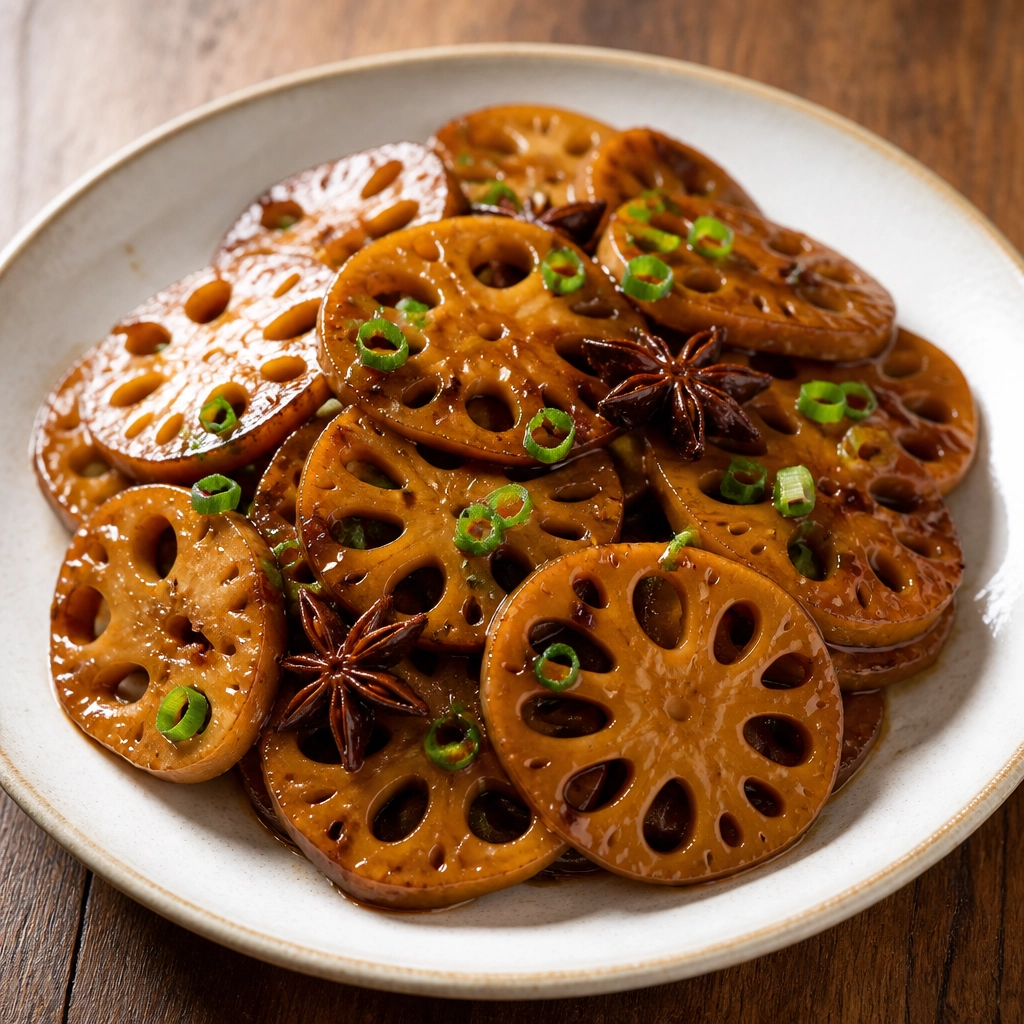
Hongshao Oupian
Hongshao Oupian is a simple but elegant braise of crisp-tender lotus root simmered in soy sauce, ginger, sugar, and star anise until glossy and deeply aromatic. The finished dish is savory, lightly sweet, faintly tangy, and full of the lotus root's refreshing crunch.
Nutrition · per serving
Ingredients
11 itemsBraising base
Finishing
Tips
- •Choose a fresh lotus root that feels heavy, firm, and free of soft spots; younger roots are sweeter and less fibrous.
- •If you prefer a softer, more traditional braise, add 5-8 extra minutes of simmering time and a splash more water if needed.
- •Dark soy sauce is mainly for color; do not replace it entirely with light soy sauce or the dish may become too salty.
- •For a cleaner finish, remove the star anise before serving.
Steps
- 1
Peel the lotus root and slice it into 6-8 mm rounds. If the root is very wide, cut the rounds into halves for easier eating. Rinse the slices under cold water to remove surface starch, then drain well. Slice the ginger and finely slice the spring onion.
400 g lotus root, peeled20 g fresh ginger, sliced10 g spring onion, finely sliced - 2
Heat a wok or wide saucepan over medium heat until hot, then add the neutral oil. Add the ginger and star anise and stir-fry for about 30 seconds, just until fragrant; do not let the ginger brown deeply or it can taste bitter.
15 ml neutral oil20 g fresh ginger, sliced2 whole star anise - 3
Add the lotus root and stir-fry for 2-3 minutes so the slices are lightly coated in the aromatics and oil. This brief frying helps the lotus root take on flavor before braising.
400 g lotus root, peeled - 4
Add the light soy sauce, dark soy sauce, rock sugar or caster sugar, Chinkiang black vinegar, and water. Stir well, scraping the pan so the sugar dissolves evenly. Bring to a boil over medium-high heat.
30 ml light soy sauce10 ml dark soy sauce12 g rock sugar or caster sugar10 ml Chinkiang black vinegar350 ml water - 5
Once boiling, reduce to a steady simmer, cover partially, and cook for 18-22 minutes, stirring once or twice, until the lotus root is tender but still slightly crisp in the center. A knife tip should pass through with light resistance.
- 6
Uncover and raise the heat slightly to reduce the braising liquid for 3-5 minutes, turning the lotus root slices so they become glossy and evenly colored. The sauce should lightly coat the pieces rather than pool thinly in the pan.
- 7
Turn off the heat and drizzle over the toasted sesame oil. Transfer to a serving dish, scatter with spring onion, and serve warm as a side dish or with steamed rice.
5 ml toasted sesame oil10 g spring onion, finely sliced
Origin & History
Braised lotus root dishes are common in several Chinese regional home kitchens, especially in the Yangtze River basin where lotus root is widely cultivated and deeply embedded in seasonal cooking. Red-braising, or hongshao, is a classic Chinese technique that uses soy sauce, sugar, and aromatics to create a savory, lightly sweet, glossy finish.
Do even more with Gourmate
Cook this recipe in Gourmate — your AI meal planning app.
Plan Meals
Weekly planner at a tap
Ask Questions
Chat with your AI chef
Adjust Recipe
Scale servings & swap ingredients
Cook Mode
Step-by-step guidance
Kitchen Timers
Built-in timers & alerts
Grocery List
Auto-generated shopping lists