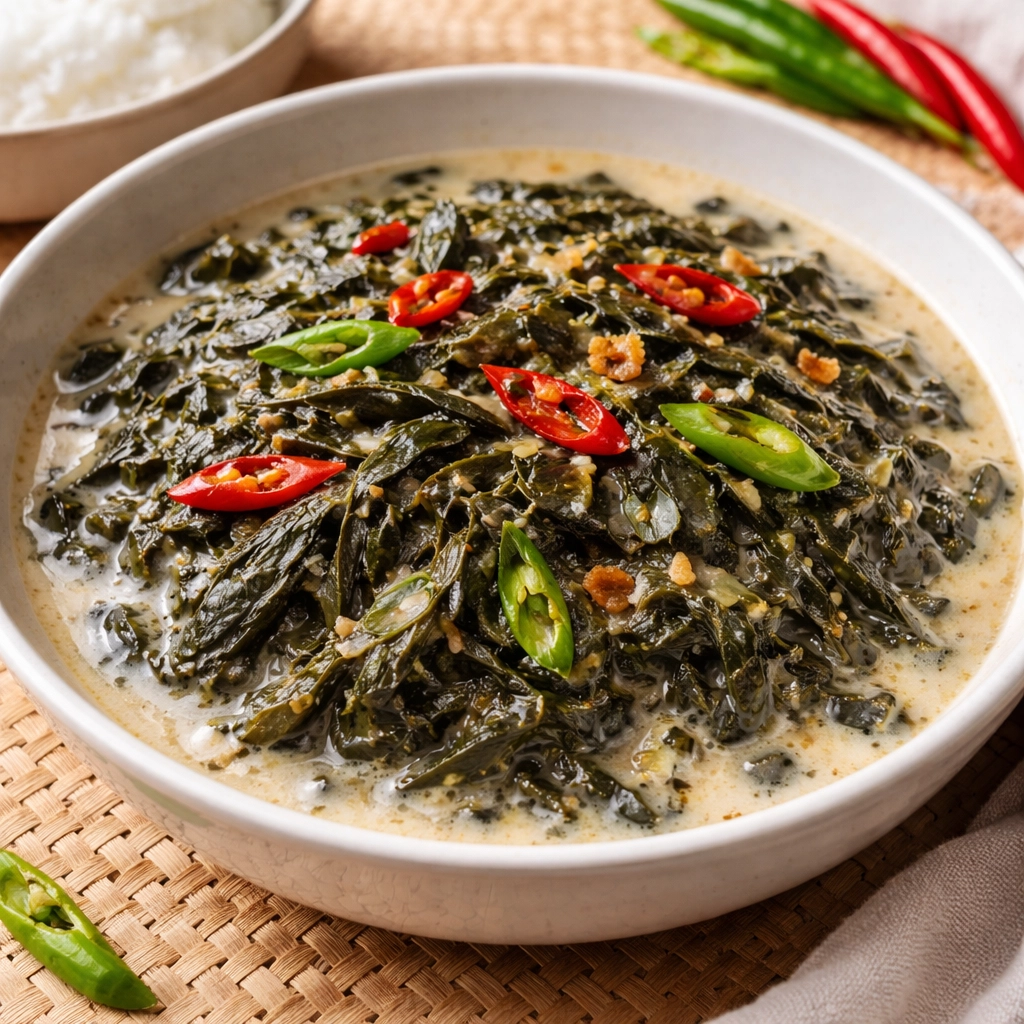
Laing
Laing is a deeply savory, creamy dish of taro leaves slowly simmered in coconut milk, aromatics, and chili until lush and tender. This vegetarian version delivers the same rich, spicy, umami-packed character, with a silky coconut sauce that begs to be eaten with rice.
Nutrition · per serving
Ingredients
15 itemsDahon at gata
Ginisa base
Pampalasa at pangtapos
Tips
- •Traditional laing often uses shrimp paste, but this vegetarian version uses vegetarian bagoong or fermented soybean paste for comparable savory depth.
- •Using dried taro leaves is the most practical and reliable option; they cook down evenly and are less likely to cause irritation when handled properly.
- •Do not stir the taro leaves early in cooking. Letting them steam in the coconut liquid first helps keep the texture silky rather than slimy.
- •For a spicier version, leave the seeds in the chilies or add a small bird's eye chili.
Steps
- 1
Check the dried taro leaves and remove any tough stems. Do not wash or stir them once simmering, which helps prevent the leaves from becoming itchy. Slice the onion, mince the garlic, julienne the ginger, and slice the chilies.
40 g dried taro leaves100 g onion, finely sliced20 g garlic, minced20 g ginger, julienned10 g red chili, sliced10 g green chili, sliced - 2
In a wide pan over medium heat, warm the neutral oil. Add the onion and cook for 2-3 minutes until softened but not browned. Add the garlic and ginger and sauté for 1 minute until fragrant. Stir in the red chili, green chili, and vegetarian bagoong or fermented soybean paste; cook for another 1-2 minutes so the paste mellows and perfumes the oil.
15 ml neutral oil100 g onion, finely sliced20 g garlic, minced20 g ginger, julienned10 g red chili, sliced10 g green chili, sliced25 g vegetarian bagoong or fermented soybean paste - 3
Pour in the coconut milk, coconut cream, and water. Add the soy sauce, brown sugar, and black pepper, then bring just to a gentle simmer. Keep the heat moderate; a hard boil can cause the coconut mixture to split.
400 ml coconut milk200 ml coconut cream120 ml water10 ml soy sauce5 g brown sugar1 g freshly ground black pepper - 4
Lay the dried taro leaves on top of the simmering liquid in an even layer. Press very lightly only to moisten the top, but do not stir. Cover and simmer on low for 18-20 minutes, until the leaves are fully rehydrated and dark green.
40 g dried taro leaves - 5
Once the leaves have softened, gently fold them into the sauce. Simmer uncovered for 8-10 minutes, stirring only occasionally now, until the sauce is thick, rich, and clings to the leaves. If it looks too dry before the leaves are tender, add a splash of water; if too loose, continue simmering until the oil begins to shine on the surface.
120 ml water - 6
Turn off the heat and stir in the lime juice. Let the laing rest for 5 minutes so the coconut sauce settles and the flavors round out.
10 ml lime juice - 7
Serve hot with steamed rice or as a side dish. For best texture, spoon some of the thick coconut sauce over the top before serving.
Origin & History
Laing comes from the Bicol region of the Philippines, an area famous for abundant coconuts and a love of chili heat. The dish traditionally combines dried taro leaves with coconut milk and bagoong, producing a rich, savory preparation that reflects Bicolano flavor preferences. Many households have their own versions, ranging from very creamy to intensely spicy.
Do even more with Gourmate
Cook this recipe in Gourmate — your AI meal planning app.
Plan Meals
Weekly planner at a tap
Ask Questions
Chat with your AI chef
Adjust Recipe
Scale servings & swap ingredients
Cook Mode
Step-by-step guidance
Kitchen Timers
Built-in timers & alerts
Grocery List
Auto-generated shopping lists