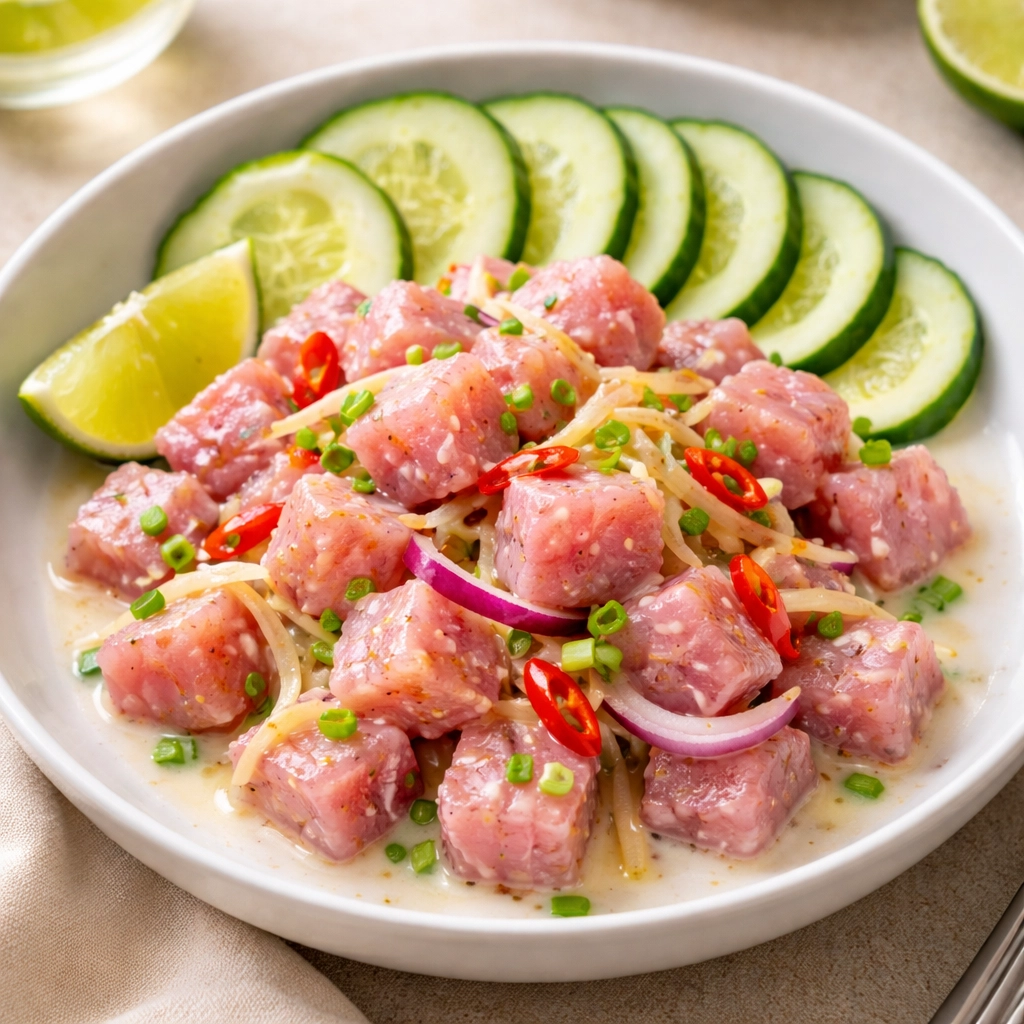
Kinilaw na Tuna
Kinilaw na Tuna is bright, clean-tasting, and delicately rich, with silky cubes of tuna lightly cured in coconut vinegar and calamansi. Ginger, onion, and chili add crunch and heat, while coconut milk rounds the sharp acidity into a smooth, refreshing finish.
Safety Warning
This dish uses raw fish. Use only sashimi-grade tuna from a trusted supplier, keep it refrigerated, avoid cross-contamination, and do not serve to people who are pregnant, elderly, immunocompromised, or very young.
Nutrition · per serving
Ingredients
10 itemsIsda at pampaasim
Pampalasa at gulay
Pampaputi
Panghain
Tips
- •Use only very fresh, sashimi-grade tuna from a trusted source; this dish is not suitable for regular supermarket raw fish of uncertain handling.
- •If calamansi is unavailable, use an equal amount of fresh lime juice, though the flavor will be slightly less floral.
- •For a milder version, remove the chili seeds or reduce the chili by half.
- •If you prefer a firmer cure, rest the dressed tuna for up to 8 minutes total, but much longer can make it chalky.
Steps
- 1
Chill a mixing bowl if possible. Dice the sashimi-grade tuna into even 1.5 cm cubes so it cures evenly, then thinly slice the onion and chili and finely julienne the ginger. Even cuts help the fish season uniformly and keep the texture neat.
300 g sashimi-grade tuna, diced 1.5 cm80 g red onion, thinly sliced20 g fresh ginger, peeled and finely julienned1 small (10 g) red chili, thinly sliced - 2
In the chilled bowl, combine the coconut vinegar and calamansi juice. Add the tuna and toss gently for 1 minute so every piece is coated. This first acidic contact firms the outside of the fish without making it tough.
60 ml coconut vinegar30 ml calamansi juice300 g sashimi-grade tuna, diced 1.5 cm - 3
Add the onion, ginger, chili, sea salt, and black pepper. Toss gently, then let the mixture stand for 5 minutes. The tuna should look slightly opaque on the surface but still moist and tender in the center.
80 g red onion, thinly sliced20 g fresh ginger, peeled and finely julienned1 small (10 g) red chili, thinly sliced4 g sea salt1 g ground black pepper - 4
Fold in the thick coconut milk just before serving. Taste and adjust with a little more salt or calamansi if needed; the finished kinilaw should be bright, creamy, and sharply seasoned, not overly sour.
80 ml thick coconut milk - 5
Transfer to serving bowls and serve immediately with sliced cucumber on the side. For the best texture, eat it cold and freshly mixed rather than leaving it to sit too long in the acid.
100 g cucumber, sliced
Origin & History
Kinilaw is one of the Philippines' oldest food traditions, predating colonial-era cooking methods and relying on vinegar and citrus to season and lightly cure fresh seafood. Coastal communities developed many regional versions, often using local vinegars, aromatics, and coconut milk for richness. Tuna kinilaw is especially popular in island and seaside areas where very fresh fish is readily available.
Do even more with Gourmate
Cook this recipe in Gourmate — your AI meal planning app.
Plan Meals
Weekly planner at a tap
Ask Questions
Chat with your AI chef
Adjust Recipe
Scale servings & swap ingredients
Cook Mode
Step-by-step guidance
Kitchen Timers
Built-in timers & alerts
Grocery List
Auto-generated shopping lists