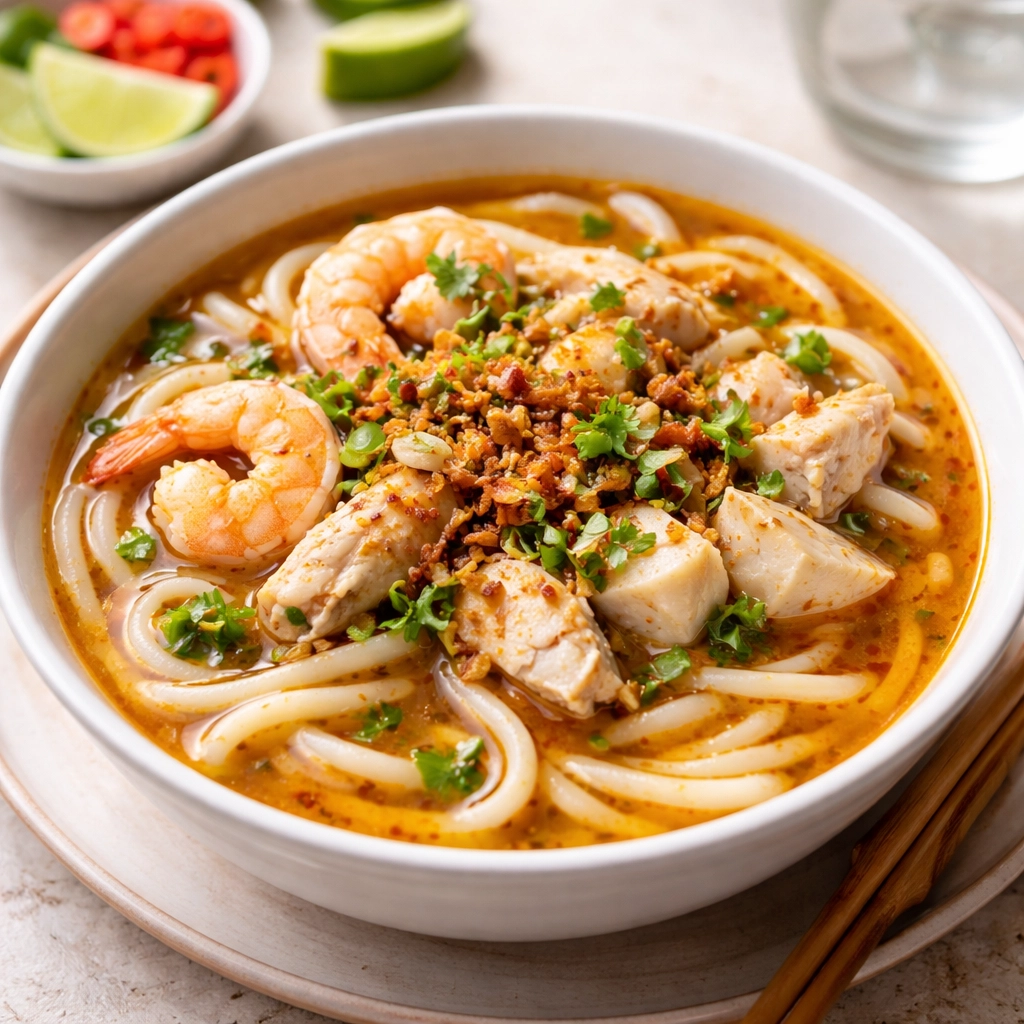
Bánh Canh Cua
This bowl of bánh canh cua is rich yet clean, with springy thick noodles in a savory seafood broth scented with shallot, garlic, and fish sauce. Sweet crab, tender shrimp, and delicate white fish make it deeply satisfying, while scallions, herbs, and lime keep it bright.
Nutrition · per serving
Ingredients
18 itemsNước dùng hải sản
Hải sản
Bánh canh và hoàn thiện
Tips
- •Traditional bánh canh cua is often made with thick tapioca-rice noodles; udon is a practical substitute that gives a similarly chewy, thick texture within the time limit.
- •If using cooked pasteurized crab meat, add it at the very end as written. If using freshly picked crab from a cooked crab, check carefully for shell fragments before adding.
- •For a more luxurious broth, simmer shrimp shells in the stock for 10 minutes before straining, if time allows.
- •A little lime brightens the bowl, but add it at the table so the broth keeps its rounded seafood flavor.
Steps
- 1
Prepare all ingredients first: slice the shallot, mince the garlic, peel and devein the shrimp, cut the fish into bite-size pieces, slice the scallions, and bring a pot of water to a boil for the noodles. Keeping the seafood in even pieces helps everything cook quickly and stay tender.
60 g shallot, finely sliced12 g garlic, minced160 g raw shrimp, peeled and deveined120 g firm white fish fillet, cut into bite-size pieces25 g scallions, finely sliced400 g udon noodles - 2
Heat the oil in a soup pot over medium heat. Add the shallot and cook for 2-3 minutes until softened and lightly golden, then add the garlic and stir for 30 seconds until fragrant; do not let it brown deeply or the broth can taste bitter.
15 ml neutral oil60 g shallot, finely sliced12 g garlic, minced - 3
Pour in the water and fish stock. Season with fish sauce, salt, white pepper, and rock sugar. Bring to a gentle boil, then lower to a steady simmer for 10 minutes so the aromatics infuse the broth.
1.2 litres water500 ml fish stock or light seafood stock30 ml fish sauce4 g salt1 g white pepper8 g rock sugar - 4
Meanwhile, cook the udon noodles in boiling water according to package directions, usually 2-4 minutes for vacuum-packed noodles or slightly longer if chilled. Loosen them gently with chopsticks, then drain and rinse briefly with warm water to remove excess starch and prevent clumping.
400 g udon noodles - 5
Add the fish pieces to the simmering broth and cook for about 2 minutes. Add the shrimp and cook for 1-2 minutes more, just until the shrimp turn pink and the fish is opaque. Finally, add the crab meat and simmer for 1 minute only, just to heat through; overcooking will toughen the seafood.
120 g firm white fish fillet, cut into bite-size pieces160 g raw shrimp, peeled and deveined180 g fresh crab meat - 6
Taste the broth and adjust if needed: it should be savory, lightly sweet, and distinctly marine. Stir in half of the scallions and the annatto or paprika oil for a warmer color and a subtle aromatic finish.
25 g scallions, finely sliced10 ml ground annatto or paprika oil - 7
Divide the cooked udon noodles between 2 large bowls. Ladle the hot seafood broth over the noodles, making sure each bowl gets crab, shrimp, and fish. Top with the remaining scallions, cilantro, and fried shallots. Serve immediately with lime wedges on the side for squeezing at the table.
400 g udon noodles180 g fresh crab meat160 g raw shrimp, peeled and deveined120 g firm white fish fillet, cut into bite-size pieces25 g scallions, finely sliced10 g cilantro leaves15 g fried shallots1 lime lime, cut into wedges
Origin & History
Bánh canh cua is a beloved Vietnamese noodle soup built around thick, chewy noodles and a rich crab-based broth. Versions vary by region and household, with some including pork, quail eggs, or a thicker, more gelatinous soup, but seafood-forward styles are especially popular in southern Vietnam.
Do even more with Gourmate
Cook this recipe in Gourmate — your AI meal planning app.
Plan Meals
Weekly planner at a tap
Ask Questions
Chat with your AI chef
Adjust Recipe
Scale servings & swap ingredients
Cook Mode
Step-by-step guidance
Kitchen Timers
Built-in timers & alerts
Grocery List
Auto-generated shopping lists