Brisket
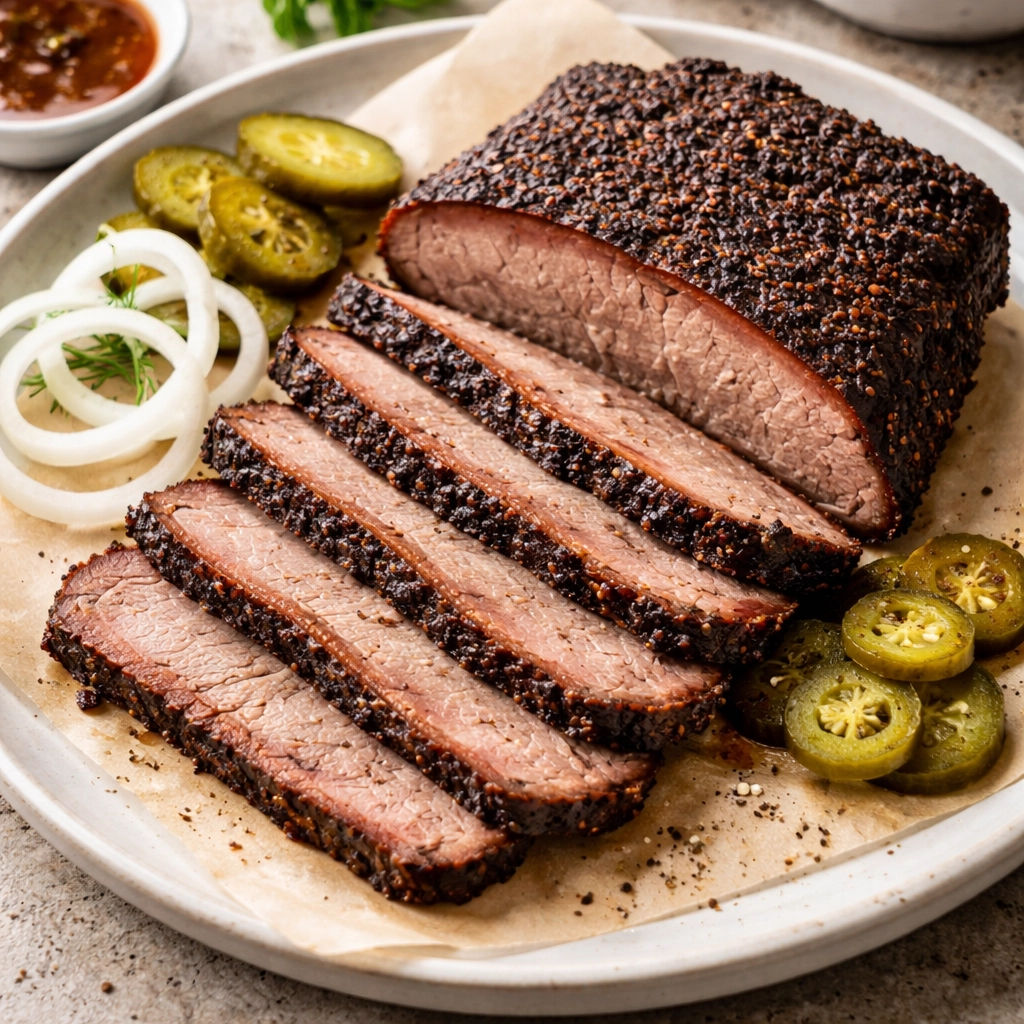
This brisket delivers a dark, peppery bark and deep beef flavor with a clean hit of smoke. Cooked hot and fast for a small portion, it still offers juicy slices and the unmistakable character of Texas barbecue.
Nutrition · per serving
Ingredients
7 itemsBrisket and rub
For the smoker
Tips
- •A true whole packer brisket cannot be properly smoked from raw in 60 minutes; this recipe is designed around a small 900 g brisket piece cooked hot and fast to fit the time limit as realistically as possible.
- •If your smoker runs cooler or the brisket is thicker than expected, allow extra time; tenderness and internal temperature are the real indicators of doneness.
- •For the best slicing, identify the grain before cooking and cut across it after resting.
- •Serve with pickles, onions, or a simple slaw if you want a classic barbecue plate, though these are not included to keep the dish strictly paleo-friendly.
Steps
- 1
Preheat a smoker to 150°C. Add the wood chunks and set a water pan with the hot water in the smoker to help stabilize heat. Pat the brisket very dry so the rub adheres evenly and the surface begins to tack up.
300 g oak or hickory wood chunks500 ml hot water900 g beef brisket, flat or point end, trimmed to about 6 mm fat cap - 2
Mix the salt, black pepper, garlic powder, and onion powder. Season the brisket evenly on all sides, pressing the rub onto the meat rather than rubbing it off. Let it stand at room temperature for 10 minutes while the smoker settles; this brief wait helps the rub hydrate.
12 g fine sea salt12 g coarsely ground black pepper4 g garlic powder4 g onion powder900 g beef brisket, flat or point end, trimmed to about 6 mm fat cap - 3
Place the brisket in the smoker fat-side up, close the lid, and smoke for about 35 minutes. Maintain a steady 150°C and avoid opening the lid unnecessarily. The surface should darken noticeably and begin forming a bark.
900 g beef brisket, flat or point end, trimmed to about 6 mm fat cap - 4
Increase the smoker temperature to 170°C and continue cooking for about 10 minutes more, until the thickest part reaches 88-92°C. For a small brisket portion cooked hot and fast, tenderness matters more than time: a probe or skewer should slide in with little resistance.
900 g beef brisket, flat or point end, trimmed to about 6 mm fat cap - 5
Transfer the brisket to a warm tray or board and rest for 10 minutes, loosely tented. Resting lets the juices redistribute and the carryover heat finish softening the collagen.
900 g beef brisket, flat or point end, trimmed to about 6 mm fat cap - 6
Slice across the grain into pencil-thick slices and serve immediately. If using a point end, slightly thicker slices work well because of the higher fat content.
900 g beef brisket, flat or point end, trimmed to about 6 mm fat cap
Origin & History
Texas-style brisket grew out of Central Texas barbecue traditions shaped by German and Czech butchers who seasoned beef simply and cooked it low and slow over post oak. The classic rub of salt and black pepper became iconic because it highlights the flavor of the beef and smoke rather than masking it.
Do even more with Gourmate
Cook this recipe in Gourmate — your AI meal planning app.
Plan Meals
Weekly planner at a tap
Ask Questions
Chat with your AI chef
Adjust Recipe
Scale servings & swap ingredients
Cook Mode
Step-by-step guidance
Kitchen Timers
Built-in timers & alerts
Grocery List
Auto-generated shopping lists