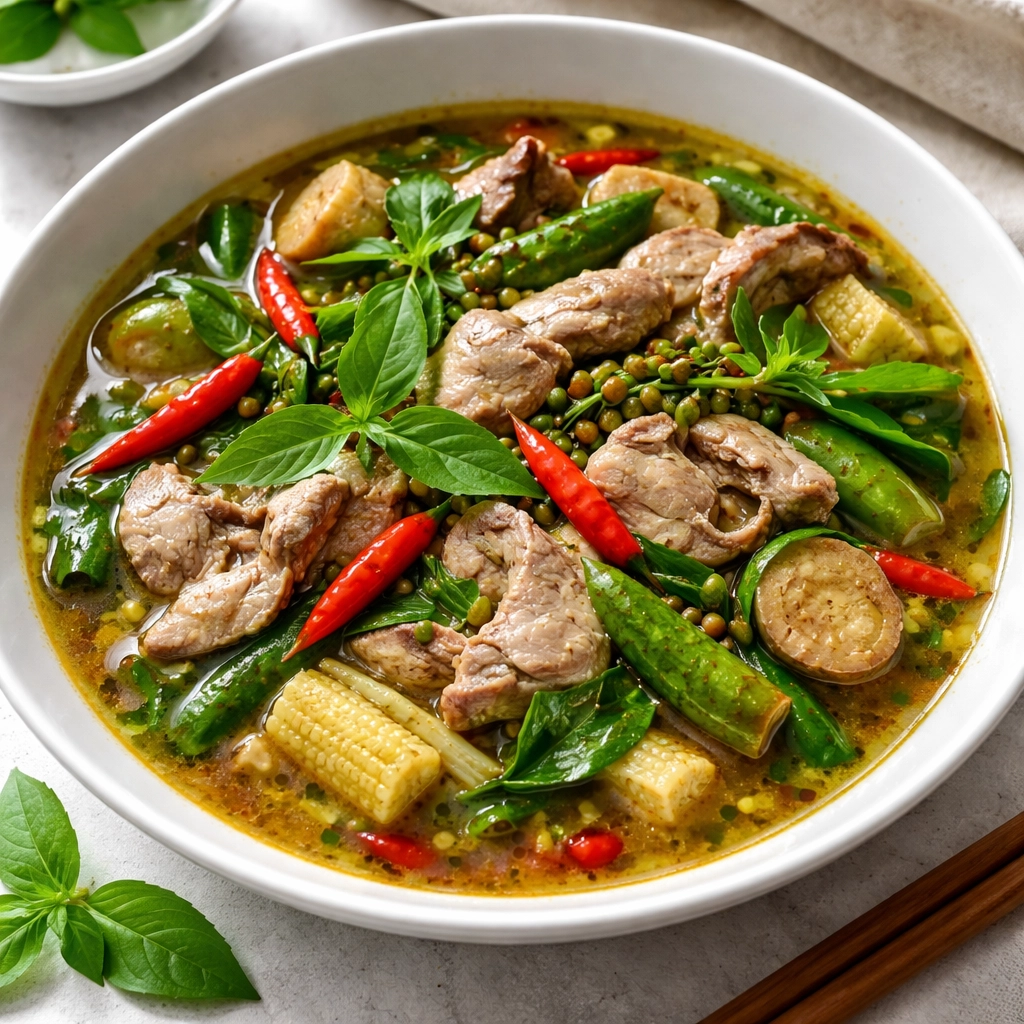
Gaeng Pa
Gaeng Pa is a vivid, fiery Thai curry with a light broth instead of coconut milk, letting galangal, chili, makrut lime leaf, and holy basil come through clearly. Pork, bamboo shoots, and vegetables simmer quickly in the aromatic stock for a savory, sharp, and deeply warming bowl.
Nutrition · per serving
Ingredients
16 itemsCurry base
Curry broth and vegetables
Finishing
Tips
- •For a more traditional spicy profile, keep all the chili seeds; for a slightly milder curry, remove some seeds from half the chilies.
- •If fresh green peppercorns are unavailable, omit them rather than substituting dried black pepper; the flavor is different.
- •Choose pork shoulder over lean loin because it stays juicier in the broth and suits the rustic style of the dish.
- •This curry is often eaten with rice, but for a paleo-style menu it also works on its own as a brothy main dish.
Steps
- 1
Prep everything first: thinly slice the pork shoulder; peel and slice the galangal; slice the tender inner part of the lemongrass; quarter the Thai eggplants; cut the beans into short lengths; halve the baby corn; tear the makrut lime leaves. Rinsing canned bamboo shoots well helps remove any metallic or sour canning taste.
300 g pork shoulder, thinly sliced20 g galangal, peeled and sliced1 stalk (20 g) lemongrass, tender inner part only, sliced120 g small Thai eggplants, quartered80 g snake beans or green beans, cut into 4 cm lengths60 g baby corn, halved lengthwise4 makrut lime leaves, torn150 g bamboo shoots, drained and rinsed, sliced - 2
Pound or blend the curry base into a coarse paste: red chilies, garlic, galangal, lemongrass, and shrimp paste. A rough texture is traditional for jungle curry; do not make it perfectly smooth. If using a blender, add just 1-2 teaspoons of water only if needed to get it moving.
8 red bird's eye chilies6 garlic cloves20 g galangal, peeled and sliced1 stalk (20 g) lemongrass, tender inner part only, sliced1 tsp (5 g) shrimp paste - 3
Bring the water or stock to a boil in a medium pot over medium-high heat. Add the curry paste and stir for 1-2 minutes until the broth smells intensely aromatic and the paste disperses fully.
500 ml water or unsalted pork stock8 red bird's eye chilies6 garlic cloves20 g galangal, peeled and sliced1 stalk (20 g) lemongrass, tender inner part only, sliced1 tsp (5 g) shrimp paste - 4
Add the pork and simmer for 4-5 minutes, stirring to separate the slices so they cook evenly. Skim any foam for a cleaner broth. The pork should be just cooked and still tender, not boiled hard for too long.
300 g pork shoulder, thinly sliced - 5
Add the bamboo shoots, Thai eggplants, beans, baby corn, makrut lime leaves, and fresh green peppercorns. Simmer for 6-8 minutes until the eggplants are tender but not collapsing and the beans still keep a little bite.
150 g bamboo shoots, drained and rinsed, sliced120 g small Thai eggplants, quartered80 g snake beans or green beans, cut into 4 cm lengths60 g baby corn, halved lengthwise4 makrut lime leaves, torn2 sprigs (20 g) fresh green peppercorns - 6
Season with fish sauce, then taste. Jungle curry should be hot, savory, and aromatic rather than rich. Add the lime juice at the end for brightness so it stays fresh-tasting.
2 tbsp (30 ml) fish sauce1 tbsp (15 ml) lime juice - 7
Turn off the heat and fold in the holy basil leaves just until wilted by the residual heat. Serve immediately while the broth is fragrant and fiery.
15 g holy basil leaves
Origin & History
Gaeng Pa, or jungle curry, comes from the forested regions of Thailand where coconuts were historically less available than in central and southern areas. Unlike richer coconut curries, it is built on herbs, roots, chilies, and a clear, intensely aromatic broth. The dish is known for its rustic character and assertive heat.
Do even more with Gourmate
Cook this recipe in Gourmate — your AI meal planning app.
Plan Meals
Weekly planner at a tap
Ask Questions
Chat with your AI chef
Adjust Recipe
Scale servings & swap ingredients
Cook Mode
Step-by-step guidance
Kitchen Timers
Built-in timers & alerts
Grocery List
Auto-generated shopping lists