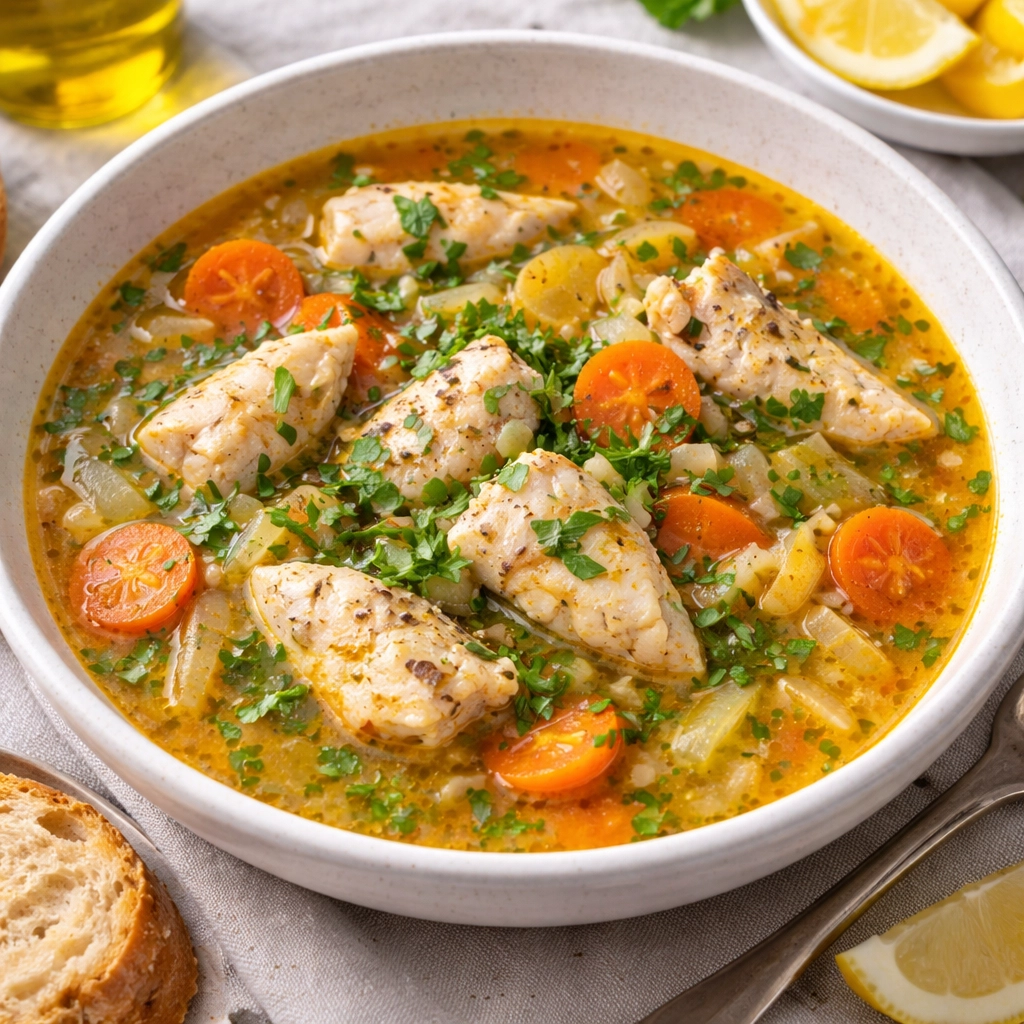
Kakavia
Kakavia is a light yet deeply savory fisherman's soup built on fresh fish, olive oil, and sweet vegetables gently simmered into a fragrant broth. Lemon added at the end gives it a clean, bright finish that makes the fish taste even sweeter and more delicate.
Nutrition · per serving
Ingredients
15 itemsFish and broth base
Vegetables and aromatics
Finishing
Tips
- •Use firm Mediterranean-style white fish such as sea bream, sea bass, red mullet, or hake; a mixture gives the best depth.
- •If using fish fillets only, add a few extra bones or heads from the fishmonger for a more flavorful broth.
- •Do not boil the soup hard after adding the fish back in, or the flesh will toughen and cloud the broth.
- •Serve as is for a strict paleo meal, or with extra lemon wedges on the side.
Steps
- 1
Rinse the fish well and check that all scales and gills are removed. Put the fish in a pot with the water, bay leaves, salt, and peppercorns. Bring gently to a bare simmer over medium heat, skimming any foam in the first few minutes so the broth stays clear.
700 g whole small white fish or fish pieces on the bone, cleaned900 ml water2 bay leaves6 g fine sea salt6 black peppercorns - 2
As soon as the fish is just cooked through, about 8-10 minutes at a gentle simmer, lift it out carefully with a slotted spoon onto a tray. Strain the broth through a fine sieve and keep it hot. When the fish is cool enough to handle, remove the flesh from skin and bones in large flakes; discard bones and skin. This prevents the fish from overcooking later.
- 3
In the cleaned pot, heat the olive oil over medium heat. Add the onion, carrot, and celery and cook for 5-6 minutes, stirring often, until softened but not browned; sweetness from gentle sweating is key to the classic flavor.
45 ml olive oil150 g onion, thinly sliced100 g carrot, sliced into thin rounds80 g celery stalks, sliced - 4
Add the grated tomato and garlic. Cook for 3-4 minutes, stirring, until the tomato loses its raw smell and the oil starts to look glossy around the vegetables.
180 g ripe tomato, grated or finely chopped2 garlic cloves, thinly sliced - 5
Pour the strained fish broth back into the pot. Bring to a lively simmer and cook for 10-12 minutes, until the carrot is tender and the broth tastes rounded and lightly concentrated.
- 6
Return the flaked fish to the soup and simmer very gently for 1-2 minutes, just enough to warm it through without breaking it up too much. Turn off the heat, then stir in the lemon juice, extra-virgin olive oil, and most of the parsley. Taste and adjust with a little more salt if needed.
30 ml lemon juice10 ml extra-virgin olive oil10 g fresh parsley, chopped - 7
Ladle the soup into warm bowls, finish with the remaining parsley and freshly ground black pepper, and serve immediately. A proper kakavia should be brothy, bright with lemon, and rich from the fish and olive oil rather than heavy.
1 g freshly ground black pepper
Origin & History
Kakavia is one of Greece's oldest fish soups, traditionally made by fishermen using part of the day's catch cooked right on the boat or by the shore. The dish is closely associated with the islands and coastal communities, where simple ingredients and very fresh fish define its character. Its name is thought to come from the vessel, the kakavi, in which the soup was originally prepared.
Do even more with Gourmate
Cook this recipe in Gourmate — your AI meal planning app.
Plan Meals
Weekly planner at a tap
Ask Questions
Chat with your AI chef
Adjust Recipe
Scale servings & swap ingredients
Cook Mode
Step-by-step guidance
Kitchen Timers
Built-in timers & alerts
Grocery List
Auto-generated shopping lists