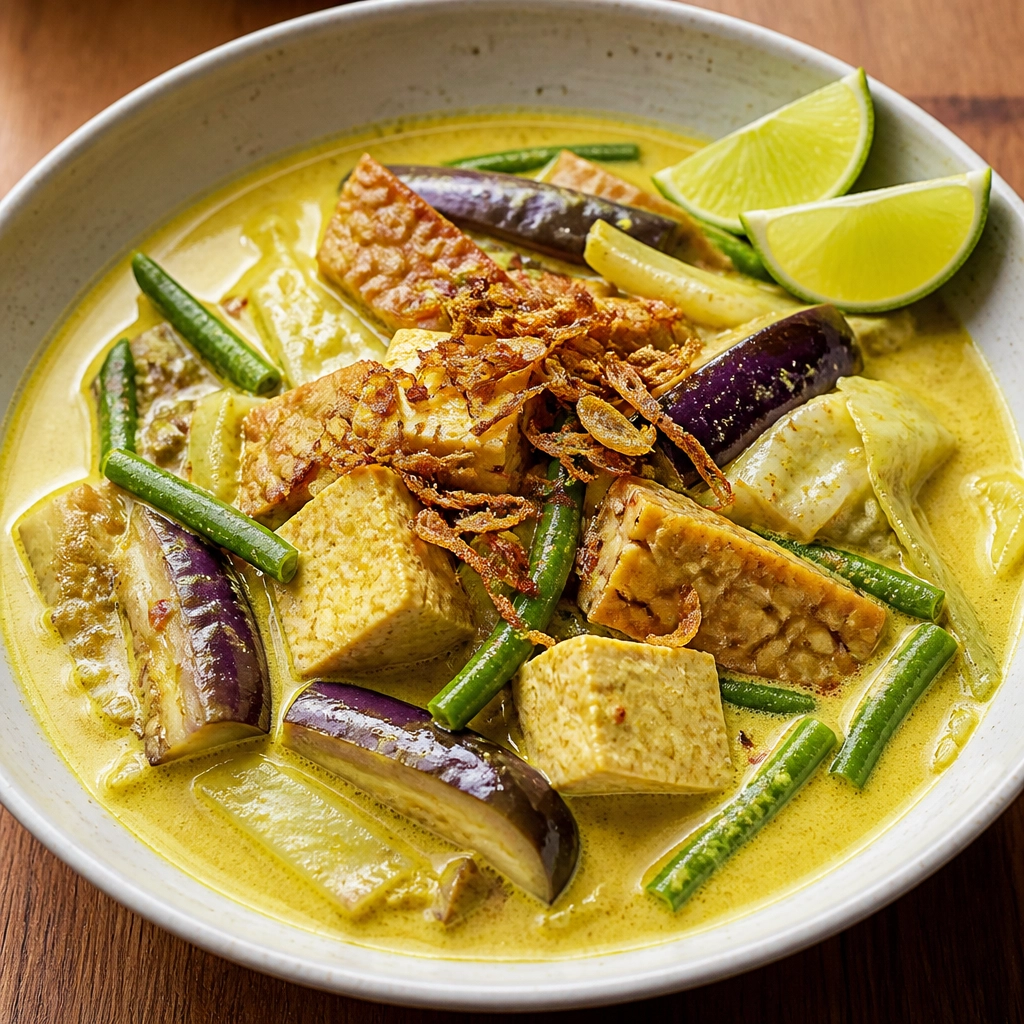
Sayur Lodeh
Sayur Lodeh is a gently spiced coconut vegetable stew that is creamy, aromatic, and deeply comforting. Tender cabbage, eggplant, tofu, and tempeh soak up a fragrant rempah scented with lemongrass, galangal, turmeric, and belacan for a bowl that is both delicate and savory.
Nutrition · per serving
Ingredients
21 itemsPes rempah
Kuah dan sayur
Untuk menggoreng dan menghidang
Tips
- •For a milder, creamier lodeh, use only one deseeded chilli and avoid boiling the coconut milk vigorously.
- •If you prefer a thinner kuah, add 50-100 ml more water; if you want it richer, simmer 1-2 minutes longer uncovered.
- •Serve with steamed rice, sambal, or salted fish on the side for a more traditional flexitarian meal.
- •Toasted belacan is potent: toast just until aromatic to deepen flavour without bitterness.
Steps
- 1
Prepare all ingredients first so the stew cooks quickly: chop the shallot, slice the galangal and turmeric, cube the tofu, slice the tempeh, cut the cabbage, eggplant, and beans, and bruise the lemongrass. Toast the shrimp paste briefly in a dry pan for 20-30 seconds until fragrant, not burnt.
80 g shallot, roughly chopped15 g galangal, peeled and sliced10 g fresh turmeric, peeled and sliced180 g firm tofu, drained and cubed120 g tempeh, cut into thin rectangles180 g cabbage, cut into 3 cm pieces150 g eggplant, cut into thick batons100 g green beans, trimmed and cut into 4 cm lengths1 lemongrass stalk, bruised and knotted8 g shrimp paste (belacan), toasted - 2
Blend or pound the shallot, garlic, chilli, galangal, turmeric, toasted shrimp paste, and 15 ml oil into a fairly smooth spice paste. If needed, add 1-2 teaspoons of the measured water to help it move, but keep the paste thick for better frying.
80 g shallot, roughly chopped3 cloves garlic cloves1 fresh red chilli, deseeded for mild heat15 g galangal, peeled and sliced10 g fresh turmeric, peeled and sliced8 g shrimp paste (belacan), toasted15 ml neutral oil200 ml water - 3
Heat 20 ml oil in a wide pot or deep sauté pan over medium heat. Fry the tempeh for 2-3 minutes until lightly golden at the edges, then add the tofu and fry for 1-2 minutes more. Remove and set aside; this helps them hold their shape in the stew.
20 ml neutral oil120 g tempeh, cut into thin rectangles180 g firm tofu, drained and cubed - 4
In the same pot, reduce to medium-low heat and fry the spice paste for 3-4 minutes, stirring often, until the oil begins to separate and the raw aroma disappears. Add the lemongrass and cook 30 seconds more to release its fragrance.
1 lemongrass stalk, bruised and knotted20 ml neutral oil80 g shallot, roughly chopped3 cloves garlic cloves1 fresh red chilli, deseeded for mild heat15 g galangal, peeled and sliced10 g fresh turmeric, peeled and sliced8 g shrimp paste (belacan), toasted15 ml neutral oil - 5
Pour in the coconut milk and water gradually, stirring constantly so the paste disperses smoothly. Bring just to a gentle simmer; do not boil hard or the coconut milk may split.
250 ml thick coconut milk200 ml water - 6
Add the eggplant, cabbage, salt, sugar, and white pepper. Simmer gently for 5 minutes until the eggplant is starting to soften but not collapsing.
150 g eggplant, cut into thick batons180 g cabbage, cut into 3 cm pieces4 g salt4 g sugar1 g white pepper - 7
Return the fried tofu and tempeh to the pot, then add the green beans. Simmer for 3-4 minutes more, stirring carefully so the tofu stays intact, until the beans are tender-crisp and the stew is lightly thickened. Taste and adjust salt if needed.
180 g firm tofu, drained and cubed120 g tempeh, cut into thin rectangles100 g green beans, trimmed and cut into 4 cm lengths4 g salt - 8
Remove the lemongrass. Ladle the sayur lodeh into bowls, top with fried shallots, and serve hot with lime wedges on the side for a bright finish.
1 lemongrass stalk, bruised and knotted10 g fried shallots2 wedges lime wedges
Origin & History
Sayur lodeh is a coconut-based vegetable stew widely eaten across the Malay-Indonesian world, with many regional variations in Malaysia, Indonesia, and Singapore. Malaysian versions often feature a fragrant rempah with lemongrass, galangal, and belacan, balancing creamy coconut richness with savory depth. It is a homestyle dish often served as part of a larger rice meal with sambal and other side dishes.
Do even more with Gourmate
Cook this recipe in Gourmate — your AI meal planning app.
Plan Meals
Weekly planner at a tap
Ask Questions
Chat with your AI chef
Adjust Recipe
Scale servings & swap ingredients
Cook Mode
Step-by-step guidance
Kitchen Timers
Built-in timers & alerts
Grocery List
Auto-generated shopping lists