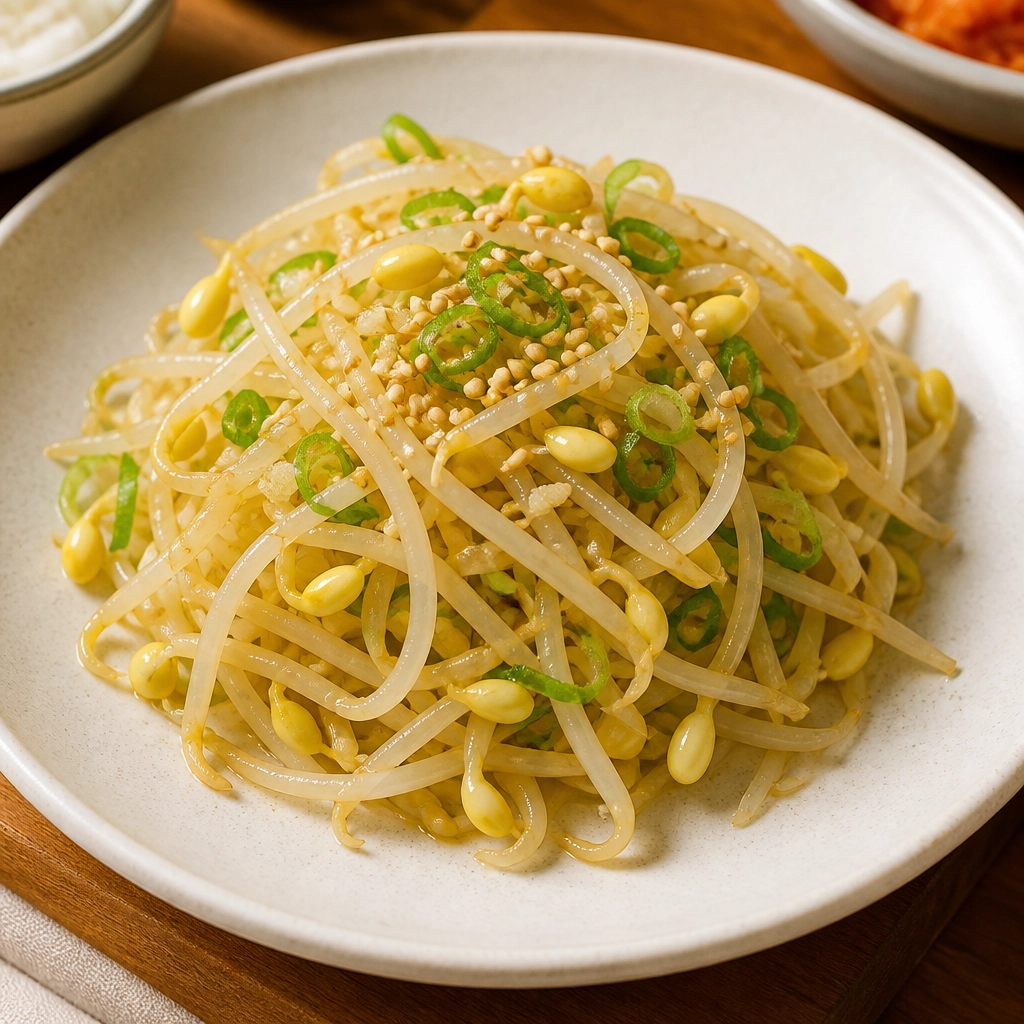
Kongnamul Muchim
Kongnamul Muchim is a light, savory bean sprout salad with a clean crunch and nutty sesame aroma. Garlic, scallion, and soy sauce give it depth, while a quick blanch keeps the sprouts tender yet fresh. It's simple, fast, and especially satisfying as a cool side dish.
Nutrition · per serving
Ingredients
7 itemsSeasoned sprouts
Tips
- •For the best texture, use very fresh, crisp bean sprouts and season them while they are still slightly warm.
- •If your soy sauce is very salty, start with 8 ml and adjust to taste.
- •This dish is commonly served as banchan alongside rice, grilled meats, or other Korean side dishes.
- •For a spicier variation, add a small spoonful of gochugaru, though the traditional mild version is often just sesame, garlic, and soy.
Steps
- 1
Bring a medium pot of water to a boil. While it heats, rinse the bean sprouts well and pick out any discolored bits. Mince the garlic and thinly slice the scallion.
300 g bean sprouts6 g garlic, minced20 g scallion, thinly sliced - 2
Add the bean sprouts to the boiling water and blanch for 2 to 3 minutes, just until the sprouts are tender-crisp and no longer raw-smelling. Do not overcook or they will lose their fresh crunch.
300 g bean sprouts - 3
Drain immediately and rinse briefly under cold water, or spread in the colander for 1 minute to stop the cooking. Squeeze very gently to remove excess water; this keeps the seasoning from becoming diluted.
- 4
In a mixing bowl, combine the minced garlic, sliced scallion, soy sauce, sesame oil, toasted sesame seeds, and salt.
6 g garlic, minced20 g scallion, thinly sliced10 ml soy sauce10 ml sesame oil5 g toasted sesame seeds1 g fine salt - 5
Add the drained bean sprouts and toss thoroughly by hand or with tongs until evenly seasoned. Taste and adjust salt if needed. Serve right away or chill briefly for a colder banchan.
300 g bean sprouts
Origin & History
Kongnamul Muchim is a classic Korean banchan made from seasoned soybean sprouts, a staple ingredient in Korean home cooking for generations. It is valued for being inexpensive, quick to prepare, and highly versatile, appearing both in everyday meals and as part of larger spreads. The dish reflects the Korean tradition of transforming simple vegetables into flavorful side dishes with careful seasoning.
Do even more with Gourmate
Cook this recipe in Gourmate — your AI meal planning app.
Plan Meals
Weekly planner at a tap
Ask Questions
Chat with your AI chef
Adjust Recipe
Scale servings & swap ingredients
Cook Mode
Step-by-step guidance
Kitchen Timers
Built-in timers & alerts
Grocery List
Auto-generated shopping lists