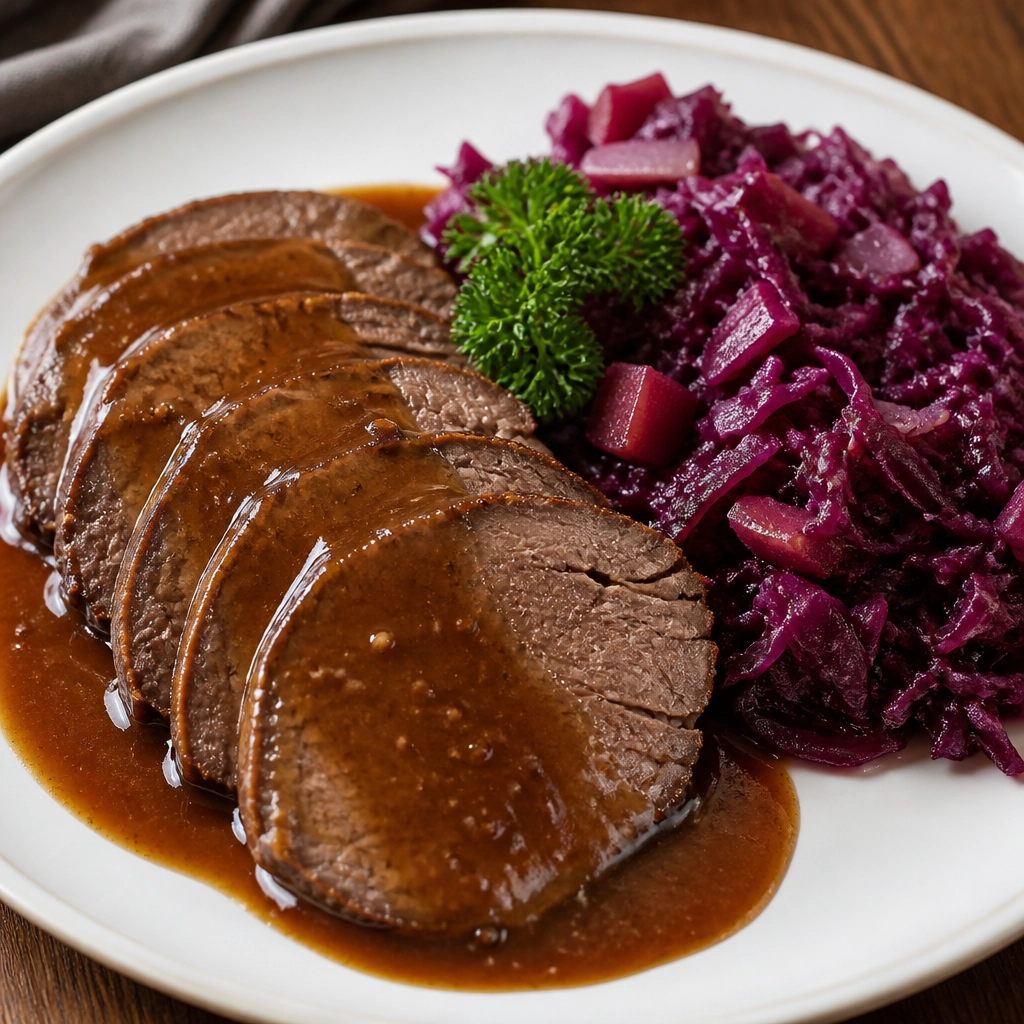
Sauerbraten
This Sauerbraten delivers tender slices of beef in a glossy, sweet-sour gravy scented with bay, clove, and juniper. Braised red cabbage on the side adds earthy sweetness and bright acidity, making the plate rich, balanced, and deeply traditional.
Nutrition · per serving
Ingredients
25 itemsMarinade and beef
Roast and gravy
Red cabbage
Tips
- •Traditional Sauerbraten is often marinated for several days; this version keeps the authentic flavor profile while using a smaller cut so the final cooking fits a 60-minute session.
- •If you have time, marinate for 48 hours for deeper penetration and a more classic sweet-sour character.
- •Ginger snaps are the classic Rhineland thickener; add them gradually so the sauce stays silky rather than pasty.
- •Serve with potato dumplings, boiled potatoes, or Spätzle if you want a fuller classic plate, though they are not included here.
Steps
- 1
Place the beef rump in a non-reactive container. Bring the red wine vinegar, water, sliced onion, sliced carrot, bay leaves, cloves, black peppercorns, juniper berries, brown sugar, and salt just to a simmer for 2 minutes, then cool quickly until no longer warm. Pour over the beef, making sure it is mostly submerged. Marinate in the refrigerator for 24-48 hours, turning once or twice. For a 60-minute cooking session, this marination is done in advance.
500 g beef rump, tied180 ml red wine vinegar220 ml water120 g onion, sliced100 g carrot, sliced2 bay leaves4 cloves1 tsp black peppercorns4 juniper berries, lightly crushed10 g brown sugar6 g salt - 2
Remove the beef from the marinade and pat it very dry; reserve the marinade and vegetables separately. Drying well is essential so the meat browns instead of steams. Strain out and keep the bay leaves and whole spices if you want a more pronounced traditional flavor in the braise.
500 g beef rump, tied120 g onion, sliced100 g carrot, sliced2 bay leaves4 cloves1 tsp black peppercorns4 juniper berries, lightly crushed - 3
Heat a heavy pot over medium-high heat with 15 ml neutral oil. Sear the beef on all sides until deeply browned, about 6-8 minutes total. Add the reserved marinated onion and carrot and cook 3 minutes until lightly caramelized. Stir in the tomato paste and cook 1 minute to remove its raw taste.
15 ml neutral oil500 g beef rump, tied120 g onion, sliced100 g carrot, sliced15 g tomato paste - 4
Pour in the reserved marinade liquid and add enough of the reserved spices to taste. Bring to a boil, then reduce to a gentle simmer, cover, and cook for 35-40 minutes, turning once, until the beef is tender enough to slice but still holds together. Because this is a smaller 500 g roast, slicing across the grain after this shorter braise gives the best texture.
180 ml red wine vinegar220 ml water2 bay leaves4 cloves1 tsp black peppercorns4 juniper berries, lightly crushed500 g beef rump, tied - 5
While the beef cooks, prepare the red cabbage. Heat 10 ml neutral oil in a sauté pan over medium heat. Add the finely sliced onion and cook 2 minutes. Add the shredded red cabbage and diced apple, tossing until the cabbage begins to soften. Add the red wine vinegar, water, bay leaf, cloves, brown sugar, and salt. Cover and cook 20-25 minutes, stirring occasionally, until the cabbage is tender but still vibrant and the liquid is mostly reduced.
10 ml neutral oil60 g onion, finely sliced350 g red cabbage, finely shredded100 g apple, peeled and diced15 ml red wine vinegar80 ml water1 bay leaf2 cloves12 g brown sugar3 g salt - 6
Transfer the beef to a board and rest 8 minutes. Meanwhile, strain the braising liquid into a saucepan, pressing on the vegetables to extract flavor. Bring to a simmer and whisk in the crushed ginger snaps a little at a time until the gravy lightly thickens and tastes balanced between sweet, sour, and spiced. Swirl in the cold butter for gloss and a rounded finish.
500 g beef rump, tied30 g ginger snaps, finely crushed10 g cold butter - 7
Slice the beef thinly across the grain. Serve with the hot gravy spooned over and the red cabbage alongside. Taste and adjust the cabbage or sauce with a touch more salt or vinegar if needed just before serving.
500 g beef rump, tied350 g red cabbage, finely shredded
Origin & History
Sauerbraten is one of Germany's best-known pot roasts, especially associated with the Rhineland, where the gravy is often rounded with sweeteners such as ginger snaps or raisin notes. The defining technique is the sour-spiced marinade, originally used both for flavor and preservation, which developed into a celebratory Sunday and holiday dish.
Do even more with Gourmate
Cook this recipe in Gourmate — your AI meal planning app.
Plan Meals
Weekly planner at a tap
Ask Questions
Chat with your AI chef
Adjust Recipe
Scale servings & swap ingredients
Cook Mode
Step-by-step guidance
Kitchen Timers
Built-in timers & alerts
Grocery List
Auto-generated shopping lists