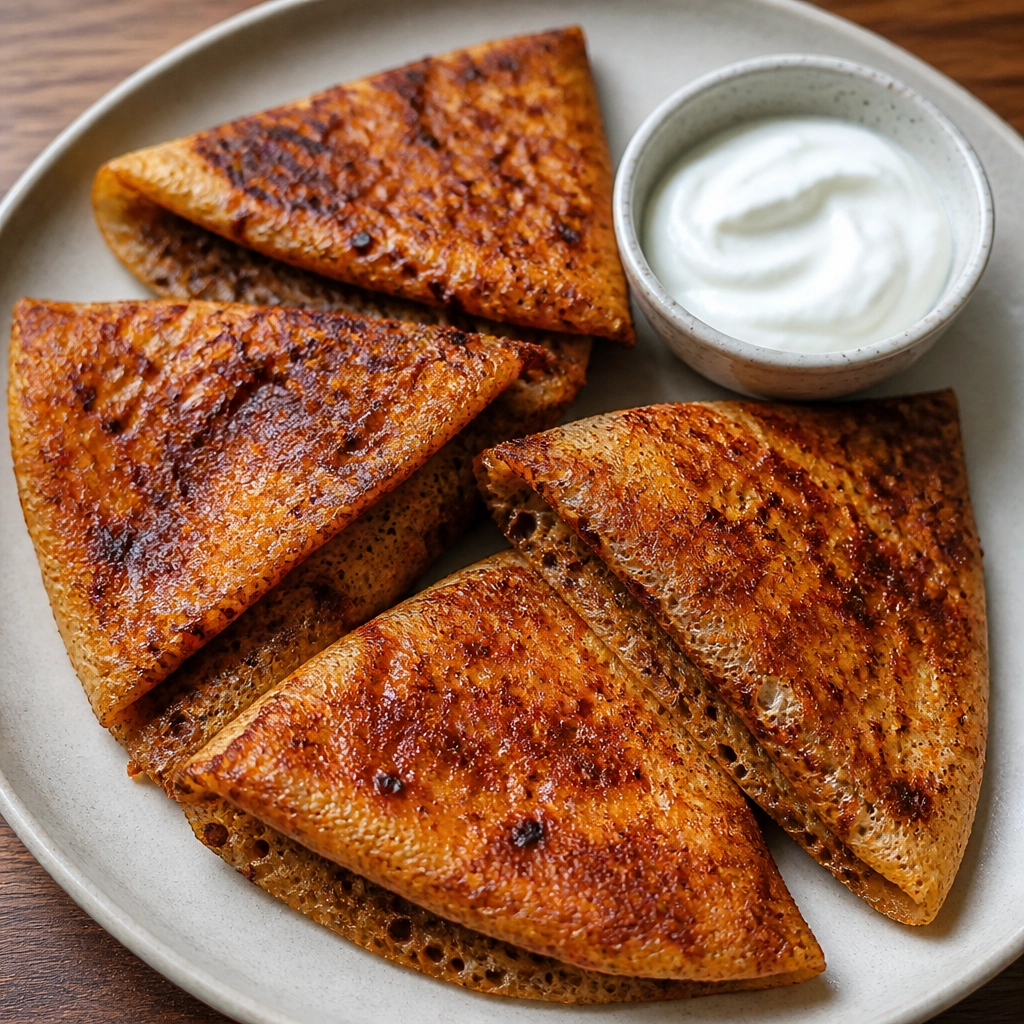
Kategna
Kategna is warm, crisp-edged injera brushed with fragrant spiced butter and fiery berbere, then toasted until lightly charred and aromatic. The result is tangy, buttery, spicy, and deeply comforting, especially with a cool spoonful of yogurt alongside.
Nutrition · per serving
Ingredients
5 itemsSpiced butter spread
Bread and finish
Tips
- •If you have stale or leftover injera, this is an ideal use for it; slightly dry injera crisps better than very fresh injera.
- •For a more traditional richer finish, add a little extra niter kibbeh after toasting.
- •A cast-iron skillet gives the best charred spots and crisp edges.
- •If needed, substitute clarified butter for niter kibbeh, though the flavor will be less authentic.
Steps
- 1
Warm a large dry skillet or griddle over medium heat. While it heats, melt the niter kibbeh in a small pan or microwave just until fluid, then stir in the berbere and salt to make a loose, even paste. If your berbere is very hot, start with a little less and adjust after tasting.
30 g niter kibbeh6 g berbere1 g fine salt - 2
Lay the injera flat and brush the spiced butter mixture evenly over one side of each piece, spreading all the way to the edges so they crisp uniformly. Fold each piece in half, then in half again into wedges, or leave them open if your pan is wide enough.
2 large pieces (about 180 g total) injera30 g niter kibbeh6 g berbere1 g fine salt - 3
Toast the injera in the hot skillet for 2-3 minutes per side until the surface is slightly blistered, the edges turn crisp, and the butter is fragrant but not burnt. Press lightly with a spatula for better contact, and lower the heat if the berbere darkens too quickly.
2 large pieces (about 180 g total) injera - 4
Transfer to a board and rest for 1 minute so the surface firms up. Cut into manageable pieces if needed.
- 5
Serve immediately while hot and crisp, with plain yogurt on the side to cool the spice. Kategna is best eaten fresh, before the injera softens again.
80 g plain yogurt
Origin & History
Kategna is a simple Ethiopian preparation that transforms injera into a richly spiced, toasted snack or quick meal with niter kibbeh and berbere. It is especially associated with home cooking and practical use of day-old injera, showing the resourceful, flavor-forward character of Ethiopian cuisine.
Do even more with Gourmate
Cook this recipe in Gourmate — your AI meal planning app.
Plan Meals
Weekly planner at a tap
Ask Questions
Chat with your AI chef
Adjust Recipe
Scale servings & swap ingredients
Cook Mode
Step-by-step guidance
Kitchen Timers
Built-in timers & alerts
Grocery List
Auto-generated shopping lists