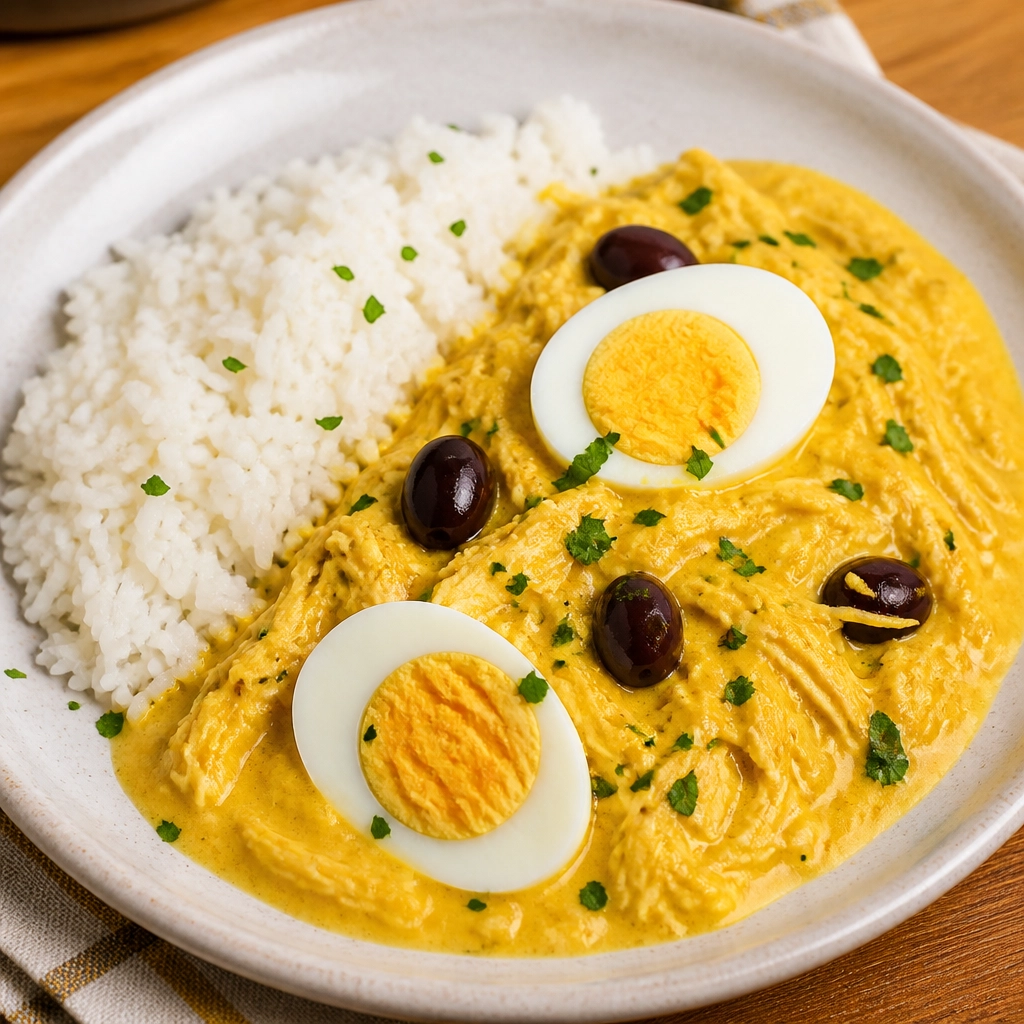
Ají de Gallina
Ají de Gallina is a rich, silky shredded chicken dish bound in a creamy yellow sauce scented with ají amarillo and enriched with walnuts, bread, and Parmesan. Served with rice, egg, and olives, it balances gentle heat, nuttiness, and savory depth in a deeply comforting plate.
Nutrition · per serving
Ingredients
21 itemsPoaching and rice
Ají sauce
For serving
Tips
- •If you can find whole jarred ají amarillo instead of paste, blend 60 g drained chillies with the milk for a fresher flavor.
- •Traditional versions often use stale bread for body; brioche is too sweet, so use a neutral white loaf.
- •The sauce should be rich but pourable. It thickens as it stands, so loosen with a splash of hot poaching liquid before serving if necessary.
- •A small boiled yellow potato alongside the rice is also classic, though omitted here to keep the dish within the time limit.
Steps
- 1
Bring the water to a gentle boil in a saucepan with the lightly crushed garlic, halved onion, bay leaf, and 3 g of the salt. Add the chicken breast, lower to a bare simmer, and poach for 12-14 minutes until the thickest part reaches 74°C and the meat is just cooked through. Lift out the chicken and let it cool slightly for easier handling; strain and reserve 300 ml of the poaching liquid.
300 g boneless skinless chicken breast900 ml water2 garlic cloves, lightly crushed80 g small onion, halved1 bay leaf6 g salt - 2
While the chicken cooks, rinse the rice until the water runs mostly clear. Cook it in lightly salted water until tender, about 12 minutes, then drain or steam off excess moisture as needed. Keep warm for serving.
120 g long-grain white rice - 3
Place the bread in a bowl and pour over the evaporated milk. Leave for 5 minutes to fully soften, then blend with the walnuts until very smooth. A smooth puree gives the finished sauce its classic velvety texture.
60 g white bread, crusts removed180 ml evaporated milk40 g walnuts - 4
Shred the poached chicken into fine strands rather than large chunks; ají de gallina is traditionally silky and spoonable, so thin shreds help the sauce cling properly.
300 g boneless skinless chicken breast - 5
Heat the olive oil in a wide sauté pan over medium heat. Add the finely diced onion and cook for 4-5 minutes until soft but not browned. Stir in the minced garlic, aji amarillo paste, turmeric, black pepper, and remaining 3 g salt; cook for 1-2 minutes until fragrant and the oil turns golden. Do not let the garlic brown, or the sauce can taste harsh.
20 ml olive oil80 g small onion, finely diced2 garlic cloves, finely minced45 g aji amarillo paste1 g ground turmeric1 g ground black pepper3 g salt - 6
Add the bread-walnut mixture and about 200 ml of the reserved poaching liquid to the pan, stirring constantly to prevent lumps. Simmer gently for 3-4 minutes until the sauce thickens to a creamy, nappé consistency. If it becomes too thick, loosen with the remaining poaching liquid a little at a time.
60 g white bread, crusts removed180 ml evaporated milk40 g walnuts - 7
Stir in the shredded chicken and grated Parmesan. Cook gently for 2-3 minutes, stirring often, until the chicken is heated through and evenly coated in the sauce. Taste and adjust seasoning if needed; the finished dish should be mildly spicy, savory, and creamy rather than stiff.
300 g boneless skinless chicken breast25 g grated Parmesan - 8
Meanwhile, place the egg in boiling water and cook for 9 minutes for a firm yolk. Cool briefly under cold water, peel, and halve it.
1 large egg - 9
To serve, spoon the warm rice onto two plates. Ladle the ají de gallina beside or over the rice, then garnish with the halved egg, black olives, and chopped parsley.
120 g long-grain white rice1 large egg30 g black olives5 g flat-leaf parsley, chopped
Origin & History
Ají de gallina is one of Peru's best-known comfort dishes, rooted in colonial-era limeño cooking and shaped by both Spanish and Andean ingredients. Over time, the combination of shredded poultry, bread-thickened sauce, dairy, nuts, and ají amarillo became the creamy, golden classic served in homes and traditional restaurants across Peru.
Do even more with Gourmate
Cook this recipe in Gourmate — your AI meal planning app.
Plan Meals
Weekly planner at a tap
Ask Questions
Chat with your AI chef
Adjust Recipe
Scale servings & swap ingredients
Cook Mode
Step-by-step guidance
Kitchen Timers
Built-in timers & alerts
Grocery List
Auto-generated shopping lists