Asam Laksa
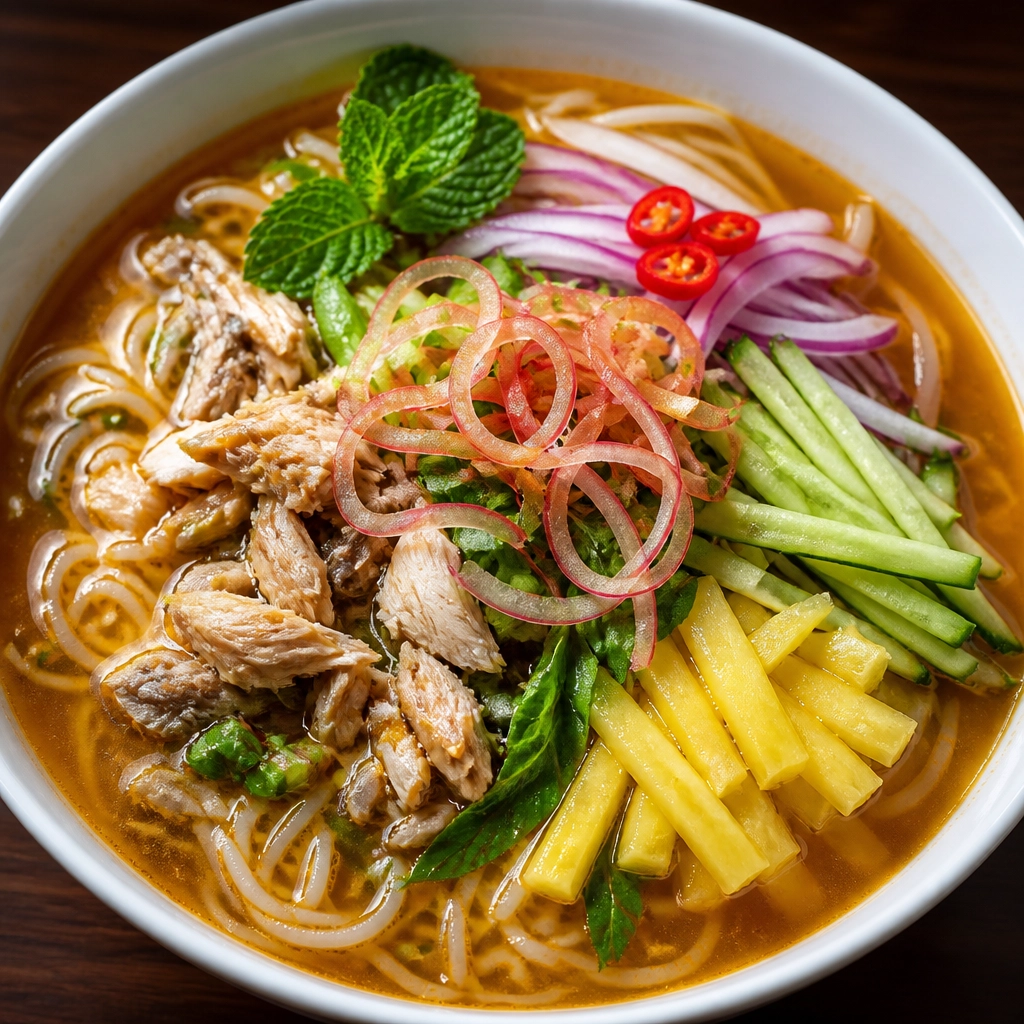
This bowl of Asam Laksa is bright, deeply savoury, and unmistakably aromatic, with tender flakes of mackerel in a sour tamarind broth scented by torch ginger and laksa leaf. Fresh pineapple, cucumber, onion, and mint add crunch and lift, making every spoonful complex, refreshing, and intensely satisfying.
Nutrition · per serving
Ingredients
21 itemsFish broth and fish
Noodles and garnishes
Tips
- •For the cleanest flavour, simmer the mackerel gently rather than boiling hard; vigorous boiling can make the broth cloudy and the fish dry.
- •If torch ginger flower is very fibrous, slice it paper-thin across the grain so it perfumes the soup without stringiness.
- •Taste the broth before serving: Asam laksa should lean boldly sour, with enough sweetness and salt to support the tamarind rather than mask it.
- •A spoonful of prawn-based hae ko or a little extra belacan can be added for a stronger Penang-style depth, but the soup is already balanced as written.
Steps
- 1
Bring a medium pot of water to the boil. Add the whole mackerel and simmer gently for 8-10 minutes until just cooked through; the flesh should flake easily but not be dry. Lift the fish out carefully and let it cool enough to handle, reserving the cooking liquid in the pot.
500 g whole mackerel, cleaned1.4 L water - 2
While the fish cooks, prepare the aromatic paste. Blend the shallots, soaked dried red chillies, belacan, fresh turmeric, galangal, and 2-3 tablespoons of the hot fish liquid into a fairly smooth paste. A little texture is fine; do not add too much water or the broth will taste diluted.
80 g shallots, peeled20 g dried red chillies, seeded and soaked in hot water, drained12 g belacan (shrimp paste)15 g fresh turmeric, sliced20 g galangal, sliced - 3
When the fish is cool enough to handle, remove the skin and bones carefully. Flake the flesh into small pieces and set aside. Return the head and bones to the pot for extra flavour, along with the bruised lemongrass.
500 g whole mackerel, cleaned2 stalks lemongrass, bruised - 4
Add the blended aromatic paste to the pot and simmer for 15 minutes over medium-low heat. The broth should smell deeply savoury and slightly pungent from the belacan; keep it at a gentle simmer so it stays clear rather than turning muddy.
80 g shallots, peeled20 g dried red chillies, seeded and soaked in hot water, drained12 g belacan (shrimp paste)15 g fresh turmeric, sliced20 g galangal, sliced1.4 L water - 5
Massage the tamarind pulp with 150 ml warm broth in a bowl, strain it through a sieve, and add the thick tamarind extract to the pot. Add the pineapple chunks, salt, and sugar, then simmer for 8 minutes until the broth tastes distinctly sour, lightly sweet, and rounded. Adjust with a little more salt if needed.
70 g tamarind pulp150 g pineapple, peeled and cut into chunks8 g salt8 g sugar - 6
Strain the broth into a clean pot, pressing firmly on the solids to extract flavour, then discard the bones, lemongrass, and spent aromatics. Return the flaked mackerel to the strained broth and add the chopped laksa leaves and sliced torch ginger flower. Simmer for 2 minutes only so the herbs stay bright and fragrant.
500 g whole mackerel, cleaned15 g laksa leaves (Vietnamese coriander), roughly chopped20 g torch ginger flower, very thinly sliced - 7
Meanwhile, soak or boil the rice vermicelli according to the package instructions until tender but springy, then drain well. Rinse briefly if needed to stop overcooking, but do not leave them wet or they will dilute the soup.
160 g dried rice vermicelli - 8
Divide the rice vermicelli between 2 bowls. Top with the cucumber, sliced red onion, pineapple batons, mint leaves, extra laksa leaves, and sliced red chilli so the garnishes are evenly distributed and ready to perfume the broth.
160 g dried rice vermicelli100 g cucumber, deseeded and cut into fine matchsticks60 g red onion, thinly sliced80 g pineapple, finely cut into small batons10 g mint leaves10 g laksa leaves (Vietnamese coriander)1 small (10 g) red chilli, thinly sliced - 9
Ladle the hot asam broth and fish generously over the noodles and garnishes. Serve immediately; the ideal bowl is hot, sharp with tamarind, aromatic with torch ginger and herbs, and balanced by sweet pineapple and rich fish.
500 g whole mackerel, cleaned160 g dried rice vermicelli100 g cucumber, deseeded and cut into fine matchsticks60 g red onion, thinly sliced80 g pineapple, finely cut into small batons10 g mint leaves10 g laksa leaves (Vietnamese coriander)1 small (10 g) red chilli, thinly sliced
Origin & History
Asam Laksa is one of Malaysia's most celebrated noodle soups, especially associated with Penang, where it is known for its tangy tamarind broth and flaked fish. Unlike coconut-based laksa styles, this version is built on sour, herbal, and savory notes, with influences from the region's Malay, Chinese, and Peranakan food traditions.
Do even more with Gourmate
Cook this recipe in Gourmate — your AI meal planning app.
Plan Meals
Weekly planner at a tap
Ask Questions
Chat with your AI chef
Adjust Recipe
Scale servings & swap ingredients
Cook Mode
Step-by-step guidance
Kitchen Timers
Built-in timers & alerts
Grocery List
Auto-generated shopping lists