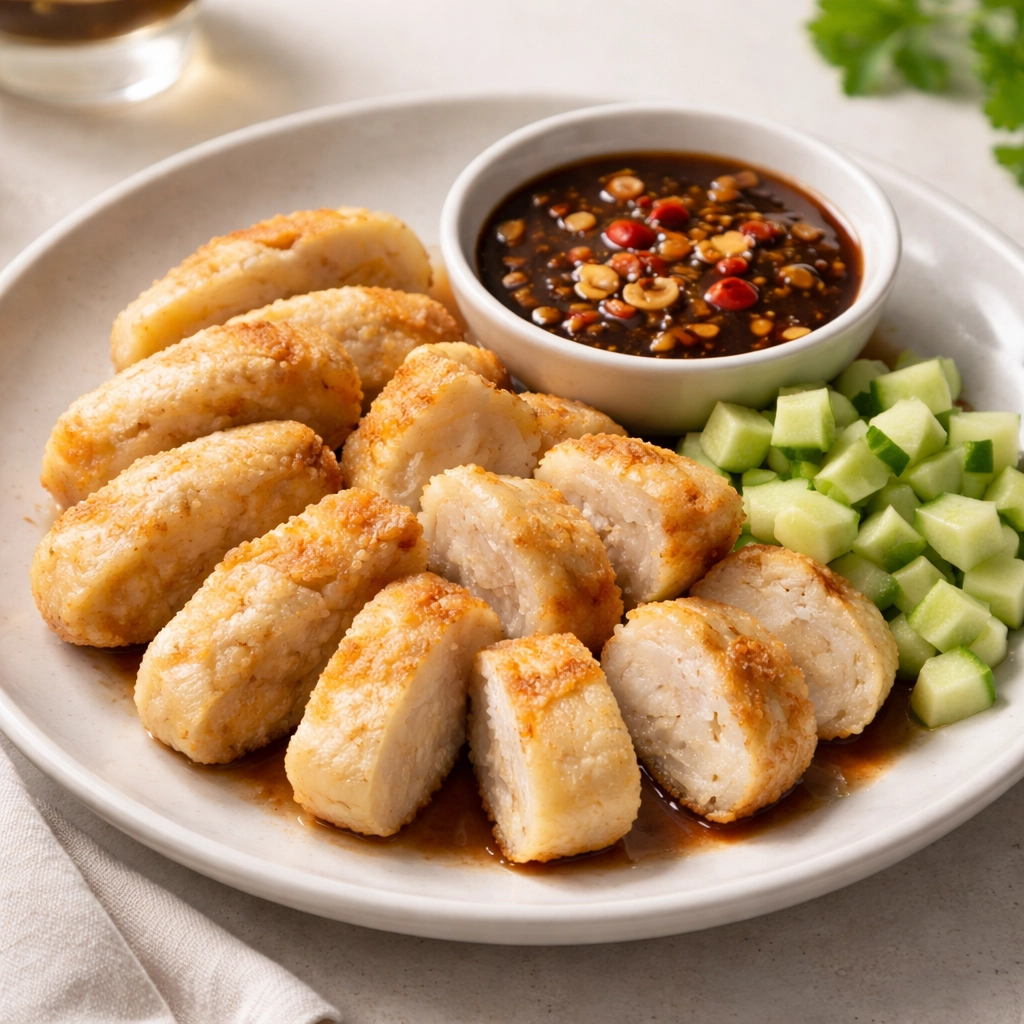
Pempek
Pempek is a beloved Palembang fish cake with a springy, chewy bite from fresh fish and tapioca. Served with sharp, dark cuko sauce and cool diced cucumber, it delivers a striking balance of savory, sweet, sour, and heat in every bite.
Nutrition · per serving
Ingredients
16 itemsAdonan pempek
Kuah cuko
Untuk merebus dan menyajikan
Tips
- •Traditional Pempek often uses tenggiri (Spanish mackerel); regular mackerel works well for a practical home version.
- •Keep the fish cold and mix the tapioca in only briefly—these two details are key to a bouncy, tender texture.
- •If you prefer a stronger sour edge, add an extra 5-10 ml rice vinegar to the cuko after simmering.
- •For extra authenticity, serve with yellow noodles if desired, though they are omitted here to keep the dish within time and serving target.
Steps
- 1
Bring a pot with the 2 litres of water to a gentle boil. Lightly oil a plate or tray for holding the shaped pempek. While the water heats, cut the mackerel into chunks and chill them briefly if they feel soft; colder fish gives a springier texture.
2 litres water for boiling10 ml neutral oil250 g mackerel fillet, skinless and boneless - 2
Make the cuko first so the flavours can meld: combine the palm sugar, 200 ml water, sliced garlic, chillies, tamarind paste, rice vinegar, and 3 g salt in a small saucepan. Bring to a simmer over medium heat and cook for 8-10 minutes until the sugar dissolves and the sauce tastes balanced—sweet first, then sour and spicy. Strain if you want a smoother sauce, or leave it rustic. Set aside.
80 g palm sugar, chopped200 ml water2 cloves (8 g) garlic, finely sliced2 small (6 g) bird's eye chillies, sliced10 g tamarind paste60 ml rice vinegar3 g fine salt - 3
For the fish paste, blend the mackerel with the cold water, 5 g salt, and grated garlic until very smooth and sticky. This should look like a thick, elastic paste rather than a loose puree.
250 g mackerel fillet, skinless and boneless120 ml cold water5 g fine salt2 cloves (8 g) garlic, finely grated - 4
Transfer the fish paste to a bowl and beat in the egg until fully combined. Add the tapioca flour all at once, then fold gently with a spoon or your hand just until no dry patches remain. Do not overwork it after adding tapioca or the pempek can become tough; the dough should be soft, slightly sticky, and hold its shape.
1 medium egg180 g tapioca flour - 5
Wet your hands lightly with water, then divide and shape the dough into 6 small oval logs. If the dough sticks, dampen your hands again rather than adding more flour. Slide each piece into gently boiling water.
- 6
Poach the pempek at a gentle boil for 10-12 minutes, stirring once or twice to prevent sticking, until they float and feel slightly firmer. Once they float, give them another 1-2 minutes to ensure the centre is cooked through, then lift out and drain well.
- 7
Let the cooked pempek rest for 3 minutes so the exterior sets slightly. Slice or halve them if you like, then arrange with the diced cucumber.
80 g cucumber, diced - 8
Serve the pempek warm with the cuko alongside or poured over. Eat immediately for the best chewy texture.
Origin & History
Pempek is a famous specialty from Palembang, South Sumatra, where fish has long been abundant and preserved in practical, delicious ways. The dish is believed to have roots in local fish cookery influenced by Chinese culinary techniques, especially in the shaping and preparation of fish cakes. Its signature cuko sauce gives Pempek its unmistakable sweet, sour, spicy identity.
Do even more with Gourmate
Cook this recipe in Gourmate — your AI meal planning app.
Plan Meals
Weekly planner at a tap
Ask Questions
Chat with your AI chef
Adjust Recipe
Scale servings & swap ingredients
Cook Mode
Step-by-step guidance
Kitchen Timers
Built-in timers & alerts
Grocery List
Auto-generated shopping lists