Halo-Halo
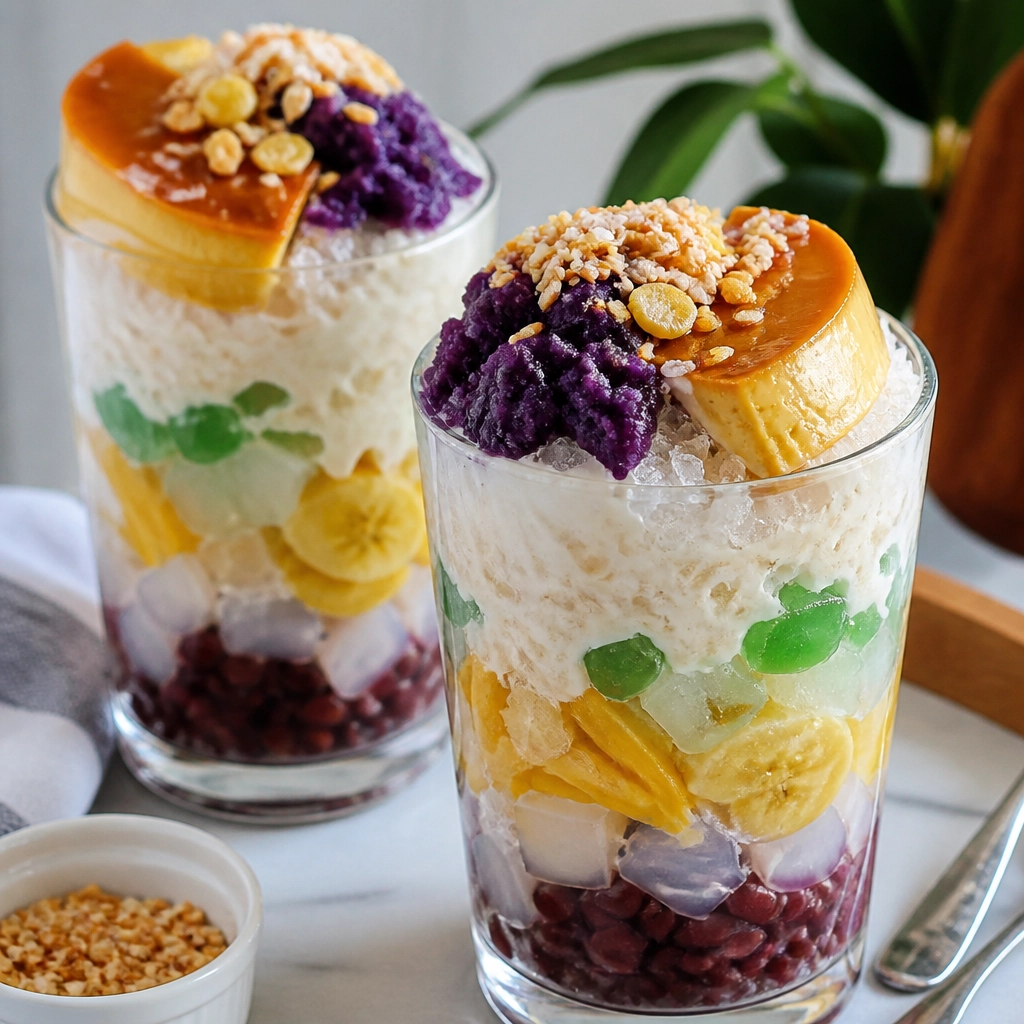
Halo-halo is a vibrant, refreshing dessert of finely shaved ice layered with sweet beans, fruit preserves, chewy coconut jelly, rich ube, and silky leche flan. As the milk melts into the ice and everything is mixed together, it becomes creamy, colorful, and full of contrasting textures in every spoonful.
Nutrition · per serving
Ingredients
10 itemsMga Sangkap sa Ibaba
Pampalasa at Pang-ibabaw
Tips
- •For a true 15-minute beginner version, use good-quality store-bought leche flan, ube halaya, and pre-cooked sweetened toppings.
- •If you do not have saba banana, use ripe plantain simmered briefly in light syrup until tender.
- •Keep serving glasses chilled in the freezer for 5 minutes if your kitchen is warm; this slows melting.
- •You can adjust sweetness by reducing or increasing the evaporated milk slightly, or by choosing less-sweet preserved toppings.
Steps
- 1
Prepare 2 tall serving glasses or bowls. Drain the coconut jelly and kaong well, slice the jackfruit and saba banana if not already prepared, and have the shaved ice ready to keep it from melting while you assemble.
100 g coconut jelly (nata de coco), drained60 g sweetened jackfruit, sliced80 g cooked sweetened saba banana, sliced60 g kaong (sugar palm fruit), drained400 g shaved ice - 2
Divide the sweetened red bean, coconut jelly, jackfruit, saba banana, and kaong evenly between the 2 glasses, layering them loosely so the spoon can reach every ingredient.
100 g sweetened red bean100 g coconut jelly (nata de coco), drained60 g sweetened jackfruit, sliced80 g cooked sweetened saba banana, sliced60 g kaong (sugar palm fruit), drained - 3
Pile the shaved ice on top of each glass, pressing very lightly so it holds its shape but stays fluffy. Pour half of the evaporated milk over each portion so it soaks into the ice.
400 g shaved ice160 ml evaporated milk - 4
Top each serving with a spoonful of ube halaya and a slice or spoonful of leche flan. Finish with pinipig for crunch.
80 g ube halaya100 g leche flan20 g pinipig or crushed toasted rice cereal - 5
Serve immediately with a long spoon. For the classic way to eat halo-halo, gently mix everything together before taking the first bite so the ice, milk, and sweet toppings combine evenly.
Origin & History
Halo-halo is a beloved Filipino iced dessert whose name means “mix-mix,” referring to the way the many sweet components are stirred together before eating. It evolved from layered shaved-ice desserts influenced by Japanese kakigori and local preserved fruits, beans, and custards, becoming a classic merienda and hot-weather treat across the Philippines.
Do even more with Gourmate
Cook this recipe in Gourmate — your AI meal planning app.
Plan Meals
Weekly planner at a tap
Ask Questions
Chat with your AI chef
Adjust Recipe
Scale servings & swap ingredients
Cook Mode
Step-by-step guidance
Kitchen Timers
Built-in timers & alerts
Grocery List
Auto-generated shopping lists