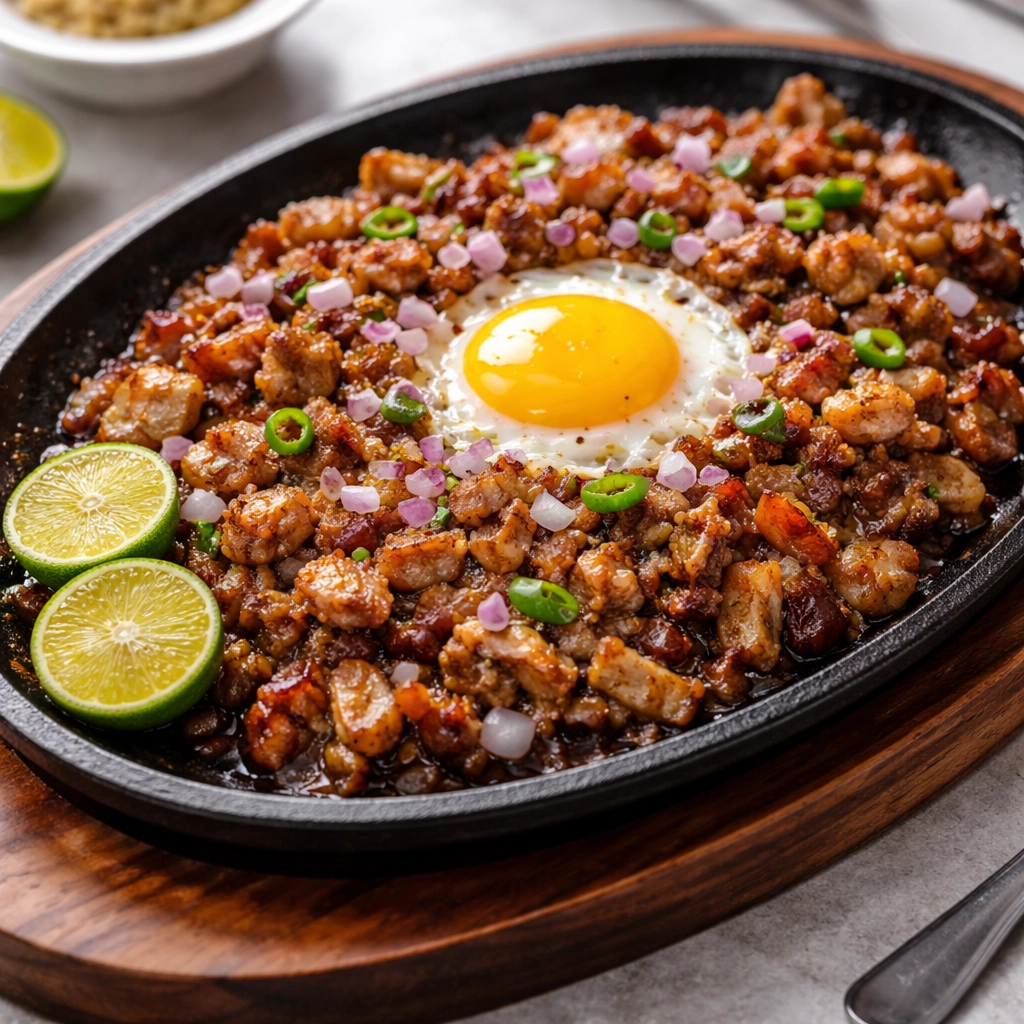
Sisig
Sisig is a vividly savory, tangy, and slightly spicy pork dish with contrasting textures from tender cheek, chewy-crisp ear, and rich chicken liver. Finished with onion, calamansi, and a just-set egg, it is intensely aromatic and best eaten immediately with hot rice.
Nutrition · per serving
Ingredients
16 itemsKarne at atay
Pampalasa
Gisa at paghahain
Tips
- •Ask your butcher for well-cleaned pork ears and cheek to save time; this makes a 45-minute version realistic.
- •For deeper char, spread the chopped pork in a single layer and avoid crowding the pan.
- •Calamansi gives the most authentic flavor, but if unavailable, use 20 ml lime juice plus 10 ml lemon juice.
- •Serve with steamed rice and extra calamansi on the side.
- •A sizzling cast-iron plate gives the characteristic aroma and lets the egg finish cooking at the table.
Steps
- 1
Bring a medium pot of water to a boil. Add the pork cheek, pork ears, bay leaf, black peppercorns, and fine salt. Lower to a lively simmer and cook for 20 minutes, skimming any foam in the first few minutes so the meat stays clean-tasting. The pork should be just tender enough to pierce with a knife but not falling apart.
1.2 L water250 g pork cheek, cleaned150 g pork ears, cleaned1 bay leaf1 tsp black peppercorns8 g fine salt - 2
Add the chicken liver to the same pot and simmer 5 minutes more, until just cooked through. Remove the pork cheek, pork ears, and liver; drain well and let them steam-dry for 5 minutes. This short rest helps them brown instead of stew.
100 g chicken liver250 g pork cheek, cleaned150 g pork ears, cleaned - 3
While the meats rest, mix the soy sauce, calamansi juice, chopped red chilli, and ground black pepper in a bowl. Set aside as the seasoning sauce.
20 ml soy sauce30 ml calamansi juice10 g red chilli, finely chopped1/4 tsp ground black pepper - 4
Finely chop the pork cheek, pork ears, and chicken liver into small sisig-style pieces, about 5 to 8 mm. Keep the ear pieces slightly smaller so the texture distributes evenly.
250 g pork cheek, cleaned150 g pork ears, cleaned100 g chicken liver - 5
Heat a wide frying pan over high heat until very hot. Add the neutral oil, then spread in the chopped pork cheek and pork ears. Sear for 4 to 5 minutes, stirring only occasionally, until the edges are browned and lightly crisp. Add the chopped liver and cook 1 minute more to toast its surface without drying it out.
15 ml neutral oil250 g pork cheek, cleaned150 g pork ears, cleaned100 g chicken liver - 6
Add the butter and half of the diced red onion. Cook for 1 to 2 minutes until the onion softens slightly but still keeps some bite. Pour in the seasoning sauce and toss over high heat for about 1 minute, just until the liquid lightly coats the meat. Stir in the mayonnaise off the heat for the classic rich, glossy finish.
10 g butter120 g red onion, finely diced20 ml soy sauce30 ml calamansi juice10 g red chilli, finely chopped1/4 tsp ground black pepper20 g mayonnaise - 7
If serving on a sizzling plate, heat the plate for a few minutes until very hot. Transfer the sisig onto it, then crack the egg on top. Cook 30 to 60 seconds more until the white begins to set, or serve in the hot pan and mix the egg in at the table. Scatter over the remaining diced red onion for freshness and serve immediately.
1 large egg120 g red onion, finely diced
Origin & History
Sisig originated in Pampanga, a region in the Philippines famous for its bold, resourceful cooking. The modern sizzling pork version is widely associated with Angeles City, where chopped grilled or browned pork is seasoned with sour citrus and chillies, then served on a hot plate.
Do even more with Gourmate
Cook this recipe in Gourmate — your AI meal planning app.
Plan Meals
Weekly planner at a tap
Ask Questions
Chat with your AI chef
Adjust Recipe
Scale servings & swap ingredients
Cook Mode
Step-by-step guidance
Kitchen Timers
Built-in timers & alerts
Grocery List
Auto-generated shopping lists