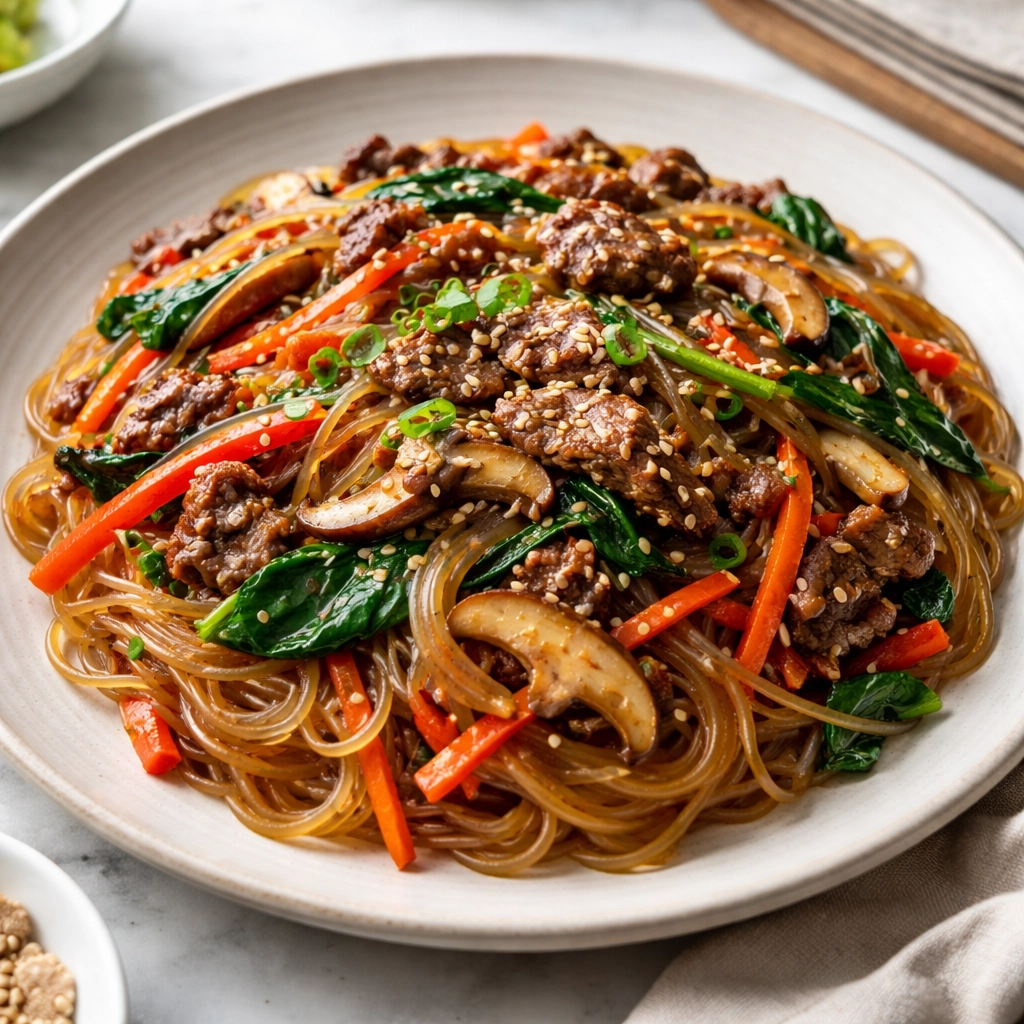
Japchae
Japchae is a glossy, savory-sweet stir-fry of chewy sweet potato glass noodles with tender beef and a rainbow of vegetables. The noodles soak up soy, garlic, and sesame oil beautifully, creating a dish that is light in feel yet deeply satisfying.
Nutrition · per serving
Ingredients
15 itemsNoodles and beef
Vegetables
For stir-frying and finishing
Tips
- •Slice the beef across the grain for maximum tenderness.
- •Do not overcook the noodles; they should remain springy and translucent, not soft and mushy.
- •For the best texture, stir-fry the vegetables over fairly high heat so they stay bright and lightly crisp.
- •Japchae is often enjoyed at room temperature, making it excellent for meal prep or part of a larger Korean spread.
Steps
- 1
Bring a medium pot of water to a boil. While it heats, combine the beef with 15 ml soy sauce, 6 g sugar, 5 ml sesame oil, 4 g garlic, and black pepper. Toss well and let it stand while you prepare the vegetables; this short marinade is enough because the beef is sliced thinly.
150 g beef sirloin, thinly sliced35 ml soy sauce12 g sugar18 ml sesame oil8 g garlic, minced1 g black pepper - 2
In a small bowl, stir together the remaining 20 ml soy sauce, 6 g sugar, 13 ml sesame oil, and 4 g garlic to make the seasoning sauce for the noodles.
35 ml soy sauce12 g sugar18 ml sesame oil8 g garlic, minced - 3
Blanch the spinach in the boiling water for 20 to 30 seconds just until wilted, then drain, rinse briefly under cold water, and squeeze out excess moisture. This keeps the strands bright and prevents the japchae from becoming watery.
80 g spinach - 4
In the same pot, cook the sweet potato glass noodles according to package timing, usually 6 to 7 minutes, until chewy but tender. Drain well, rinse briefly to stop the cooking, then cut the noodles a few times with kitchen scissors for easier eating. Toss immediately with the seasoning sauce so they absorb flavor while still warm.
120 g sweet potato glass noodles (dangmyeon)35 ml soy sauce12 g sugar18 ml sesame oil8 g garlic, minced - 5
Heat a large skillet or wok over high heat with 5 ml neutral oil. Stir-fry the marinated beef for 1 to 2 minutes until just cooked and lightly caramelized at the edges. Remove to a plate so it stays tender.
15 ml neutral oil150 g beef sirloin, thinly sliced - 6
Add another 5 ml neutral oil to the pan. Stir-fry the onion, carrot, shiitake mushrooms, and red bell pepper for 3 to 4 minutes until the vegetables are just tender but still vivid and distinct. Japchae is best when each vegetable keeps its own texture rather than steaming together into softness.
15 ml neutral oil100 g onion, thinly sliced80 g carrot, julienned80 g shiitake mushrooms, sliced70 g red bell pepper, thinly sliced - 7
Return the beef to the pan, then add the seasoned noodles, spinach, and spring onion. Toss over medium-high heat for 1 to 2 minutes until everything is evenly mixed and glossy. If the noodles seem tight or clumped, keep tossing rather than adding water; the sauce redistributes as they warm.
150 g beef sirloin, thinly sliced120 g sweet potato glass noodles (dangmyeon)80 g spinach20 g spring onion, sliced - 8
Turn off the heat, scatter over the toasted sesame seeds, and toss once more. Taste and adjust with a pinch more soy sauce if needed, then serve warm or at room temperature.
8 g toasted sesame seeds
Origin & History
Japchae originated in Korea during the Joseon dynasty and was first made as a noodle-less stir-fried vegetable dish served at court. After sweet potato starch noodles were introduced later, they became the defining ingredient, and japchae evolved into the festive dish widely loved today at celebrations and holidays.
Do even more with Gourmate
Cook this recipe in Gourmate — your AI meal planning app.
Plan Meals
Weekly planner at a tap
Ask Questions
Chat with your AI chef
Adjust Recipe
Scale servings & swap ingredients
Cook Mode
Step-by-step guidance
Kitchen Timers
Built-in timers & alerts
Grocery List
Auto-generated shopping lists