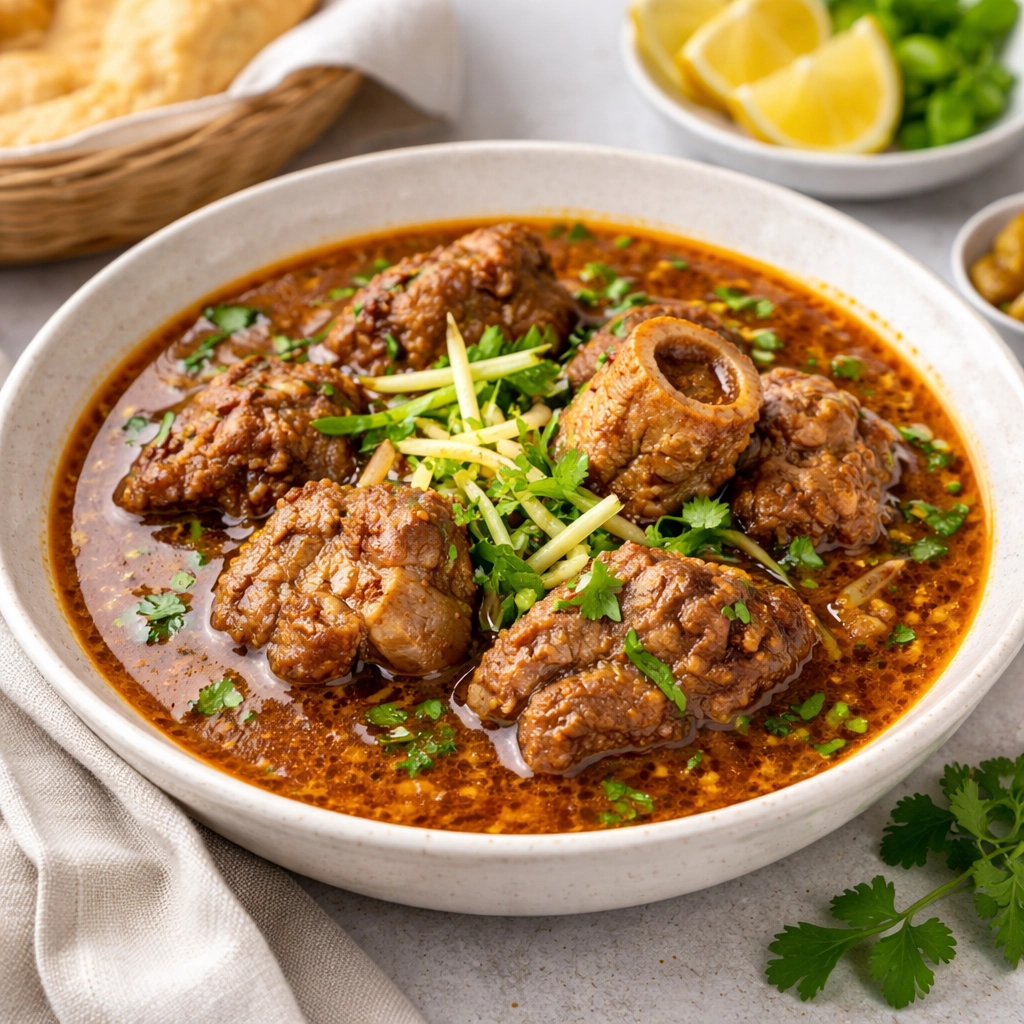
Nihari
This quick-classic nihari delivers deep, slow-cooked flavor in a practical pressure-cooker format. The beef shank turns tender in a silky, spice-rich gravy thickened lightly with atta, then finished with hot ghee, fresh ginger, herbs, and lemon for the signature aromatic lift.
Nutrition · per serving
Ingredients
18 itemsGosht aur yakhni
Nihari masala
Aata slurry
Tarka aur sajawat
Tips
- •For the best texture in a 60-minute format, use a pressure cooker; traditional stovetop nihari takes several hours.
- •Bone-in shank gives the gravy more body from collagen and marrow. If using boneless shank, reduce the meat to 600 g and expect a slightly lighter broth.
- •Commercial nihari masalas vary in salt and chilli strength, so taste before adding extra salt or heat.
- •Serve with naan or kulcha; if you include bread, nutritional values will increase.
Steps
- 1
Pat the beef shank dry. In a pressure cooker or stovetop pressure pot, combine the beef shank, water, sliced ginger, crushed garlic, and salt. Lock the lid and cook on high pressure for 30 minutes, then let the pressure release naturally for 10 minutes. This gives a near slow-cooked texture within the time limit; the meat should be very tender but still holding its shape.
700 g beef shank, bone-in, cut into 4-5 cm pieces900 ml water20 g ginger, sliced20 g garlic cloves, crushed8 g salt - 2
While the beef cooks, whisk the wheat flour with 50 ml water until completely smooth and lump-free; set aside. Crush the fried onions with your fingers or a mortar so they dissolve easily into the gravy. Prepare the julienned ginger, chopped coriander, sliced green chilli, and lemon wedges for serving.
18 g wheat flour50 ml water40 g fried onions, crushed15 g julienned fresh ginger8 g fresh coriander leaves, chopped1 small (8 g) green chilli, sliced2 wedges lemon wedges - 3
Open the cooker. If the stock looks excessively reduced, add a splash of hot water; if it looks thin, that is fine because it will be thickened later. In a separate heavy pot, heat 35 g ghee over medium heat. Add the crushed fried onions, nihari masala, red chilli powder, turmeric powder, and coriander powder. Fry for 60-90 seconds, stirring constantly, until the spices smell deep and nutty but do not darken or scorch.
35 g ghee40 g fried onions, crushed18 g nihari masala3 g red chilli powder1 g turmeric powder4 g coriander powder - 4
Carefully add the cooked beef and all of its cooking liquid to the fried masala. Bring to a steady simmer over medium heat and cook uncovered for 8 minutes so the meat absorbs the spice base and the fat begins to rise slightly to the surface.
700 g beef shank, bone-in, cut into 4-5 cm pieces900 ml water20 g ginger, sliced20 g garlic cloves, crushed8 g salt35 g ghee40 g fried onions, crushed18 g nihari masala3 g red chilli powder1 g turmeric powder4 g coriander powder - 5
Stir the flour slurry again, then pour it in a thin stream into the simmering pot while stirring continuously. Reduce the heat to low and cook for 6-8 minutes, stirring often, until the gravy turns glossy and lightly coats the spoon. Proper nihari should be fluid, not pasty; loosen with a little hot water if it becomes too thick.
18 g wheat flour50 ml water - 6
In a small pan, heat 10 g ghee until shimmering. Pour it over the nihari as a finishing tarka, cover, and rest for 5 minutes off the heat so the aromas settle into the stew.
10 g ghee - 7
Serve hot, garnished with julienned ginger, chopped coriander, and sliced green chilli, with lemon wedges on the side for squeezing over at the table.
15 g julienned fresh ginger8 g fresh coriander leaves, chopped1 small (8 g) green chilli, sliced2 wedges lemon wedges
Origin & History
Nihari is a celebrated South Asian slow-cooked stew strongly associated with the Mughal culinary tradition and later with Old Delhi, Lucknow, Karachi, and Lahore. Its name is linked to the Arabic word nahar, referring to the morning, because it was historically eaten as a rich breakfast after dawn prayers. In Pakistan, it became one of the great classic meat dishes, especially in urban Muslim food culture.
Do even more with Gourmate
Cook this recipe in Gourmate — your AI meal planning app.
Plan Meals
Weekly planner at a tap
Ask Questions
Chat with your AI chef
Adjust Recipe
Scale servings & swap ingredients
Cook Mode
Step-by-step guidance
Kitchen Timers
Built-in timers & alerts
Grocery List
Auto-generated shopping lists