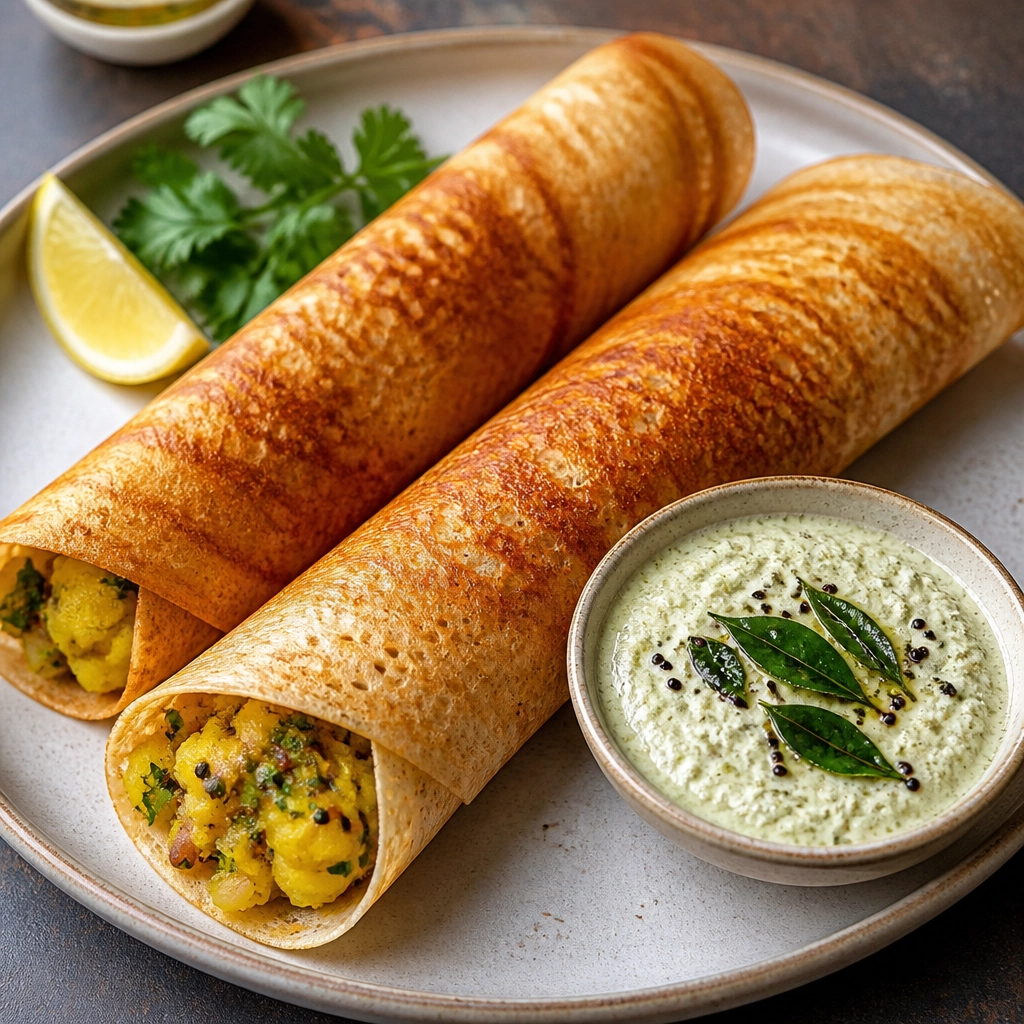
Masala Dosa
Masala dosa is a thin, lacy, golden crepe with a shatteringly crisp exterior and a warmly spiced potato filling tucked inside. Paired with cool coconut chutney, it delivers contrast in texture and a balance of earthy, tangy, and aromatic flavors.
Nutrition · per serving
Ingredients
22 itemsPotato masala
Coconut chutney
Dosa and tempering
Tips
- •Using ready fermented dosa batter is the only realistic way to keep this dish within 30 minutes; homemade batter requires soaking and fermentation far beyond the target time.
- •A properly heated pan is crucial: if the pan is too cool, the batter sticks and turns pale; if too hot, the batter sets before it can be spread thinly. Reduce the heat briefly between dosas if needed.
- •For extra crisp dosas, stir the batter gently rather than whisking vigorously, and spread it as thinly as possible in one confident motion.
- •Masala dosa is often served with sambar as well, but coconut chutney alone keeps this version achievable in the time limit.
Steps
- 1
Put the diced potatoes in a small pan with enough water to cover. Bring to a boil and cook for 8-10 minutes until just tender but not falling apart; drain well. Meanwhile, slice the onion, chop the chilli, grate the ginger, chop the coriander, and set out the curry leaves so the cooking goes quickly.
300 g potatoes, peeled and diced small120 g onion, thinly sliced1 small (8 g) green chilli, finely chopped10 g ginger, finely grated10 g fresh coriander, chopped10 leaves curry leaves - 2
Make the coconut chutney: blend the grated coconut, roasted chana dal, green chilli, ginger, salt, and water to a smooth but spoonable chutney. Add a splash more water if needed; it should be thick enough to sit on the plate without running. Set aside.
80 g fresh or frozen grated coconut20 g roasted chana dal1 small (8 g) green chilli5 g ginger1/4 tsp salt90 ml water - 3
Make the potato masala: heat 1 tbsp oil in a wide frying pan over medium heat. Add the mustard seeds and let them crackle, then add the curry leaves, sliced onion, chilli, and grated ginger. Sauté for 3-4 minutes until the onion softens and turns lightly golden at the edges; lowering the heat prevents the mustard and curry leaves from scorching.
1 tbsp (15 ml) neutral oil1 tsp (4 g) black mustard seeds10 leaves curry leaves120 g onion, thinly sliced1 small (8 g) green chilli, finely chopped10 g ginger, finely grated - 4
Add the turmeric, salt, 120 ml water, and the cooked potatoes. Mix, lightly crushing some of the potato with the spoon so the filling binds while still keeping chunks. Cook for 2-3 minutes until the water is mostly absorbed and the masala is moist, not wet. Stir in the coriander and lemon juice, then take off the heat.
1/2 tsp (1.5 g) ground turmeric3/4 tsp salt120 ml water300 g potatoes, peeled and diced small10 g fresh coriander, chopped2 tsp (10 ml) lemon juice - 5
If the batter is very thick, loosen it with 1-2 tbsp water from your tap if needed; it should pour easily but still coat the back of a ladle. Heat a large cast-iron or nonstick skillet or dosa tawa over medium-high heat until a drop of water skitters across the surface. Lightly wipe with a little oil.
500 g ready dosa batter2 tbsp (30 ml) neutral oil - 6
Pour about 125 g batter onto the centre of the hot pan and, using the bottom of the ladle, spread it outward in concentric circles into a thin dosa about 22-24 cm wide. Drizzle about 1 tsp oil around the edges and a few drops over the top. Cook 2-3 minutes until the bottom is deep golden and crisp; the surface should look dry before filling.
500 g ready dosa batter2 tbsp (30 ml) neutral oil - 7
Place half the potato masala in a strip across the centre of the dosa. Fold one side over, then the other, or roll it up. Cook 30-60 seconds more so the outside stays crisp, then transfer to a warm plate. Repeat with the remaining batter, oil, and potato masala to make 4 dosas total.
500 g ready dosa batter2 tbsp (30 ml) neutral oil300 g potatoes, peeled and diced small - 8
For a quick tempering for the chutney, heat the remaining oil in a very small pan. Add the mustard seeds; when they crackle, add the curry leaves and fry for a few seconds. Spoon this over the chutney. Serve the hot masala dosas immediately with the coconut chutney on the side.
2 tbsp (30 ml) neutral oil1/2 tsp (2 g) black mustard seeds6 leaves curry leaves
Origin & History
Masala dosa originated in South India, especially associated with Karnataka and the Udupi tradition, though it is now beloved across the country. The dish combines a fermented rice-and-lentil crepe with a spiced potato filling, reflecting both the region's mastery of fermentation and its vegetarian temple-cooking heritage.
Do even more with Gourmate
Cook this recipe in Gourmate — your AI meal planning app.
Plan Meals
Weekly planner at a tap
Ask Questions
Chat with your AI chef
Adjust Recipe
Scale servings & swap ingredients
Cook Mode
Step-by-step guidance
Kitchen Timers
Built-in timers & alerts
Grocery List
Auto-generated shopping lists