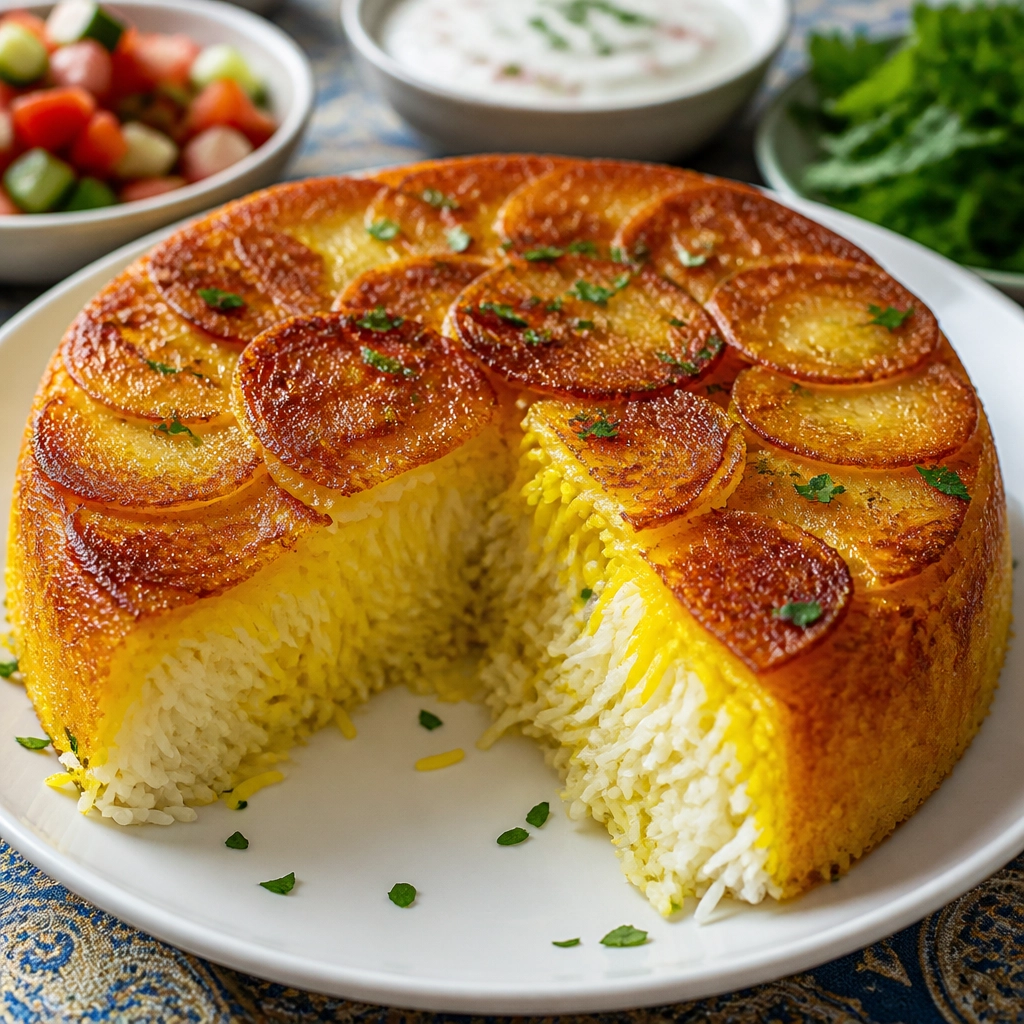
Tahdig
Tahdig is prized for its contrast of textures: fluffy, aromatic basmati rice on top and a shatteringly crisp golden crust underneath. In this version, thin potato slices fry and steam beneath saffron-buttered rice, creating the richly colored, savory layer that everyone reaches for first.
Nutrition · per serving
Ingredients
9 itemsRice and parboiling
Saffron butter
Potato crust
Tips
- •A non-stick pot gives the most reliable tahdig, especially for a small batch.
- •If your hob runs hot, place the pot over a heat diffuser during the low steaming stage.
- •For extra fragrance, bloom the saffron fully by grinding it before steeping rather than adding whole threads directly.
- •Serve with yogurt, herbs, shirazi salad, or a simple stew if making it part of a larger Persian meal.
Steps
- 1
Rinse the basmati rice in several changes of cold water until the water runs mostly clear. Soak it in fresh cold water for 10 minutes while you bring a large pot of water to the boil with the salt. Short soaking helps the grains elongate faster and keeps this version within the time limit.
200 g basmati rice2 litres water20 g fine salt - 2
Meanwhile, grind the saffron threads between your fingers or in a mortar, then steep them in the hot water for 5 minutes. Melt the butter and stir it into the saffron infusion.
0.25 g saffron threads15 ml hot water35 g unsalted butter - 3
Peel the potato and slice it into very thin rounds, about 2 mm thick, so it cooks through before the rice finishes steaming. Pat the slices dry and season lightly with the salt.
180 g potato2 g fine salt - 4
Drain the soaked rice and add it to the boiling salted water. Boil for 5 to 6 minutes, stirring once after the first minute so the grains do not clump. The rice is ready when the outside is tender but the centre still has a slight firm core.
200 g basmati rice2 litres water20 g fine salt - 5
Drain the rice thoroughly. Return a heavy non-stick or well-seasoned 20 cm pot to medium heat and add the oil. Arrange the potato slices in an overlapping layer over the base, then spoon over about half of the saffron butter. Cook for 2 minutes so the potatoes begin to sizzle.
30 ml neutral oil180 g potato0.25 g saffron threads15 ml hot water35 g unsalted butter - 6
Pile the drained rice gently over the potatoes, shaping it into a loose mound rather than packing it down; this helps steam circulate. Drizzle the remaining saffron butter over the rice. Using the handle of a spoon, poke 4 or 5 holes down through the rice to the potato layer for even steaming.
200 g basmati rice0.25 g saffron threads15 ml hot water35 g unsalted butter - 7
Wrap the pot lid in a clean kitchen towel to catch condensation, cover the pot, and cook on medium heat for 5 minutes to start the crust. Then reduce to low and steam for 20 minutes more. You should smell toasted butter and potato near the end; if it smells sharp or scorched, lower the heat immediately.
- 8
Rest the pot off the heat, covered, for 5 minutes. This brief rest helps the crust firm up and release more cleanly.
- 9
To serve, loosen the sides of the rice with a spatula. Invert the pot onto a plate in one confident motion, or lift out the rice and potato crust separately if preferred. The tahdig should be deeply golden and crisp on the bottom with fluffy rice above.
Origin & History
Tahdig, meaning 'bottom of the pot,' is one of the most beloved elements of Persian home cooking. It developed from the rice-cooking traditions of Iran, where perfectly separate grains and a prized crisp crust are marks of skill. Potato tahdig is a popular modern household variation alongside plain rice, bread, and lettuce-based crusts.
Do even more with Gourmate
Cook this recipe in Gourmate — your AI meal planning app.
Plan Meals
Weekly planner at a tap
Ask Questions
Chat with your AI chef
Adjust Recipe
Scale servings & swap ingredients
Cook Mode
Step-by-step guidance
Kitchen Timers
Built-in timers & alerts
Grocery List
Auto-generated shopping lists