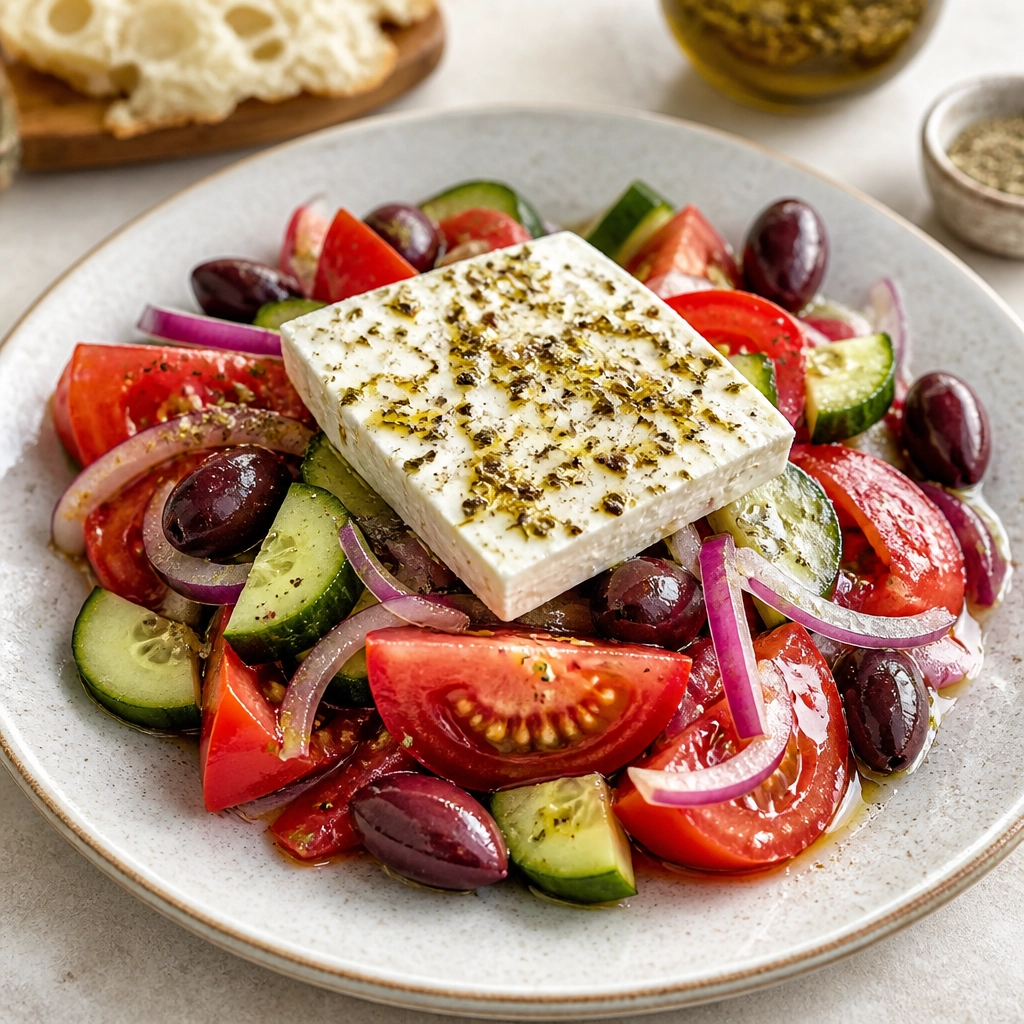
Horiatiki
Horiatiki is a fresh, rustic salad of juicy tomatoes, crisp cucumber, sharp red onion, briny Kalamata olives, and creamy feta. Finished with oregano and fruity olive oil, it is bright, salty, and deeply refreshing.
Nutrition · per serving
Ingredients
10 itemsSalad
Tips
- •Use the ripest tomatoes you can find; the salad depends on their sweetness and juice.
- •Traditional Horiatiki is kept chunky and is often topped with feta rather than crumbled through the salad.
- •If your olives are very salty, reduce or omit the added salt.
- •Serve with crusty bread to soak up the tomato, olive oil, and feta juices.
Steps
- 1
Wash and dry the tomatoes and cucumber. Cut the tomatoes into irregular bite-size wedges, slice the cucumber into thick half-moons, and thinly slice the red onion. For a milder onion bite, rinse the slices briefly under cold water and pat dry.
300 g ripe tomatoes150 g cucumber60 g red onion - 2
Arrange the tomatoes, cucumber, red onion, and Kalamata olives in a shallow bowl or on a plate. Keep the pieces fairly chunky; Horiatiki is rustic, not finely chopped.
300 g ripe tomatoes150 g cucumber60 g red onion60 g Kalamata olives - 3
Season the vegetables with the fine sea salt and black pepper, then drizzle over the red wine vinegar and extra-virgin olive oil. Toss very gently just once or twice so the tomatoes keep their shape.
1/4 tsp fine sea salt1/8 tsp black pepper5 ml red wine vinegar20 ml extra-virgin olive oil - 4
Place the feta on top as a slab or in large chunks, then sprinkle with the dried oregano. Let the salad sit for 2 minutes so the juices mingle, then serve immediately with bread if liked.
100 g feta1 tsp dried oregano
Origin & History
Horiatiki, often called Greek village salad, is a classic rural dish built from everyday summer produce, olives, and feta. It became widely known outside Greece as a symbol of simple Mediterranean cooking, where ingredient quality matters more than complexity.
Do even more with Gourmate
Cook this recipe in Gourmate — your AI meal planning app.
Plan Meals
Weekly planner at a tap
Ask Questions
Chat with your AI chef
Adjust Recipe
Scale servings & swap ingredients
Cook Mode
Step-by-step guidance
Kitchen Timers
Built-in timers & alerts
Grocery List
Auto-generated shopping lists